Wireless microphone systems have become an essential tool for creators, journalists, and videographers who require reliable audio without complex setups. The third-generation RODE Wireless GO builds on the company’s well-known compact wireless platform, introducing internal recording, expanded connectivity, and improved usability while retaining the portability that made the series popular.
After spending time using the system in different recording environments, we found it to be a practical solution for creators seeking professional-grade wireless audio in a compact format.
Design and Build
The RODE Wireless GO (3rd Generation) maintains the familiar compact design of earlier models. The kit includes two transmitters with integrated microphones and a single receiver, allowing users to capture audio from two sources simultaneously.
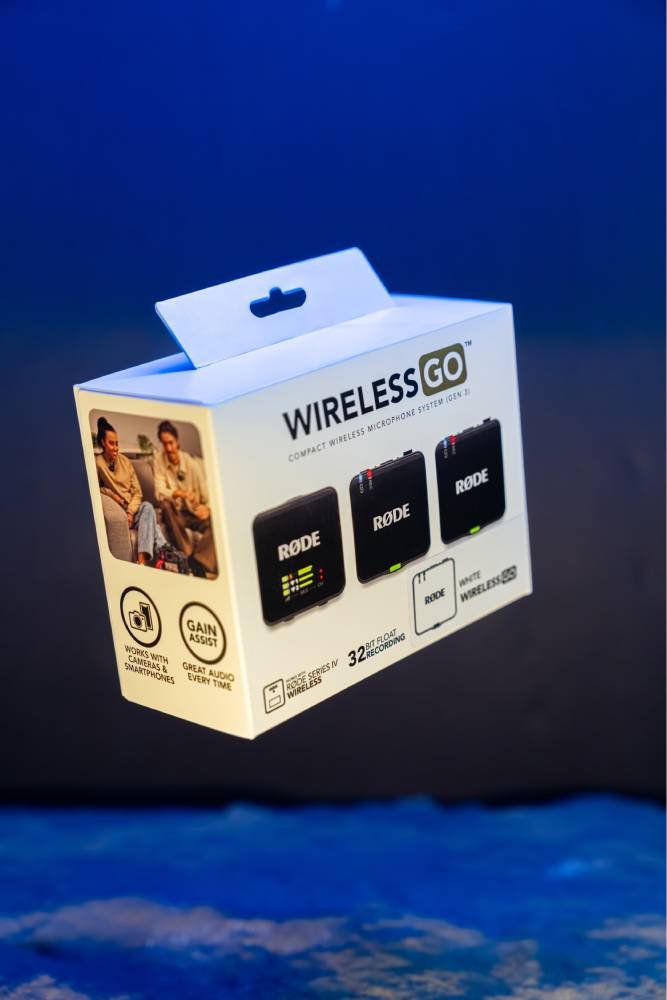
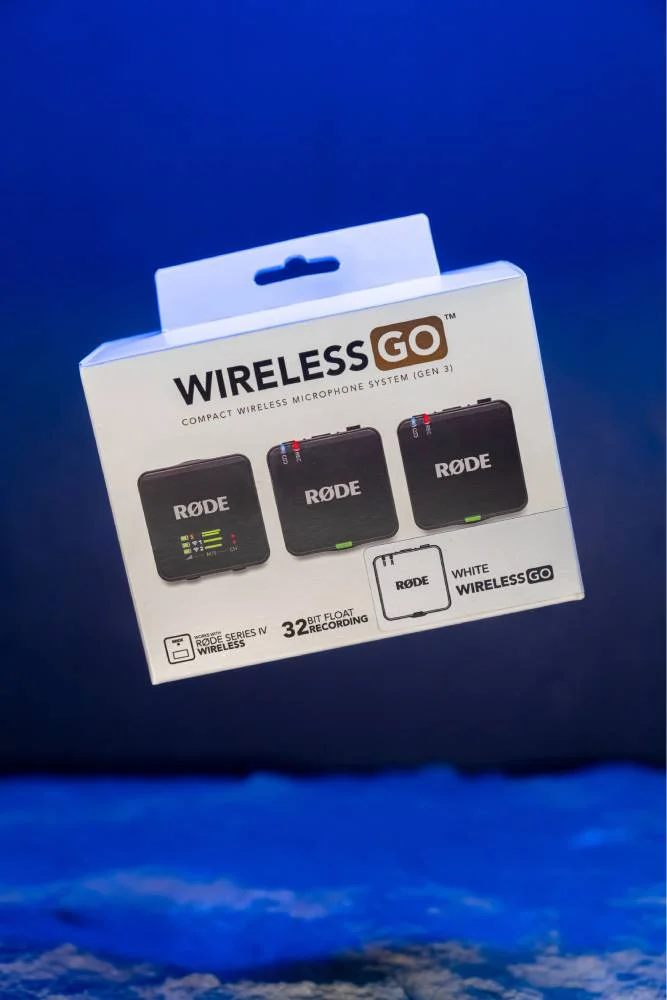
Each transmitter features a built-in omnidirectional microphone, a USB-C port for charging and data transfer, and a 3.5mm input for connecting an external lavalier microphone. The integrated clip on the back allows the unit to be attached directly to clothing, while the threaded 3.5mm port supports locking lavalier connectors for more secure use.
The receiver includes a small display that provides real-time information such as battery status, signal connectivity, and audio levels. This allows users to monitor recording conditions without relying on external devices. Physical buttons on the side enable quick adjustments, including pairing and audio level controls.
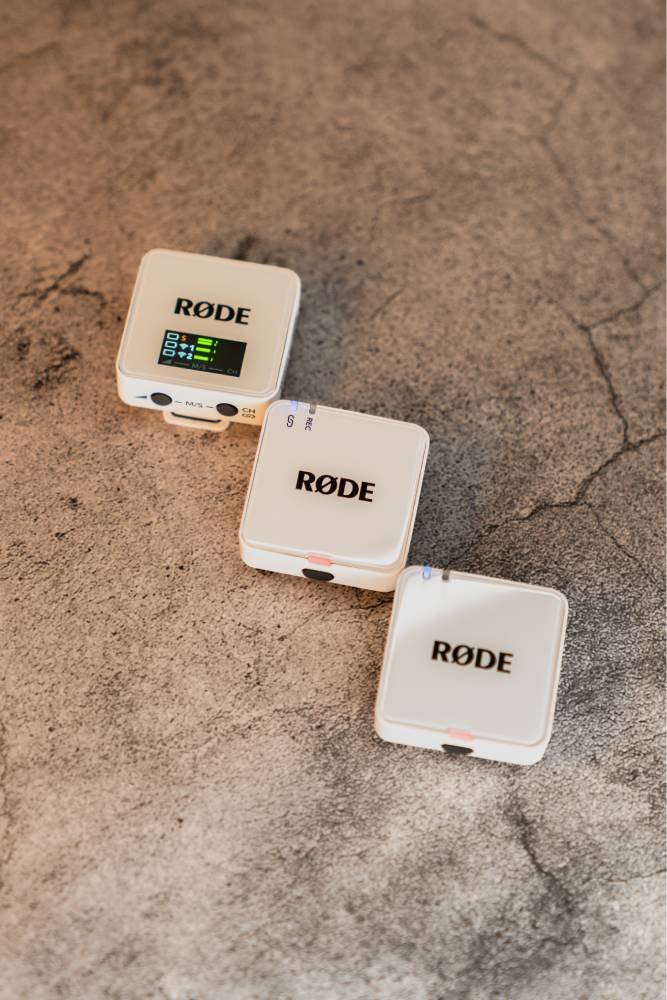
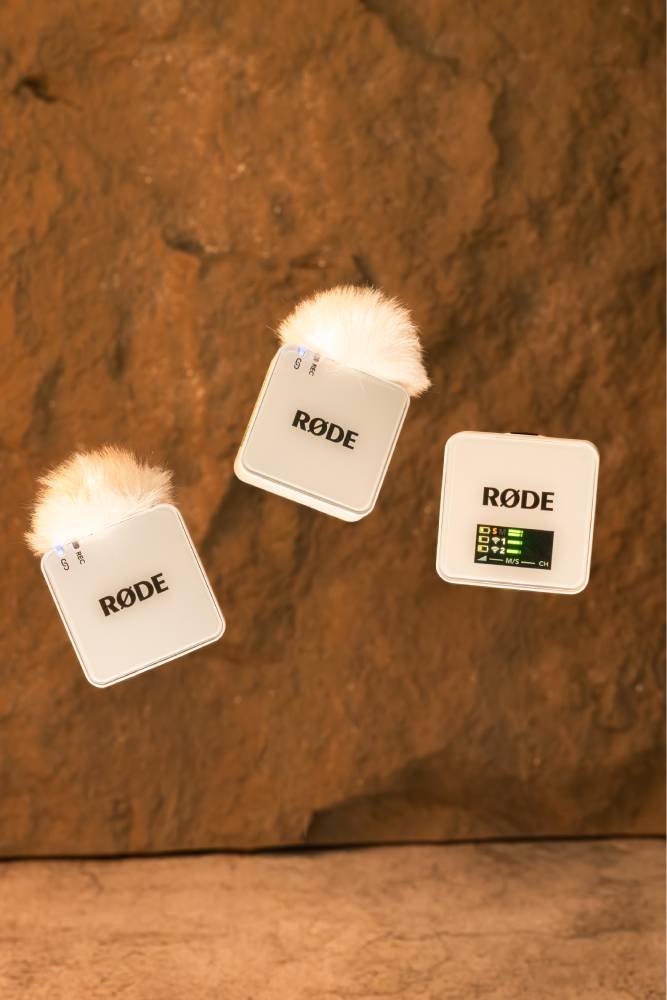
The system is available in multiple color options, which can help users match the transmitter with clothing for a less noticeable appearance on camera. Overall, the build quality feels solid and well suited for regular field use.
What’s in the Box
RODE includes a practical set of accessories with the package:
- Two wireless transmitters with built-in microphones
- One wireless receiver
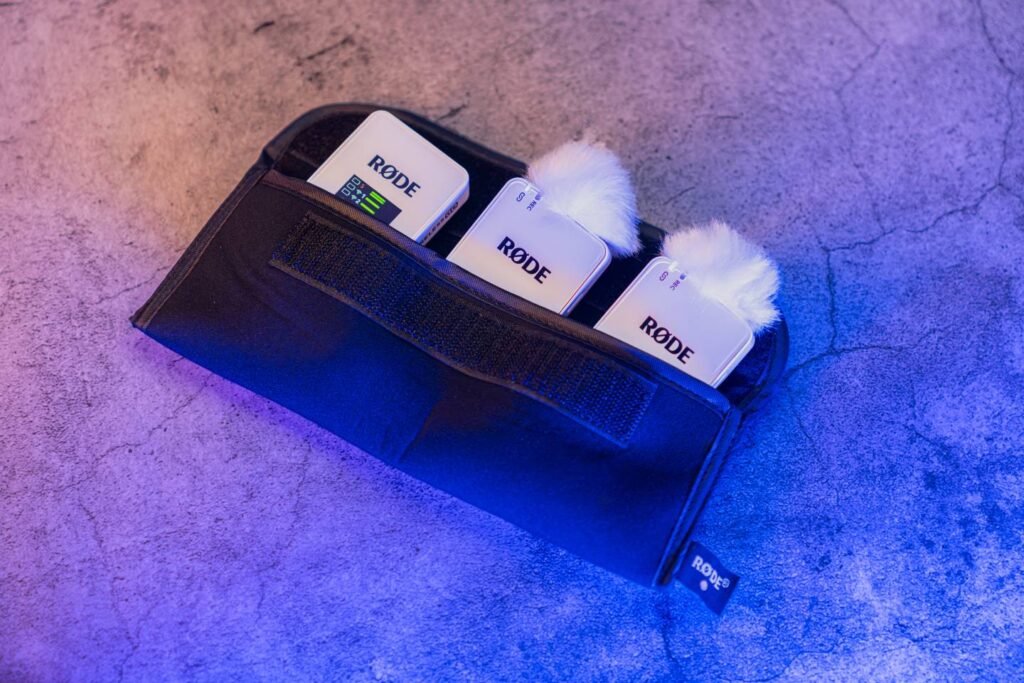
- Neoprene storage pouch
- TRS 3.5mm camera cable
- USB-C to USB-C cable
- USB-C to Lightning cable
- Three windshields (two primary plus one spare)
- Multi-device charging hub
- Documentation and quick start guide
The charging hub is a useful addition, allowing the receiver and both transmitters to be charged simultaneously via a single USB-C cable. This simplifies charging when preparing for shoots or traveling between locations.
Setup and Connectivity
Setting up the RODE Wireless GO is straightforward. The transmitters and receiver pair quickly, and the system can connect to a wide range of devices including cameras, smartphones, and computers.
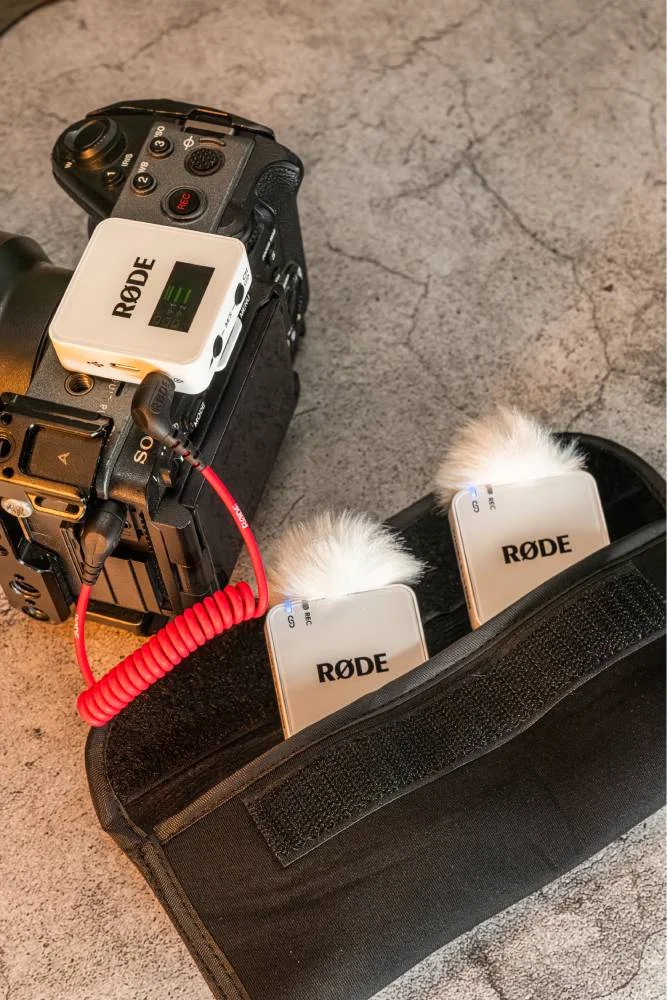
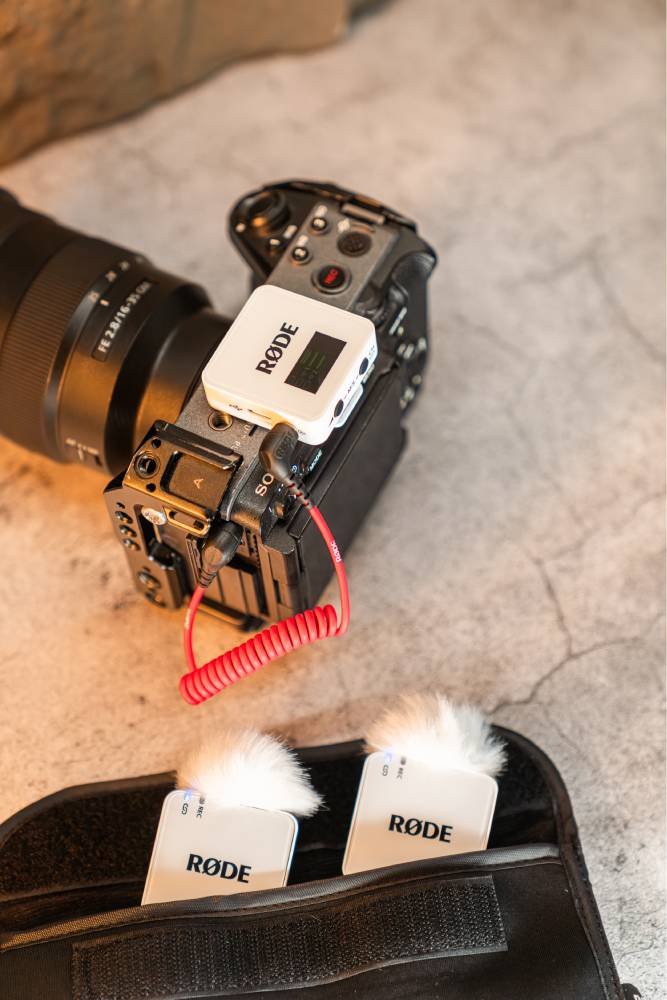
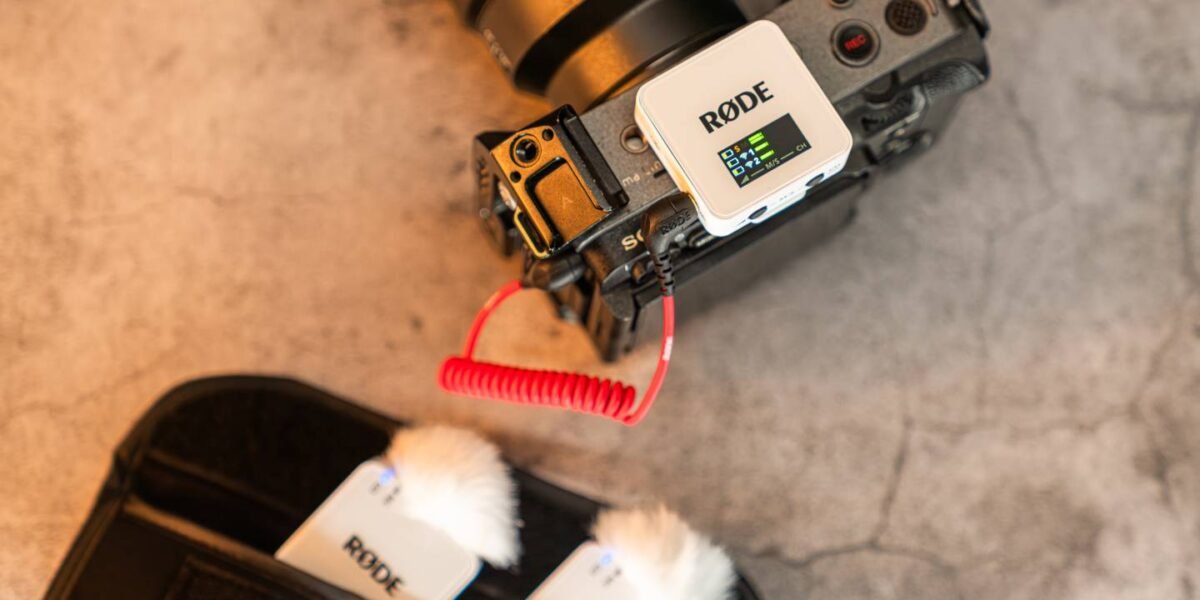
The receiver attaches easily to a camera’s hot shoe mount and connects via the included 3.5mm TRS cable. USB-C connectivity also enables direct use with computers and mobile devices, making the system suitable for video production, live streaming, or podcast recording.
Configuration can be managed directly on the receiver through its onboard interface. For more advanced adjustments, users can connect the system to the RODE Central companion app, which provides a larger interface for changing settings and managing features such as recording modes and safety tracks.
Features and Recording Options
One of the key improvements in this generation is onboard recording. Each transmitter includes internal storage, allowing audio to be recorded directly on the unit as a backup track. This feature can be particularly useful if wireless signal interference occurs during recording.
The system also supports multiple recording configurations:
- Split Mode: Each transmitter records to a separate audio channel.
- Merged Mode: Both microphones combine into a single track, which can be useful for live streaming scenarios.
- Safety Track: A secondary recording at a lower level helps prevent clipping during unexpected volume spikes.
These options provide flexibility depending on whether the system is being used for interviews, vlogging, or live production.
Audio Quality
In practical use, the built-in microphones deliver clear and consistent audio. Voice recordings remain detailed even when the microphone is clipped to clothing rather than positioned close to the mouth.
The included windshields help reduce wind noise when recording outdoors, and the ability to connect a lavalier microphone provides additional flexibility for more discreet setups.
We tested the system in several environments, including quiet indoor spaces, outdoor trails, and busy urban areas. The wireless signal remained stable in most situations, though interference can occur in areas with heavy wireless traffic. In these cases, the internal backup recording proved useful for recovering clean audio.
Overall, the sound quality is well suited for content creation, interviews, and general video production.
Practical Use in the Field
The main advantage of the RODE Wireless GO is its simplicity. The compact transmitters can be clipped directly to clothing and used immediately without additional accessories.
For creators working alone, the system allows freedom of movement compared to traditional shotgun microphones mounted on cameras. During outdoor tests, the wireless setup made it easier to walk away from the camera while maintaining consistent audio levels.
The receiver’s screen is particularly helpful for monitoring audio levels during recording, allowing users to quickly identify clipping or low levels without checking their camera’s audio meters.
Limitations
While the system performs well overall, there are a few minor considerations.
The transmitters are relatively visible when clipped directly to clothing, especially due to the prominent branding on the front. Some users may prefer to use a lavalier microphone and hide the transmitter under clothing for a cleaner on-camera appearance.
Additionally, the included pouch provides basic storage, but a more structured protective case would offer better protection during transport. These are relatively minor issues and do not significantly affect the overall usability of the system.
Verdict
The RODE Wireless GO (3rd Generation) continues to refine one of the most accessible wireless microphone systems available today. Its compact design, reliable wireless performance, and useful features such as onboard recording make it a versatile option for creators.
For videographers, vloggers, journalists, and content creators looking for a simple wireless audio solution, the system offers a strong balance of portability, audio quality, and flexibility.
While some users may prefer additional accessories such as a protective case or more discreet branding, the overall experience remains highly practical. For many creators, the RODE Wireless GO represents a reliable and easy-to-use upgrade for capturing high-quality wireless audio.
Also Read: RODE Interview GO Review