Nothing has carved out a niche for itself in an increasingly competitive smartphone landscape. The Nothing Phone 4A arrives as the brand’s most refined mid-range offering yet — a device that trades some of its predecessor’s quirks for a more purposeful, polished identity. We spent over a week with the Phone 4A as our primary device, testing it across daily tasks, gaming, photography, and endurance. Here is our full assessment.
Design & Build Quality
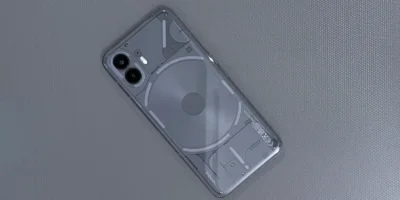
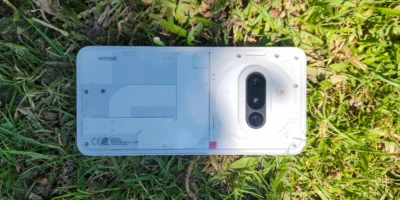
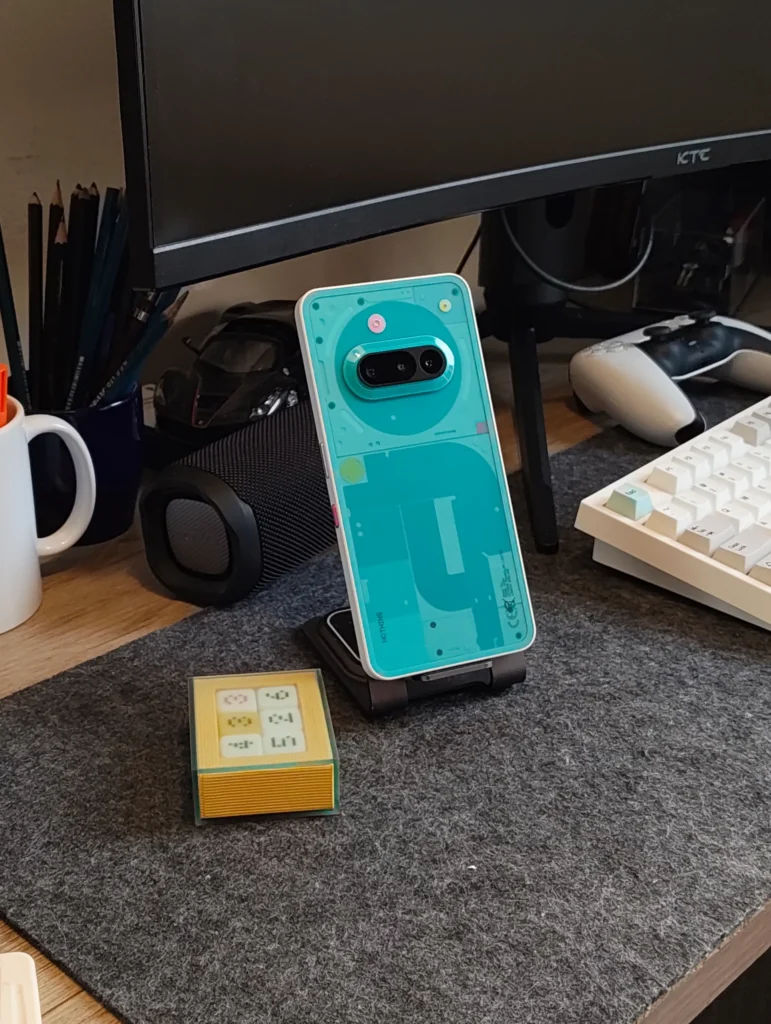
The most immediately striking change on the Phone 4A is its redesigned rear panel. Nothing has moved away from the glyph matrix of the Phone 3A in favour of a new vertical glyph bar positioned along the side of the device. This bar houses 63 mini LEDs arranged within seven square segments, producing a noticeably brighter and cleaner output than the previous glyph interface — with no visible yellow fringing at any brightness level. The recording indicator light is embedded within this bar and illuminates during video capture.
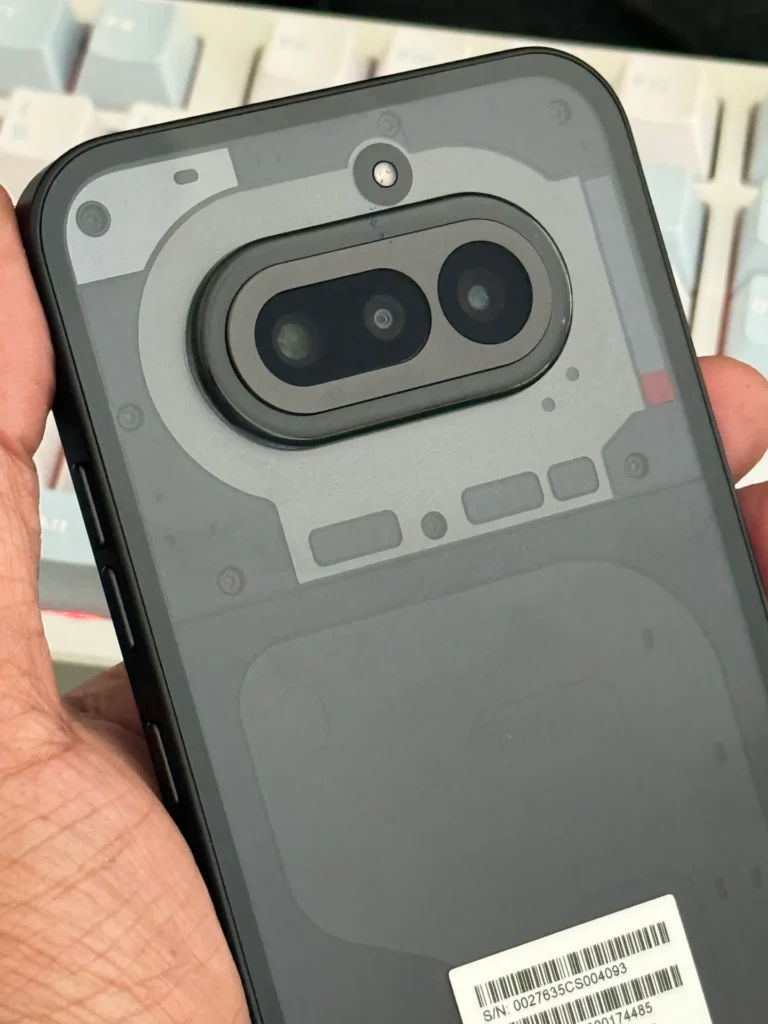
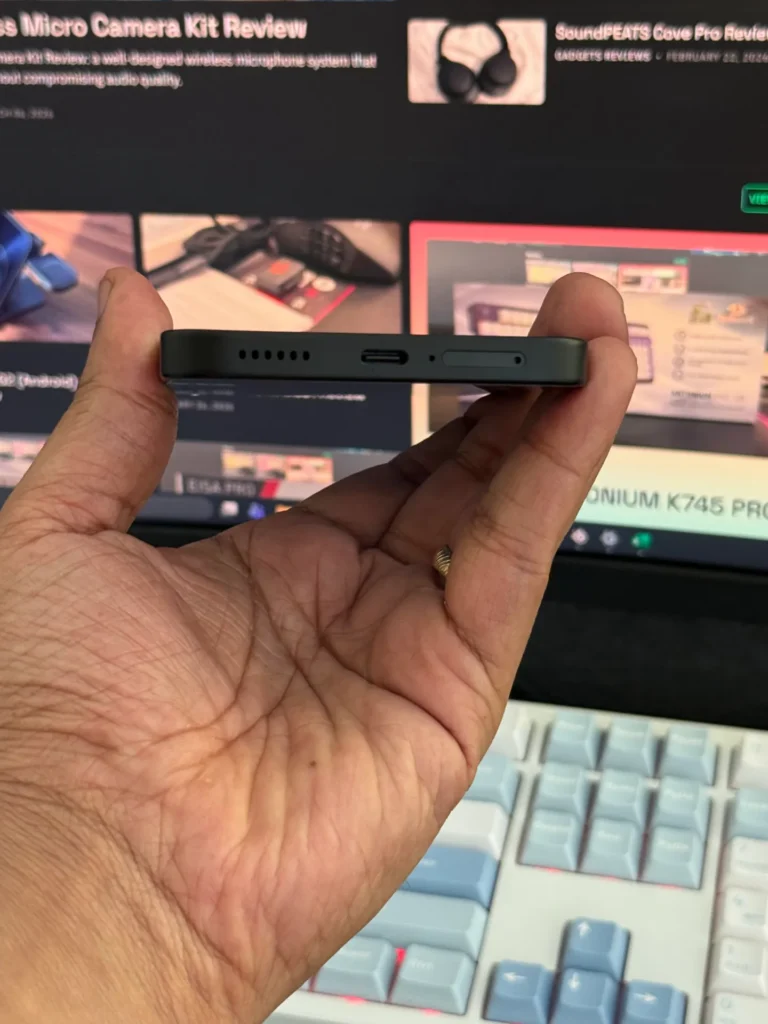
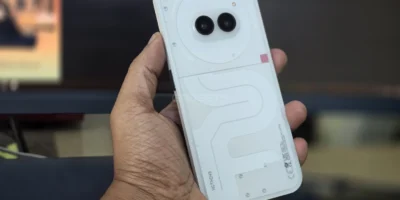
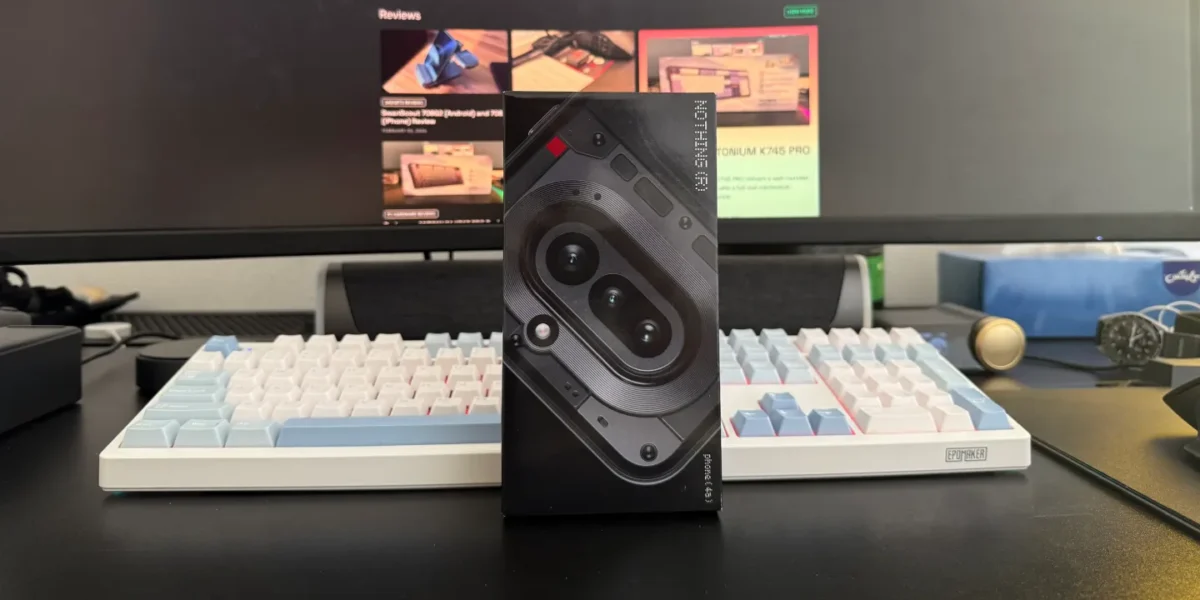
The overall aesthetic of the rear panel is more composed than before. The bottom section carries an industrial character, with a metal plate and battery-like cutout, while the upper portion features a refined metal camera housing. The number of visible screws has increased, yet the back reads as cleaner overall — a testament to more deliberate design choices. Available in white, black, blue, and a new pink colourway, the Phone 4A offers some of the more distinctive colour options in its segment.
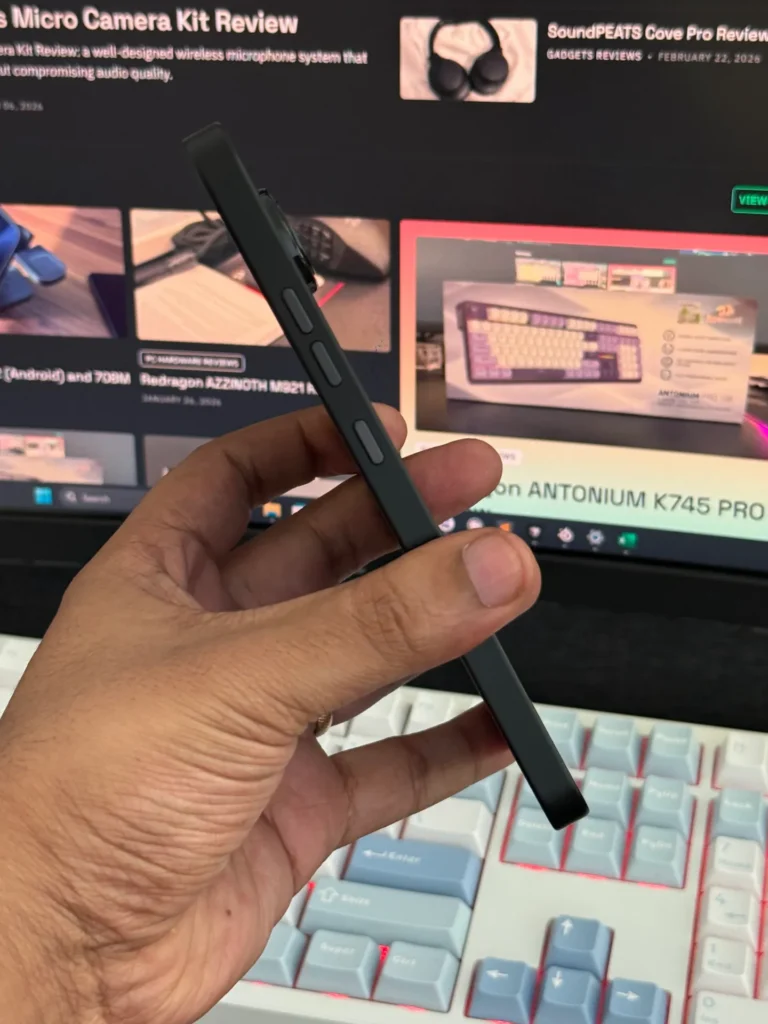
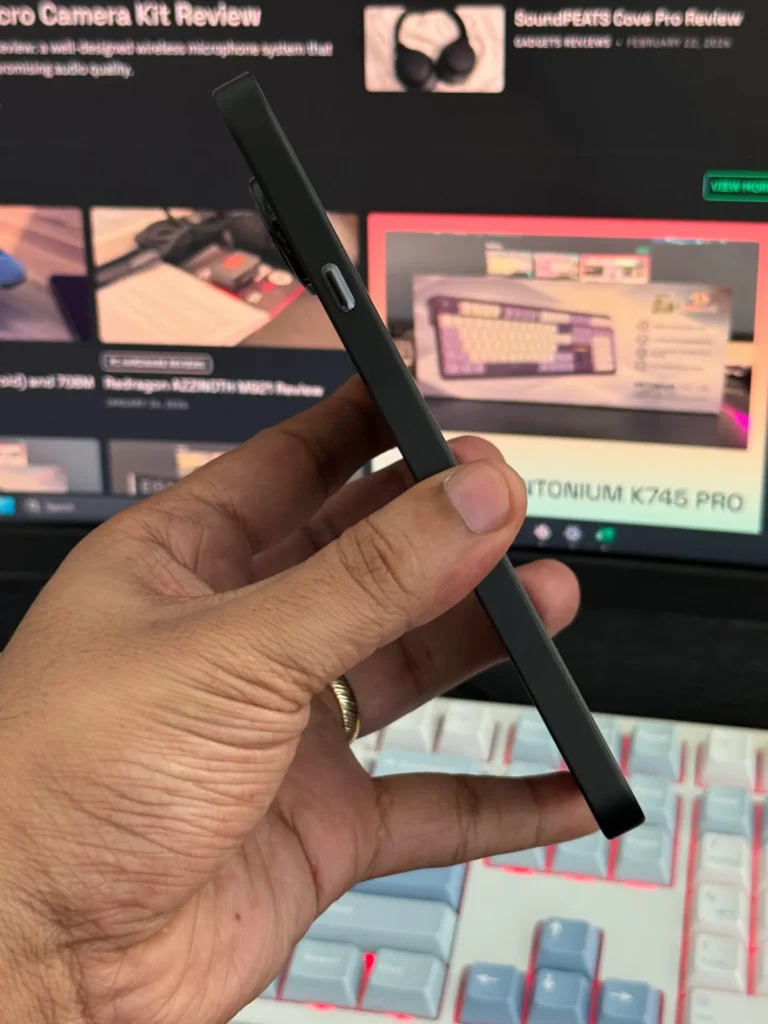
Button placement has been revised. The power button and volume keys now share one side, while the essential key occupies the other — a sensible change that eliminates the confusion some users experienced on the Phone 3A. The in-hand feel remains broadly similar to its predecessor: wide, moderately heavy at 205 grams, and featuring a subtly curved plastic rear frame. It is worth noting that the phone’s width may prove challenging for single-handed use over extended periods.
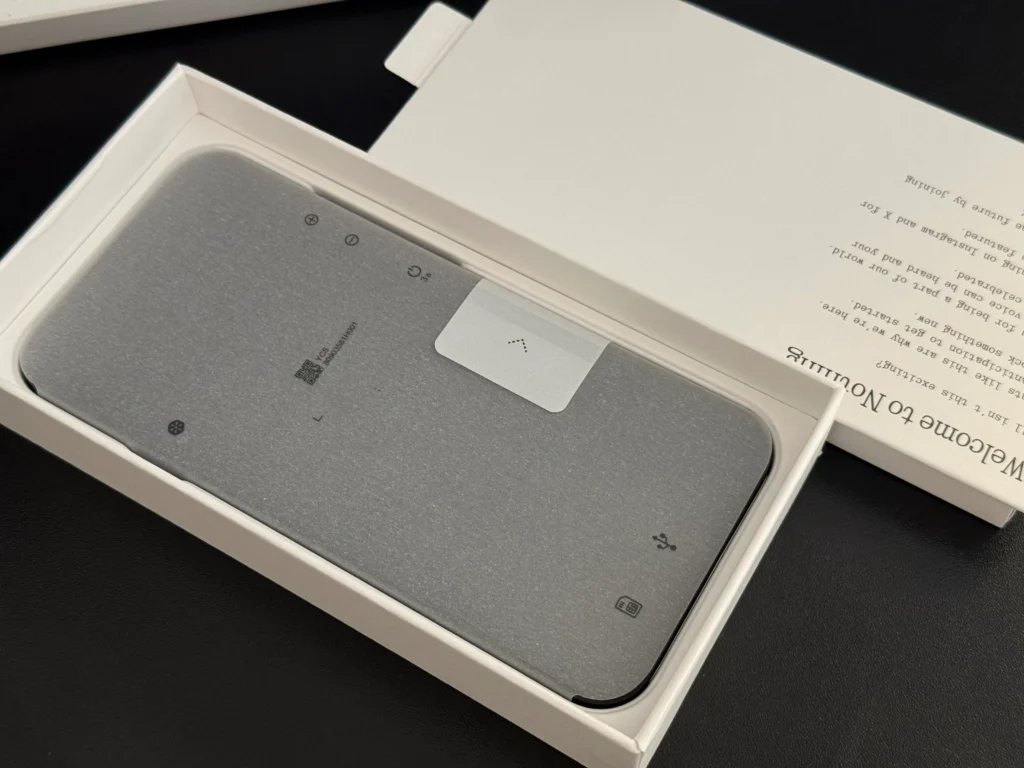
On the durability front, the rear retains Panda Glass protection, and the IP64 rating carries over from the Phone 3A, now with the ability to withstand submersion of up to 25 cm for 20 minutes. The display is now protected by Gorilla Glass 7i, an upgrade over the previous generation. A transparent protective case and a pre-applied screen protector are included in the box — the first time Nothing has bundled a case with an A-series device.
Display
The Phone 4A features a 6.78-inch AMOLED panel with a 1.5K resolution, stepping up from the Full HD Plus display on the Phone 3A. The improvement in sharpness is perceptible when the two devices are placed side by side. The panel operates at a 120 Hz refresh rate (LTPS), and peak brightness has been raised to 1,600 nits in high brightness mode, with HDR peak brightness reaching 4,500 nits. Outdoor legibility is meaningfully better than its predecessor.
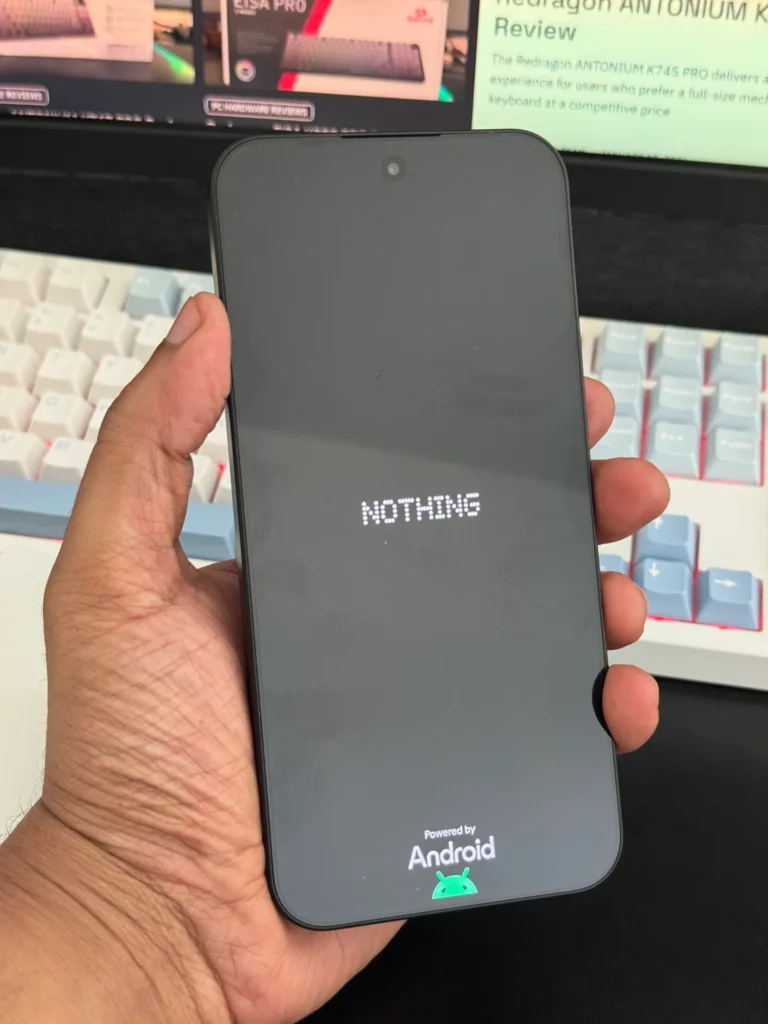
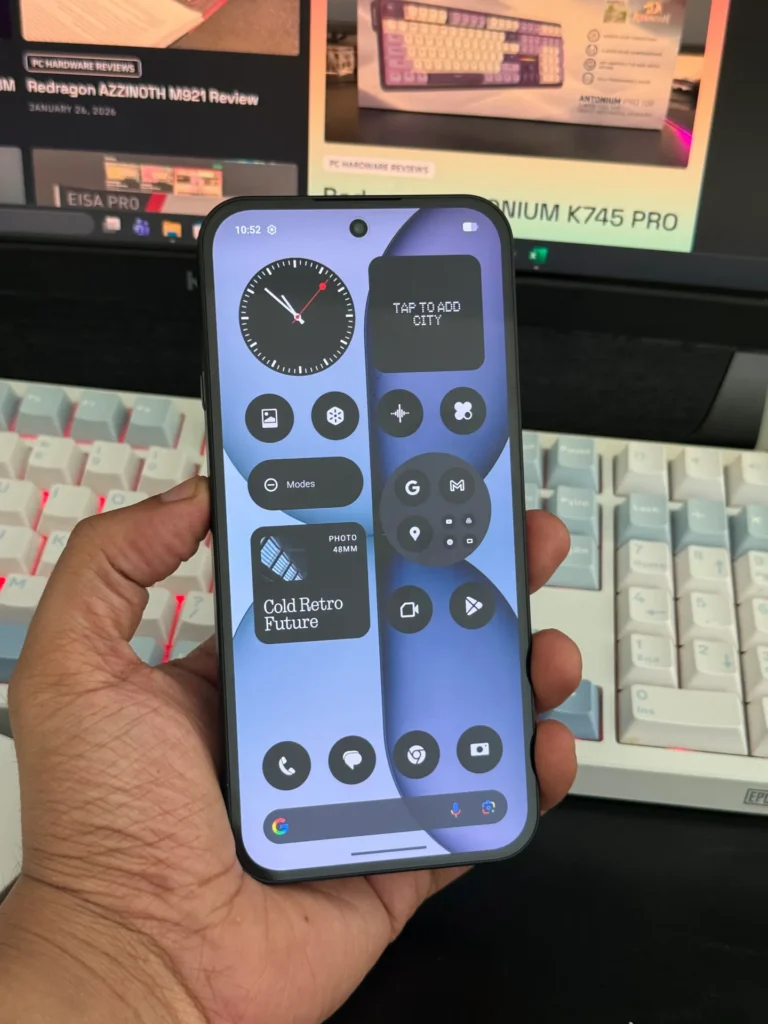
Colours on the panel trend slightly warmer and more subdued compared to the Phone 3A, which many users will find easier on the eyes. Scrolling and animations are fluid. The optical in-display fingerprint scanner performs reliably in day-to-day use. One caveat worth noting is that HDR is supported on YouTube but not on Netflix, due to the absence of the necessary certification. The auto-brightness behaviour was occasionally inconsistent during our testing period.
Performance & Software
The Phone 4A is powered by the Snapdragon 7S Gen 4, paired with up to 12 GB of LPDDR4X RAM. The standout hardware upgrade here is the inclusion of UFS 3.1 storage — a significant step forward from the UFS 2.2 used in the Phone 3A. This change positively impacts app loading speeds and storage longevity.
In daily use, the phone performs with admirable consistency. Applications open promptly, multitasking is handled without hesitation, and we encountered no crashes or erratic behaviour throughout our testing period. The device does not throttle aggressively under sustained loads, and thermal management appeared well-tuned. For gaming, BGMI runs at up to 120 fps, Call of Duty Mobile caps at 90 fps, and Genshin Impact averages around 40 fps. The Phone 4A is not positioned as a gaming device, but it handles mainstream titles without issue.
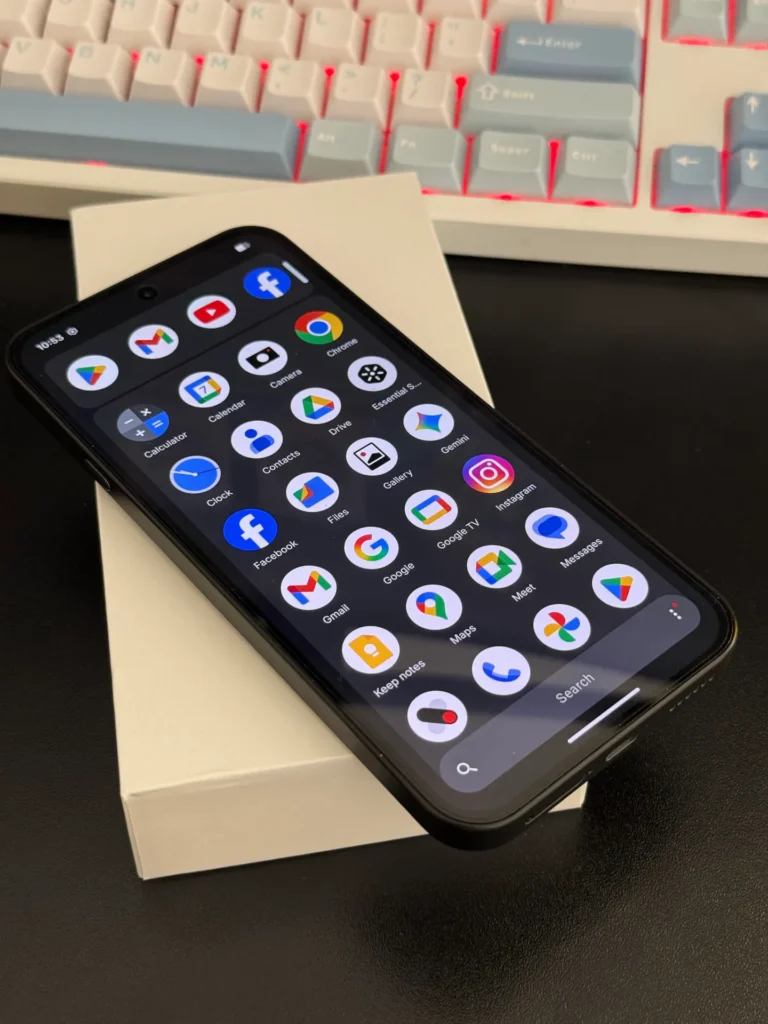
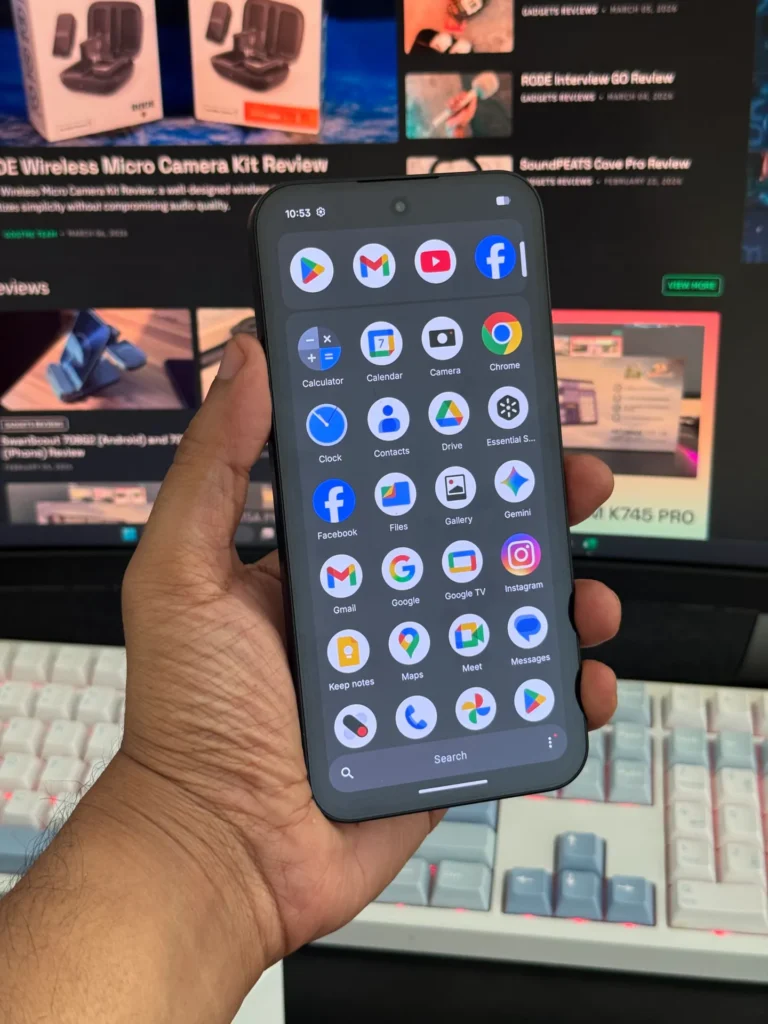
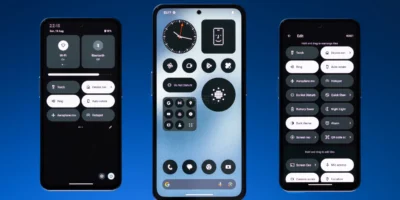
Nothing OS 4.1 running on Android 16 remains one of the cleaner software experiences on Android. The interface is lean, with no excessive bloatware — Facebook and Instagram come pre-installed but are fully removeable. The lock screen features a range of clock styles and customisable widgets. Haptic feedback is well-tuned throughout the UI, including during unlock, volume adjustments, and within the camera application. The essential space and essential search features add genuine utility, while the AI-powered wallpaper generator is a thoughtful addition for personalisation.
The device is supported by three years of OS updates and six years of security patches. Notably, the lock screen does not include Glance or similar third-party lock screen services, which was a point of contention in Nothing’s prior software releases.
Camera System
The camera configuration on the Phone 4A comprises a 50 MP primary sensor, an 8 MP ultra-wide, and a new 50 MP periscope telephoto lens offering 3.5x optical zoom. The telephoto is unquestionably the headlining addition, and represents the first periscope lens in this price segment from Nothing.
In strong natural light, the primary camera delivers well-balanced exposures, accurate colour reproduction, and good subject detail. Dynamic range handling is capable, though the device occasionally applies aggressive HDR processing that can clip shadow detail. Portrait mode offers reliable edge detection and natural subject separation, though facial smoothing can be excessive at standard shooting distances.

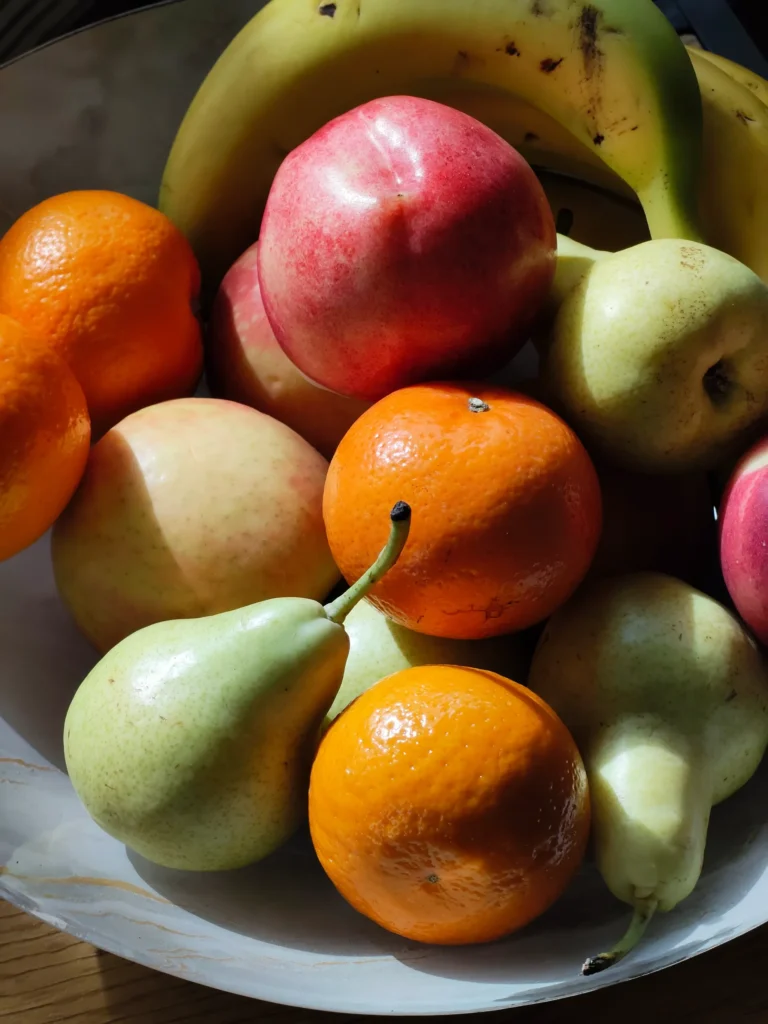
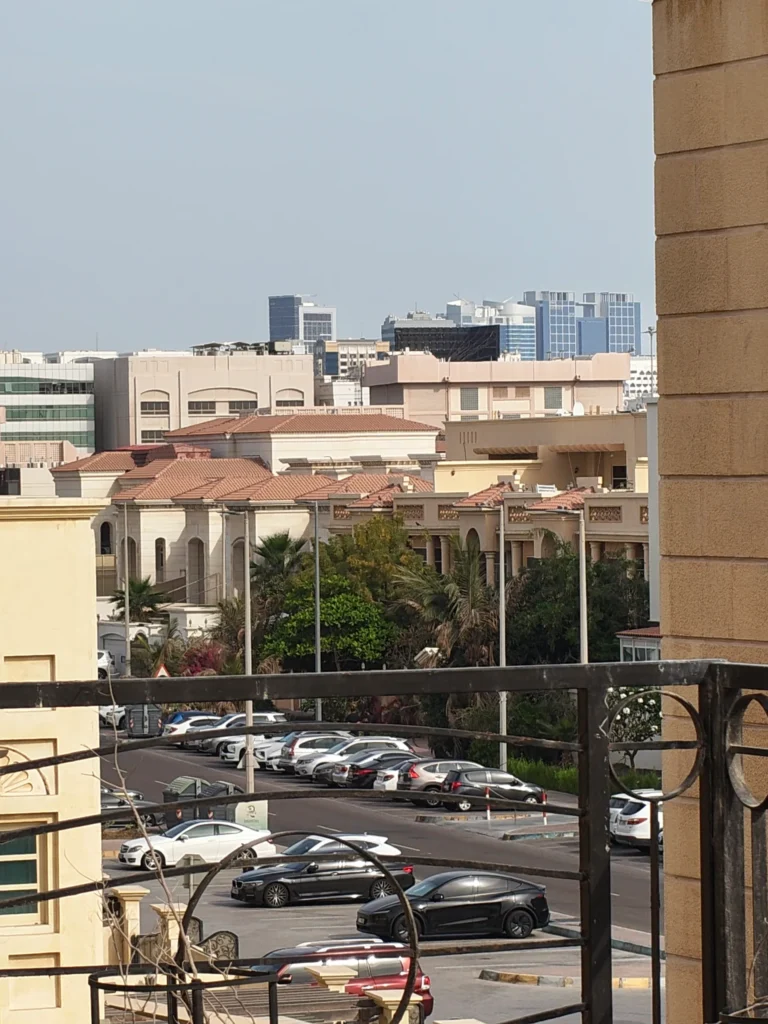
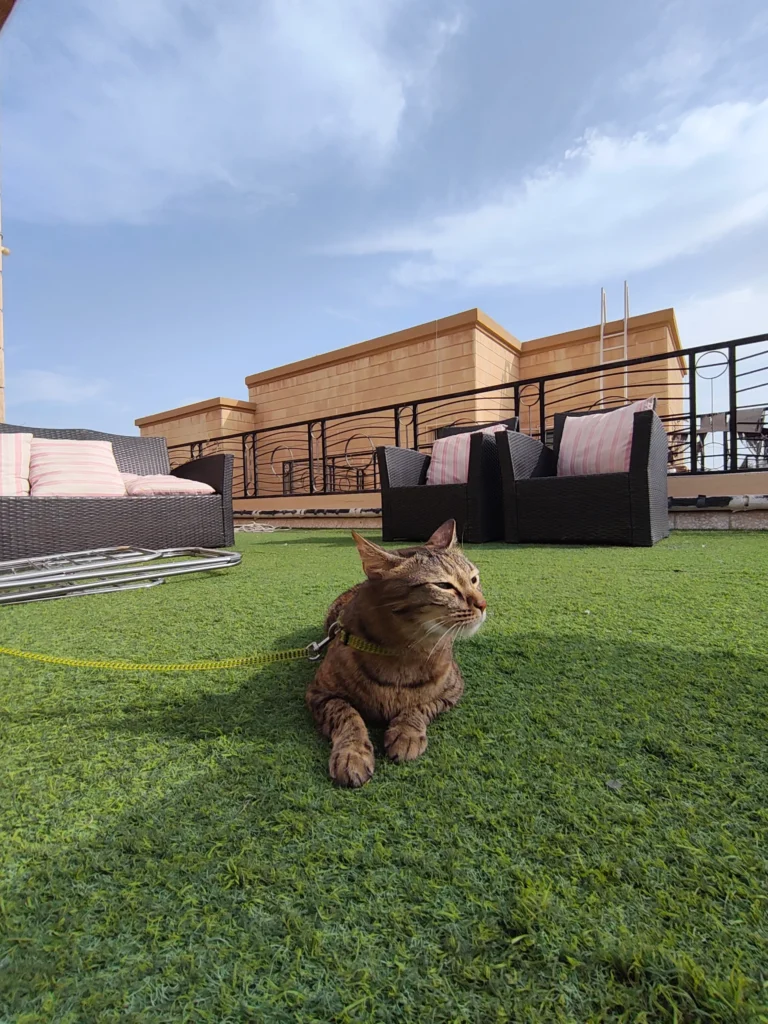
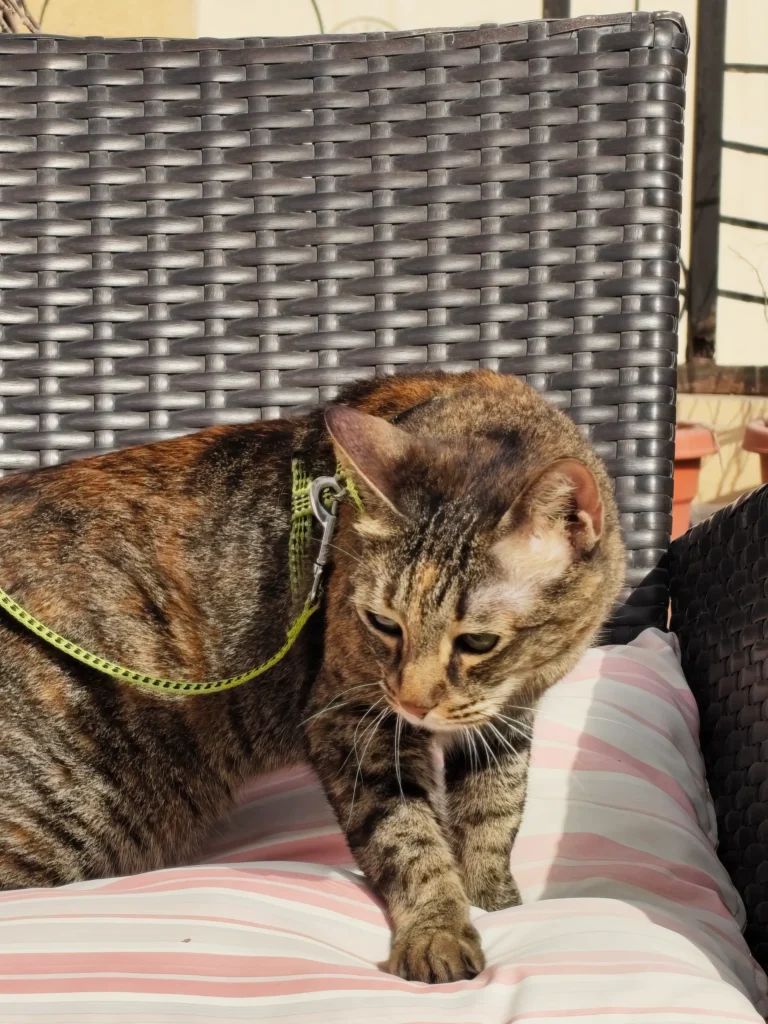
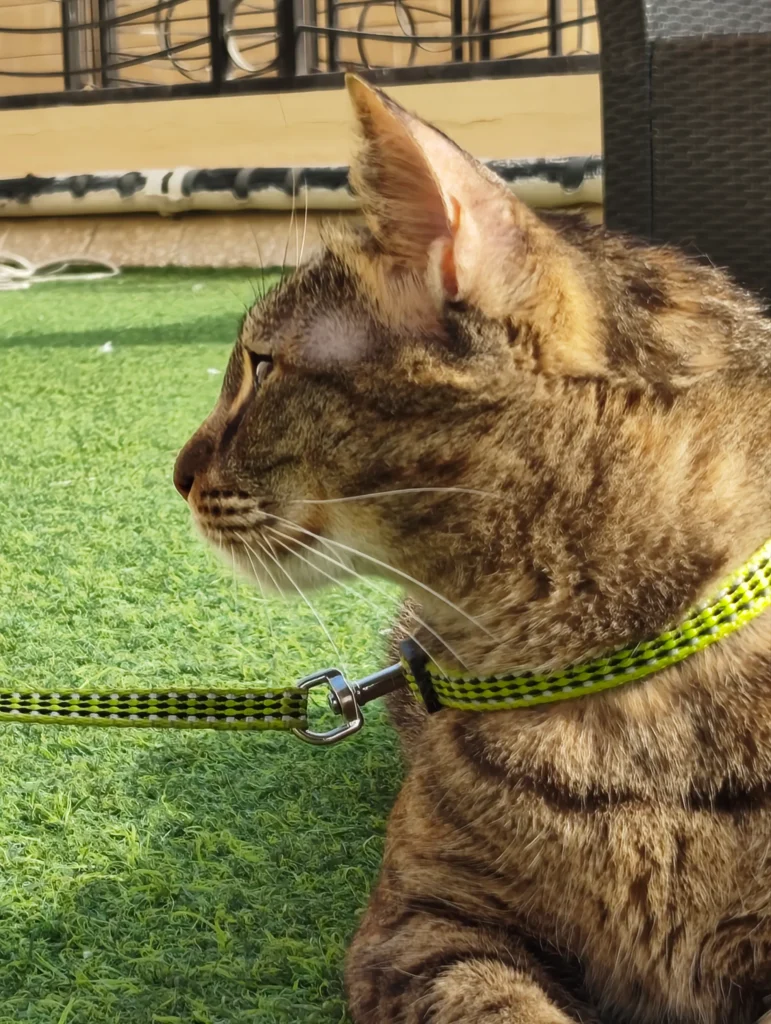

The new periscope telephoto is, in most conditions, genuinely impressive. At 3.5x, images retain meaningful sharpness and colour consistency, and the lens holds up well even at 7x digital zoom. The minimum focusing distance of 40 cm means macro photography is no longer possible via this lens. In lower light, however, the telephoto struggles — shutter speeds lengthen considerably and image clarity suffers. Skin tone rendering through the telephoto also leaves room for improvement.
The 8 MP ultra-wide lens provides adequate wide-angle coverage but lacks the resolving power of the primary camera, and colour consistency across all three lenses remains a minor concern — the ultra-wide in particular produces noticeably cooler tones compared to the main and telephoto lenses.
Video recording tops out at 4K at 30 fps on the rear cameras. Ultra-wide video is limited to 1080p at 30 fps, and the front-facing camera is capped at 1080p, with no 4K option available. Stabilisation on the primary camera is good for general use. Camera processing occasionally takes longer than expected, though Nothing has indicated this is being addressed in a future update.
Battery & Charging
The Phone 4A carries a 5,400 mAh battery, up from 5,000 mAh on the Phone 3A. In practice, the combination of efficient hardware and well-optimised software produces battery life that consistently punches above its capacity — we recorded screen-on times in the range of 8 hours with mixed usage including gaming, video streaming, calls, and social media. Overnight drain was negligible at approximately 1 percent.
Charging is supported at 50W, with a full charge completing in approximately one hour. There is no wireless charging support. The phone does not use a silicon-carbon battery cell, which means it does not match the raw capacity figures offered by some competing devices in this price range, though real-world endurance remains competitive.
Verdict
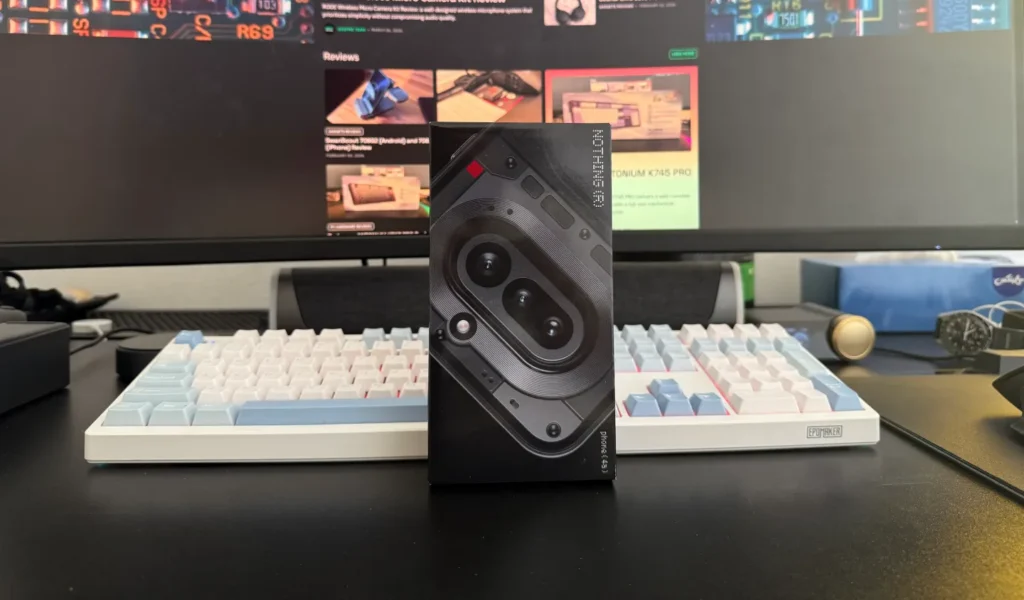
The Nothing Phone 4A is a more assured and cohesive device than its predecessor. The revised design language, the step up to UFS 3.1 storage, a meaningfully improved display, and the introduction of a periscope telephoto lens represent tangible progress. The software experience remains one of the more polished offerings in the Android mid-range, and battery endurance is better than the specification alone would suggest.
There are genuine trade-offs to acknowledge. The 8 MP ultra-wide is underwhelming at this price point, the telephoto underperforms in low light, video capabilities carry limitations that feel inconsistent with the chipset’s potential, and the removal of NFC is a notable regression. The IP64 rating is also modest given where pricing now sits.
However, for those who value a distinctive design identity, a clean and well-maintained software experience, and a capable telephoto lens, the Nothing Phone 4A makes a compelling, if premium, case for itself.
Also Read: Nothing Phone (3a) Review