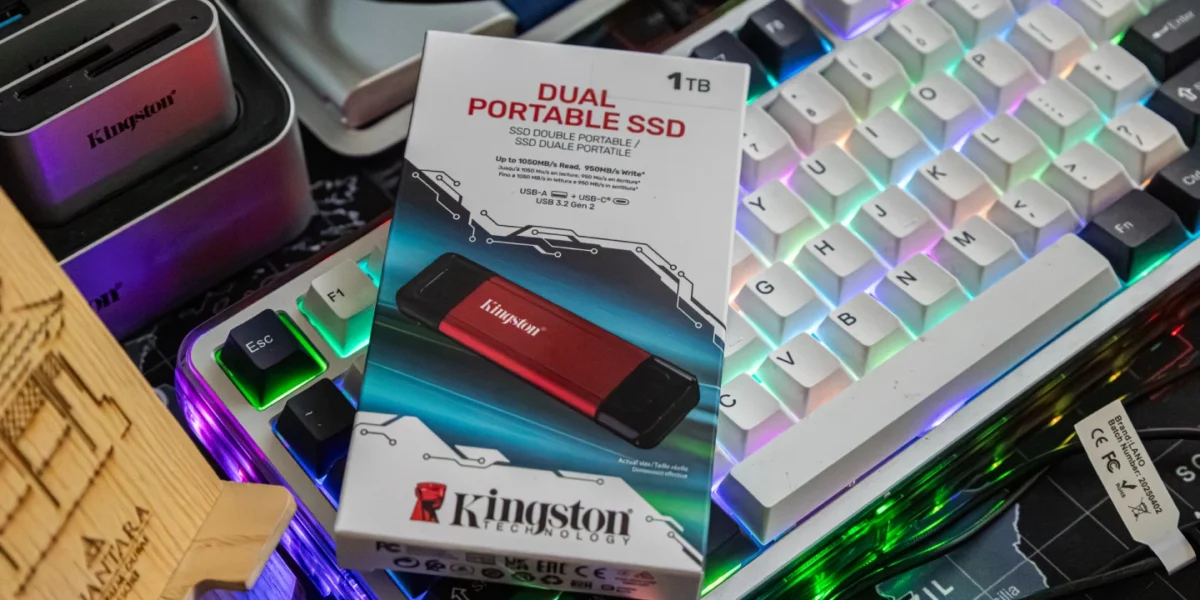
The Kingston Dual Portable SSD is designed to bridge the gap between traditional USB flash drives and full-sized external SSDs. It targets users who need fast, high-capacity portable storage in a compact, cable-free form factor. After hands-on testing, it proves to be a practical solution for transferring large files quickly across multiple devices.
Design and Build
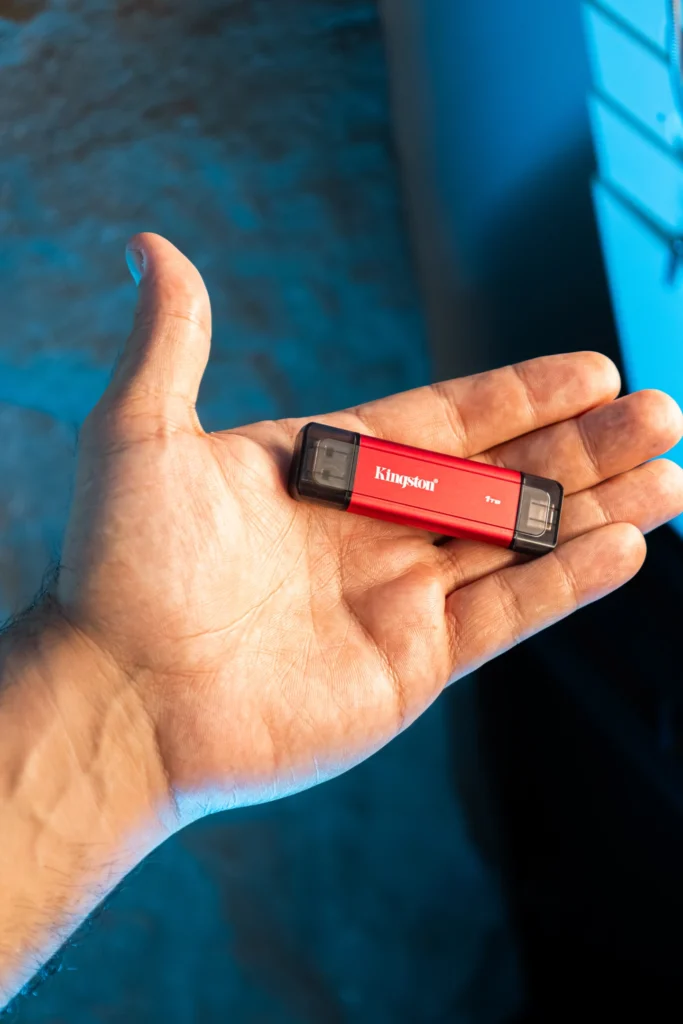
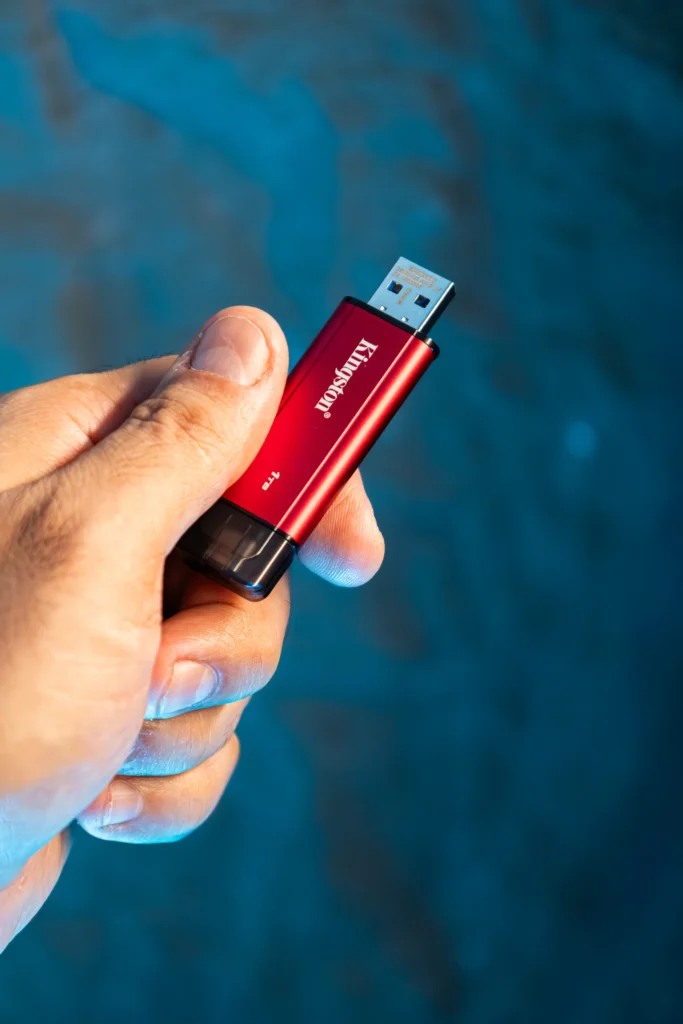
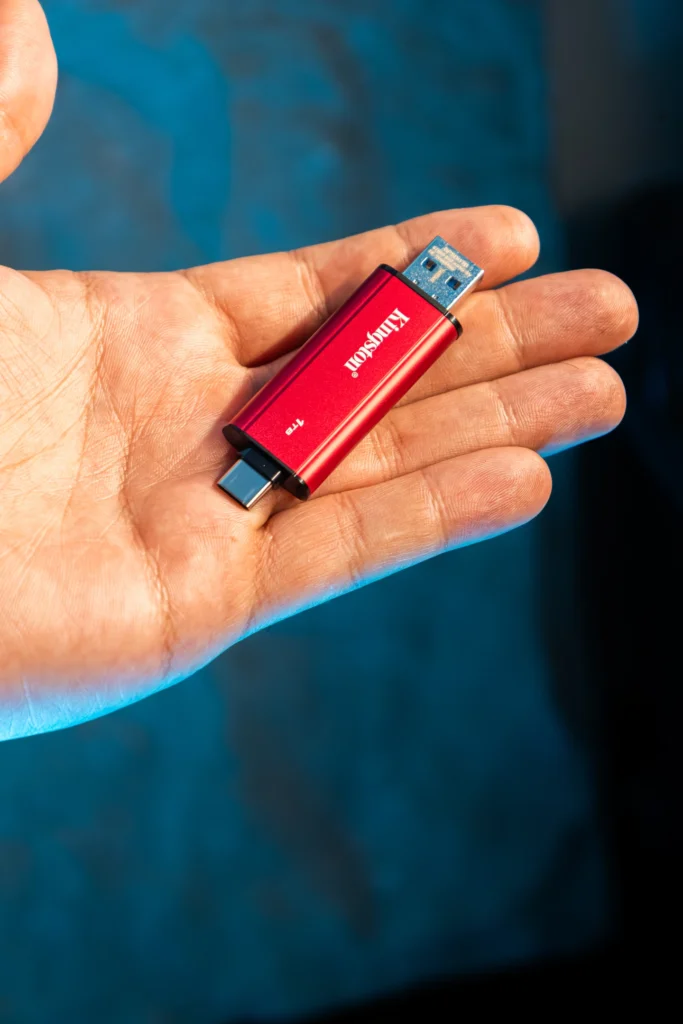
The Kingston Dual Portable SSD closely resembles an oversized flash drive rather than a conventional external SSD. It features a metal casing with a clean, understated finish and houses two integrated connectors: USB Type-A and USB Type-C, both supporting USB 3.2 Gen 2 speeds. This dual-connector design allows it to work seamlessly with older PCs, modern laptops, tablets, and even smartphones without requiring adapters or cables.
The drive is extremely lightweight at just 13 grams and small enough to fit easily in a pocket. Both connectors are protected by removable plastic caps. While these caps help keep dust and debris out, they are not attached to the body, making them easy to misplace. There is also no lanyard loop or retention mechanism, which would have improved portability.
Performance and Real-World Use
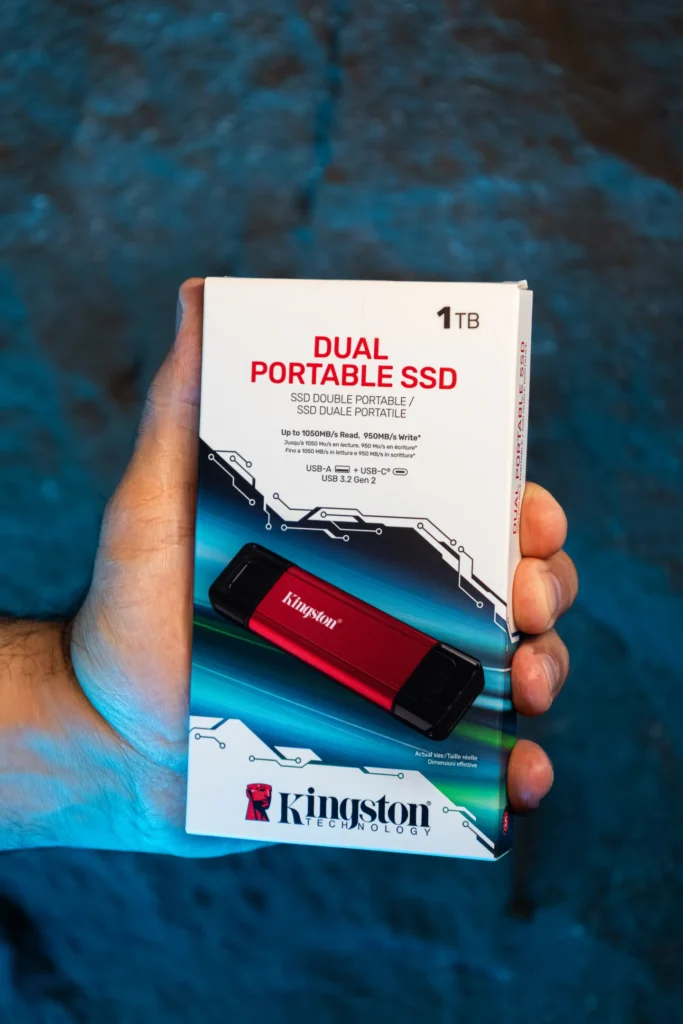
Kingston rates the Dual Portable SSD for read speeds of up to 1,050 MB/s and write speeds of up to 950 MB/s. In real-world use, performance closely matches these figures once the operating system fully negotiates the connection protocol. Initial transfers may appear slow for a few seconds, particularly on macOS when using the preformatted exFAT file system, but speeds ramp up quickly.
File transfers involving multi-gigabyte videos, game installations, and large media folders complete rapidly once stabilized. The drive is fast enough for tasks such as video playback, large backups, and moving games or project files between systems. It can also support video editing workflows, provided file sizes remain within its cache limits.
Internally, the drive uses QLC NAND with an SLC cache of approximately 200 GB. When transferring files larger than this cache in a single operation, write speeds drop significantly. For most users, this behavior will rarely be noticeable, as very large continuous transfers are uncommon in everyday use.
Thermals
During extended heavy transfers, the drive does warm up noticeably. In stress testing, temperatures can climb into the low 70°C range. While this does not impact short-term performance or usability, it reinforces that the Dual Portable SSD is best suited for file transfers rather than sustained workloads. The good news is that it cools down quickly once unplugged.
Compatibility and Format
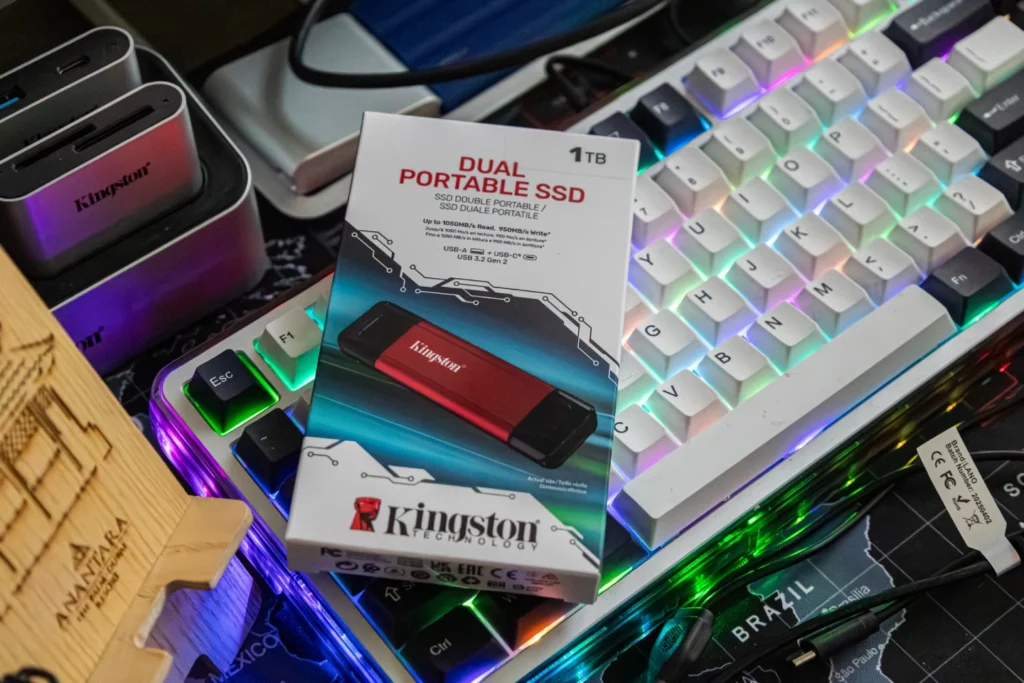
Out of the box, the drive comes formatted in exFAT, making it compatible with Windows, macOS, Linux, and mobile devices. Users who plan to use it exclusively with Apple devices may see faster and more consistent performance by reformatting it to APFS. However, keeping exFAT ensures the widest compatibility, which aligns with the product’s cross-platform intent.
Use Case and Value
Kingston positions the Dual Portable SSD as a high-performance alternative to standard USB flash drives, and this is where it makes the most sense. Compared to typical flash drives, it offers dramatically higher speeds and significantly more capacity, while remaining competitively priced. The 1TB model is often priced close to high-capacity flash drives, making the SSD upgrade a logical choice.
That said, its plug-style form factor does come with trade-offs. The width of the drive can block adjacent ports on some laptops, and unlike cable-based SSDs, damage to the connector would be difficult to repair. These are considerations worth keeping in mind depending on how and where the drive will be used.
Verdict
The Kingston Dual Portable SSD is a compact, fast, and versatile storage solution that excels as a premium replacement for traditional USB flash drives. Its dual USB-A and USB-C connectors, strong performance, and generous capacity make it well suited for professionals, students, and content creators who frequently move large files between devices. While it is not designed for sustained heavy workloads or continuous use as a primary external drive, it delivers excellent value for its intended purpose.