
RODE LPA1 Launches the LPA1 Professional Low-Profile Studio Arm
RØDE LPA1 is a low-profile studio arm with a 2kg payload, 750mm reach, integrated cable management and universal mounting support.
ROG Rapture GT-BN98 series is now available for preorder at Gamestreet Dubai and Store974, with availability expanding to more retailers soon
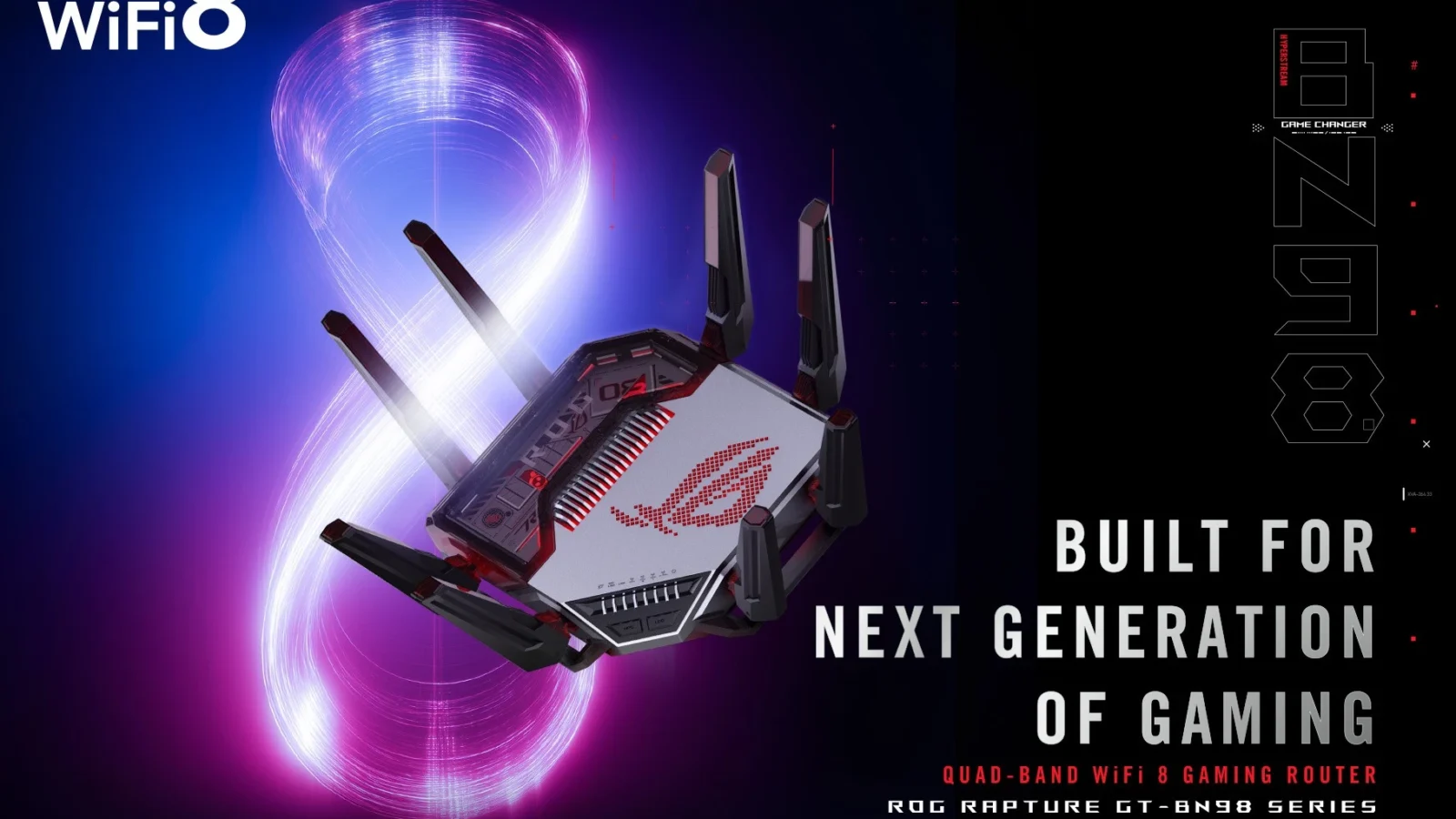
ASUS today demonstrated its lead in the next-gen networking era, with the announcement of preorders opening for the ROG Rapture GT-BN98 series in the GCC region. The ROG Rapture GT-BN98 is the world’s only quad-band WiFi 8 router currently available to buy from retail stores. Also launching in October is the ASUS ZenWiFi BN12 WiFi 8 router — a first-to-market dedicated WiFi 8 Mesh ecosystem designed for high-capacity homes and connected households.
Built on the WiFi 8 architectural framework, the ROG Rapture GT-BN98 series brings the benefits of next-generation networking to current and future client devices. ROG engineer testing indicates that the router can deliver measurable performance gains when paired with existing WiFi 7 client devices, helping users improve network performance before WiFi 8 devices become widely available.
Simulations also indicate that WiFi 8 features such as UEQM (Unequal Modulation) and NPCA (Non-Primary Channel Access) can help improve connection stability and reduce the impact of interference respectively as compatible client devices arrive. The result is a network platform designed to adapt to real-world congestion and support evolving connected-home demands.
Cementing ROG’s technical dominance, the ROG Rapture GT-BN98 series features two models, the GT-BN98 Pro (BN30000) and the GT-BN98 (BN25000), with quad-band WiFi 8 designs that deliver total wireless throughput of up to 30,000 Mbps. A 2.6GHz quad-core processor and 2GB of RAM support demanding networking workloads, while two 10Gbps ports and four 2.5Gbps LAN ports provide flexible multi-gigabit wired connectivity.
The router combines a 16-antenna architecture into eight high-performance external antennas through a 3D structural design. An advanced thermal infrastructure supports sustained performance, capacity, and coverage across the network.
Designed for large homes and connected households, the ASUS ZenWiFi BN12 will be the world’s first 12-stream tri-band WiFi 8 Mesh system. It is scheduled for consumer availability in October. Its 2x LDPC wall-penetration technology supports coverage of up to 7,000 square feet, while dual 10Gbps ports enable high-speed wired backhaul between nodes.
ASUS ZenWiFi BN12 also includes subscription-free ASUS AiProtection Pro and customizable Parental Controls. These features help support network security and screen-time management without recurring fees. ASUS AiMesh interoperability also enables integration with compatible existing ASUS setups.
The ASUS WiFi 8 ecosystem is engineered for worldwide operation, with regional regulatory compliance, frequency optimization, and a global supply chain supporting the rollout. Localization-ready software and global customer support are designed to help users access validated, store-ready hardware across major markets.
The ASUS WiFi 8 lineup is designed to give users a path to upgrade through a router and mesh ecosystem that works across current and future network environments.
The ASUS ROG Rapture GT-BN98 Pro (BN30000) is available for preorder at select retailers in the GCC, with more retailers opening preorders through October. The ASUS ROG Rapture GT-BN98 (BN25000) will be available in other regions starting in October. The ASUS ZenWiFi BN12 and the wider ASUS WiFi 8 lineup are scheduled for worldwide availability starting in October. Please contact your local ASUS representative for further information.


RØDE LPA1 is a low-profile studio arm with a 2kg payload, 750mm reach, integrated cable management and universal mounting support.

Ring Familiar Faces is now rolling out in the UAE, allowing users to identify known visitors and receive personalized notifications from compatible Ring devices.

Ring TAKE encryption announced as its future default, giving users greater control over video encryption while retaining access to cloud-based security features.
 GDGTME Team