
TOZO NC9 Pro Review: Feature-Rich Wireless Earbuds with a Touchscreen Case
TOZO NC9 Pro review: We test its adaptive ANC, LDAC audio, touchscreen case, Bluetooth 6.0, sound quality, battery life and everyday performance.
The Stardust offers good comfort, smooth treble and useful instrument separation for its price. However, its occasionally shouty upper midrange, restrained bass impact and inconsistent soundstage limit its appeal as an all-rounder.

Kiwi Ears Stardust Review: The Kiwi Ears Stardust is an affordable hybrid in-ear monitor (IEM) designed for listeners who want detailed audio without an aggressive treble presentation. Priced at around US$77, it combines one 10mm dynamic driver with four balanced armature drivers in a compact resin shell. Its tuning aims to balance bass impact, vocal clarity and smooth high frequencies.
However, the Stardust has a distinctive midrange presentation that may not suit everyone. While its treble is comfortable for extended listening and its instrument separation can be impressive, the forward upper midrange can make some vocals and instruments sound sharper than intended.
We spent time evaluating its design, comfort, sound quality and suitability for everyday listening and gaming to determine whether the Stardust is worth considering in the competitive budget IEM segment.
The Stardust’s main feature is its hybrid driver arrangement, combining a dynamic driver for low frequencies with four balanced armature drivers for the remaining frequency range. The design is intended to provide a combination of bass response, detail retrieval and separation.
| Specification | Details |
|---|---|
| Driver configuration | 1 dynamic driver + 4 balanced armature drivers |
| Dynamic driver | 10mm PU+LCP composite diaphragm |
| Frequency response | 20Hz–40kHz |
| Impedance | 13Ω |
| Sensitivity | 107 ±3dB |
| Rated power | 5mW |
| Cable length | 1.2m |
| Cable connection | Detachable two-pin |
| Source connector options | 3.5mm, 3.5mm with microphone, USB-C with microphone |
| Price | Approximately US$77 |
The low impedance and sensitivity rating make the Stardust relatively easy to drive from compatible phones, laptops and portable audio devices. A dedicated amplifier is not essential for typical listening levels, although the output quality and volume capability will depend on the source.
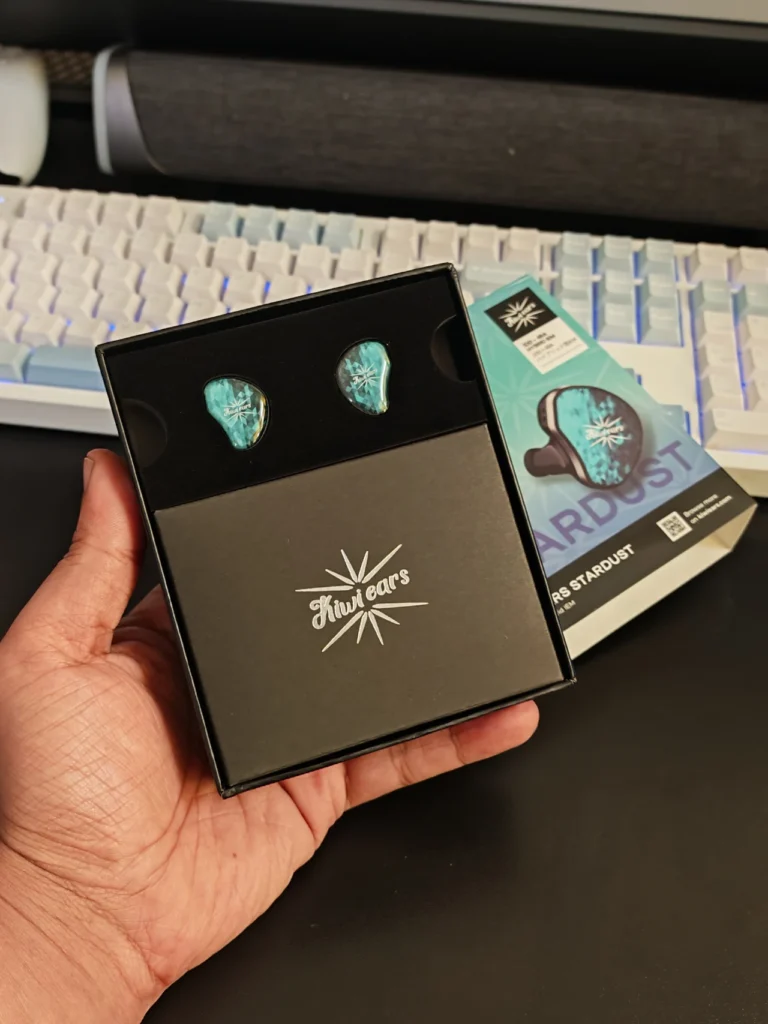
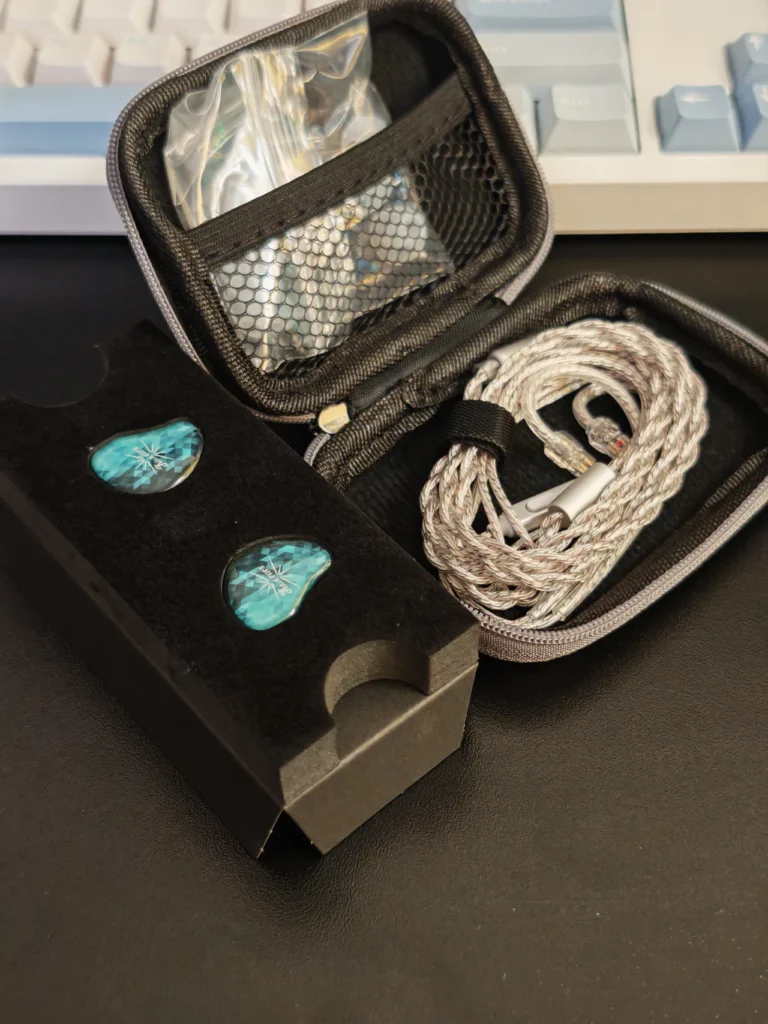
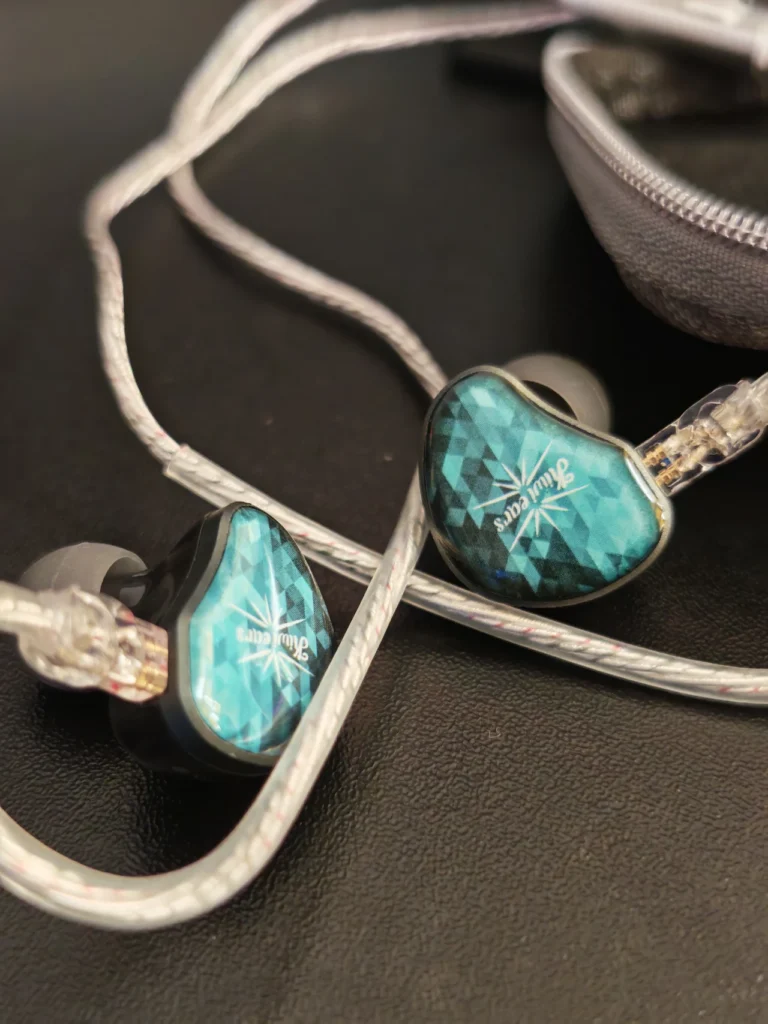
The Kiwi Ears Stardust uses lightweight resin shells with aluminium alloy faceplate detailing. Its blue finish and geometric pattern give it a distinctive appearance, although the printed design does not look as refined as the product imagery might suggest. The faceplate remains a matter of personal preference, but the overall construction is practical rather than particularly premium.
The shells are relatively compact for a five-driver hybrid design. Their ergonomic shape sits comfortably in the ears, and we experienced no significant pressure points during extended listening sessions. The nozzle is slightly substantial, but the fit did not feel intrusive during our testing.
Two vents are positioned on the shells, while the standard two-pin connectors allow the cable to be replaced if necessary. The lightweight construction also helps keep the earpieces comfortable over longer periods. Passive isolation is adequate for everyday use, although the results depend on the ear tips and the quality of the seal. Finding the right tips is important not only for comfort but also for achieving consistent bass response and overall tonal balance.
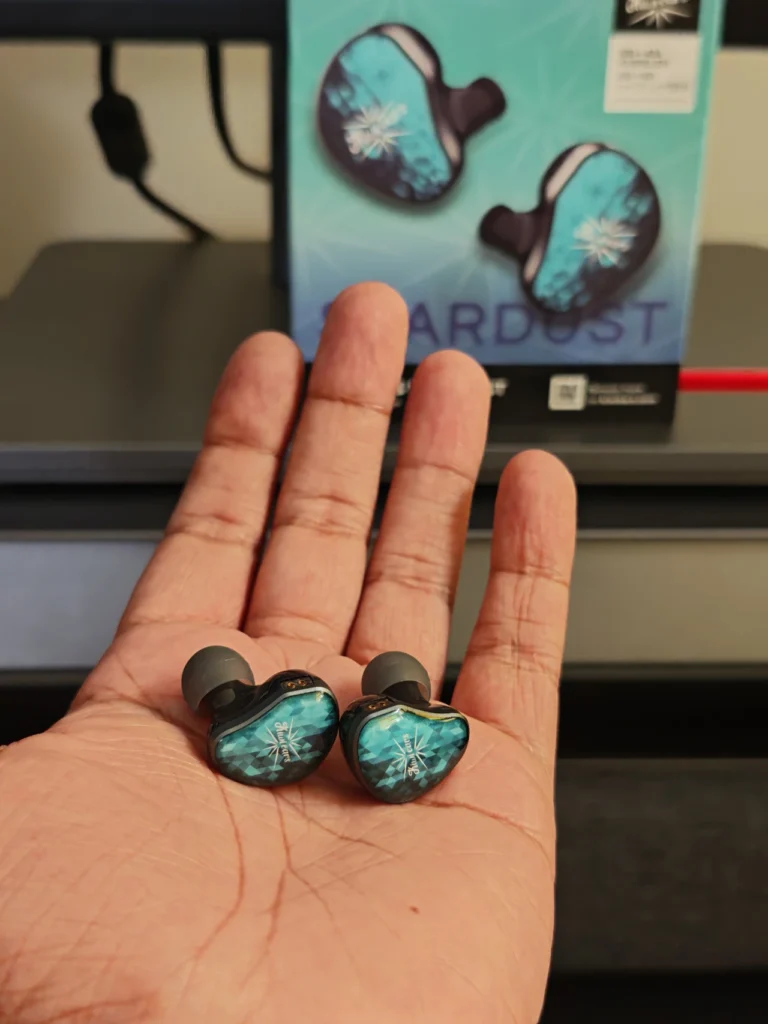

Overall, the Stardust gets the fundamentals right. Its lightweight shells and comfortable fit are more practical strengths than its faceplate design.
The package includes the IEMs, a detachable cable, silicone ear tips and documentation. The supplied ear tips offer different bore designs, allowing users to experiment with fit and sound presentation. The stock cable has a relatively slim construction but feels suitable for the price. It is flexible, easy to manage and does not tangle excessively. The metal fittings add a little refinement, although the cable is not especially substantial.
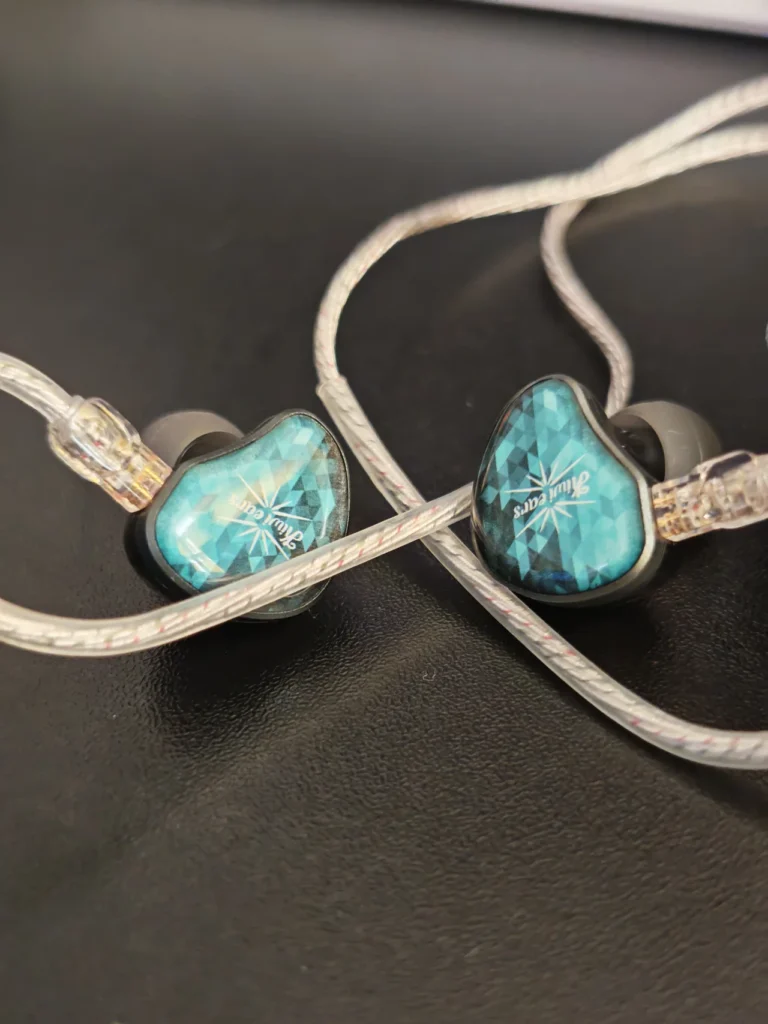
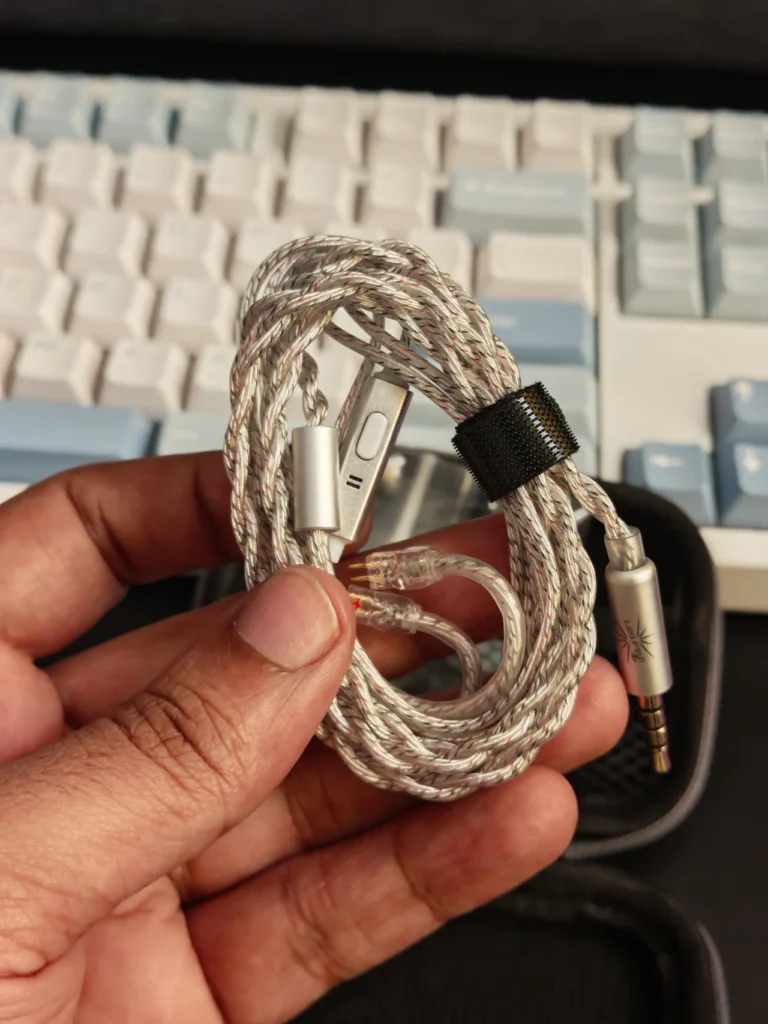
Our review sample uses a standard 3.5mm connector. Kiwi Ears also offers configurations with an inline microphone and a USB-C connection, depending on the selected version. We recommend experimenting with different ear tips before judging the sound. Wider-bore tips can make the presentation feel more open, while other tip designs may emphasise bass or alter the perceived balance of the midrange and treble. These changes are subtle and depend on the listener’s ear shape and seal.
The Stardust has a sound signature that combines a controlled low end with a forward upper midrange and smooth treble. Its overall character sits between warm-neutral and vocal-focused, although listeners may perceive it differently depending on their preferred tuning and ear tips.
One of its strengths is the separation between instruments. Busy recordings can retain a clear sense of organisation, and individual elements are often easy to follow. However, separation alone does not guarantee natural timbre, and the Stardust’s midrange tuning can occasionally make certain instruments sound less convincing.

The Stardust emphasises sub-bass more than mid-bass. Low-frequency effects have a noticeable rumble, while bass notes generally start and stop quickly. This gives the presentation a controlled character rather than the sustained, heavy impact associated with bass-focused IEMs.
Kick drums and bass guitars have reasonable definition, and electronic music benefits from the extension into the lower frequencies. The bass remains relatively tidy across many recordings, although its weight can feel restrained when a track relies on strong mid-bass impact.
Listeners who prefer deep sub-bass without excessive mid-bass warmth may appreciate this approach. However, dedicated bass enthusiasts may want more physical impact and a fuller low-frequency presentation. There can also be occasional bass bleed in recordings with particularly heavy low-frequency content, but this was not a consistent issue across the music we considered.
The midrange is the most distinctive and potentially divisive aspect of the Stardust. Vocals are prominent in the mix, and the upper midrange brings forward details in voices, guitars and percussion. This can work well with pop music and recordings where vocal presence is important. The separation between individual elements also helps prevent some complex passages from becoming congested.
However, the upper midrange can sound too forward on certain tracks. High-pitched vocals, snare drums and guitars may become shouty, particularly in recordings that already have an energetic presentation. This can affect the perceived naturalness of voices and instruments.
The lower midrange is comparatively restrained, which limits some of the body and warmth that fuller-sounding IEMs provide. As a result, the Stardust can sound clear and well-separated without always reproducing the natural weight of acoustic instruments. This is where personal preference becomes important. Listeners who enjoy forward vocals may appreciate the presentation, while those who prioritise natural timbre and a relaxed midrange may find it less convincing.
The treble is one of the Stardust’s more consistent strengths. It is generally smooth, with enough detail to preserve the character of cymbals, hi-hats and other high-frequency elements without making them persistently sharp. Listeners sensitive to harsh treble or sibilance may find the tuning comfortable. Vocals with pronounced sibilant sounds are generally less aggressive than they can be on brighter IEMs.
The trade-off is that the treble does not always provide the sparkle and air that some listeners prefer. High-frequency details remain audible, but the overall presentation can feel restrained rather than particularly bright or energetic. Wider-bore ear tips may make the sound seem more open, although they will not fundamentally change the Stardust’s tuning. Listeners looking for prominent upper-frequency energy should consider this limitation before purchasing.
The Stardust offers useful instrument separation and generally precise positional cues. Individual sounds are easy to distinguish in many recordings, and its presentation can remain organised when several instruments play simultaneously.
Its soundstage, however, is less consistent as a strength. Depending on the recording and listener, it can sound moderately spacious or relatively intimate. It does not reliably produce the expansive sense of height and depth found in some competing IEMs.
Imaging is more convincing than the overall sense of space. The Stardust can communicate where sounds are positioned within the mix, although the forward midrange may draw attention away from quieter details. For music, this combination works well when clarity and separation matter more than an expansive presentation. Listeners who prioritise a large, immersive soundstage may want to consider alternatives.
The Stardust is suitable for casual gaming, particularly when clear positional cues and a comfortable fit are priorities. Its ability to separate sounds can help distinguish effects and environmental audio in busy scenes. Horror games also benefit from its low-frequency extension, which gives atmospheric rumbles and low-frequency effects a noticeable presence. The smooth treble can make sudden high-frequency effects less fatiguing during longer sessions.
For competitive first-person shooters, the results are more mixed. Positional information is useful, but the restrained upper-frequency presentation may not provide the sense of openness some players prefer when identifying distant footsteps and subtle environmental cues.
Ear tips can influence the perceived balance, but they will not turn the Stardust into a dedicated competitive gaming IEM. It is better suited to players who want one pair of earphones for both gaming and music rather than a model focused exclusively on competitive positioning.
Comfort is one of the Stardust’s strongest qualities. The compact, lightweight shells fit securely without creating noticeable pressure points during extended sessions. The detachable cable also makes replacement straightforward if it becomes damaged or if users prefer a different cable arrangement.
Isolation is adequate for routine listening, although it depends on the ear tips and fit. As with most wired IEMs, there is no active noise cancellation, so users should not expect the same isolation experience as sealed headphones with electronic noise reduction.
The Stardust’s easy-to-drive specifications also make it convenient for everyday use with compatible audio sources. Buyers selecting the USB-C version should confirm that it suits their device and connection requirements.

At approximately US$77, the Kiwi Ears Stardust enters a competitive segment where tuning and execution matter as much as driver count. Its five-driver hybrid configuration is appealing on paper, but the number of drivers does not automatically translate into better sound.
The strongest reasons to consider the Stardust are its comfortable fit, smooth treble, useful instrument separation and controlled bass response. Its presentation can work well for listeners who prefer clear vocals without excessive high-frequency sharpness. The main compromise is the midrange. The forward upper midrange can make some recordings sound shouty, while the restrained lower midrange limits body and warmth. The soundstage is also not consistently expansive.
These characteristics make the Stardust a more specialised choice than a universally balanced all-rounder. Before purchasing, listeners should consider whether they prefer forward vocals and relaxed treble or a fuller midrange with a more conventional tonal balance.
The Kiwi Ears Stardust is a comfortable and technically capable budget hybrid IEM with a distinctive sound signature. Its smooth treble, controlled bass and good instrument separation make it worth considering for listeners who prefer a relaxed high-frequency presentation. However, the forward upper midrange is difficult to overlook. It can make vocals and instruments sound shouty on certain recordings, while the restrained lower midrange reduces their body. The soundstage is also competent rather than especially immersive.
We recommend the Stardust to listeners who value comfort, separation and smooth treble more than powerful bass or consistently natural midrange reproduction. Those who are sensitive to shouty vocals or want a fuller, more balanced presentation should compare it with alternatives before making a decision. At around US$77, the Stardust offers a specific sound rather than a safe recommendation for everyone. Whether it is the right choice depends largely on how its midrange tuning matches your listening preferences.
Also Read: Kiwi Ears Forteza Review: Style Meets Sound


TOZO NC9 Pro review: We test its adaptive ANC, LDAC audio, touchscreen case, Bluetooth 6.0, sound quality, battery life and everyday performance.
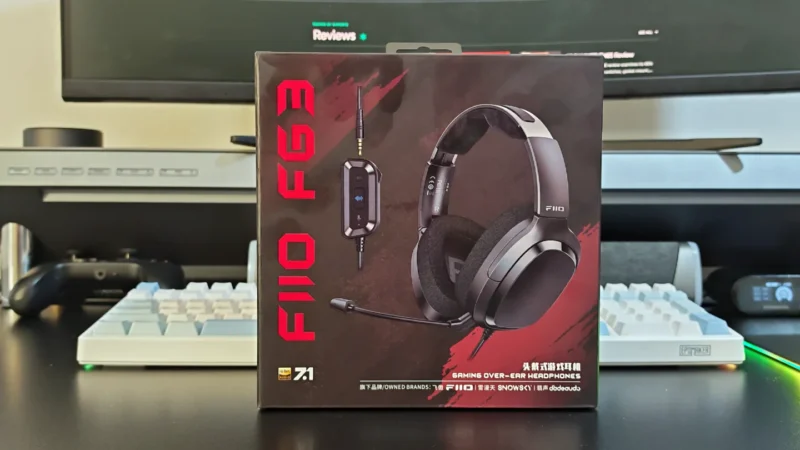
FiiO FG3 Review: an interesting first attempt at a gaming headset from a company with a strong background in personal audio.
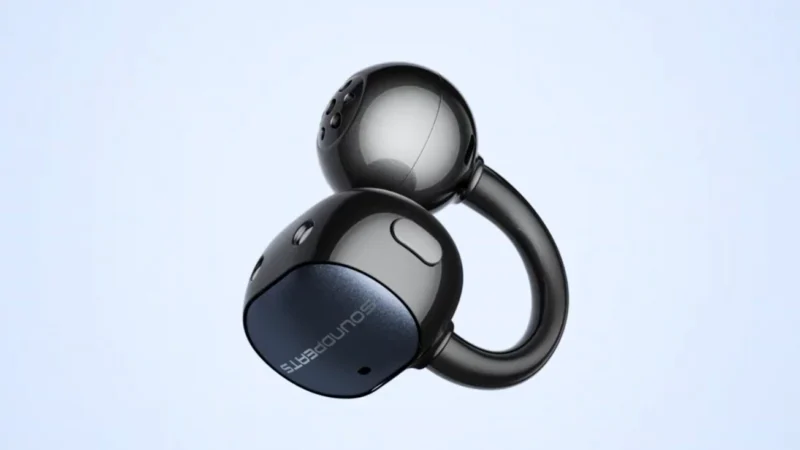
Our SoundPEATS POP Clip 2 review covers sound quality, comfort, battery life, LDAC, controls and open-ear performance to see if these $49.99 earbuds are worth buying.
 Joshua James