
EPOMAKER HE65 V2 TMR Review
EPOMAKER HE65 V2 TMR review covering its TMR switches, Rapid Trigger, 8,000Hz polling, hybrid hot-swap PCB, wireless connectivity and typing experience.
The Redragon EISA K768 is a capable compact mechanical keyboard for users who need a number pad, wireless connectivity and a broad range of customisation options without spending heavily.
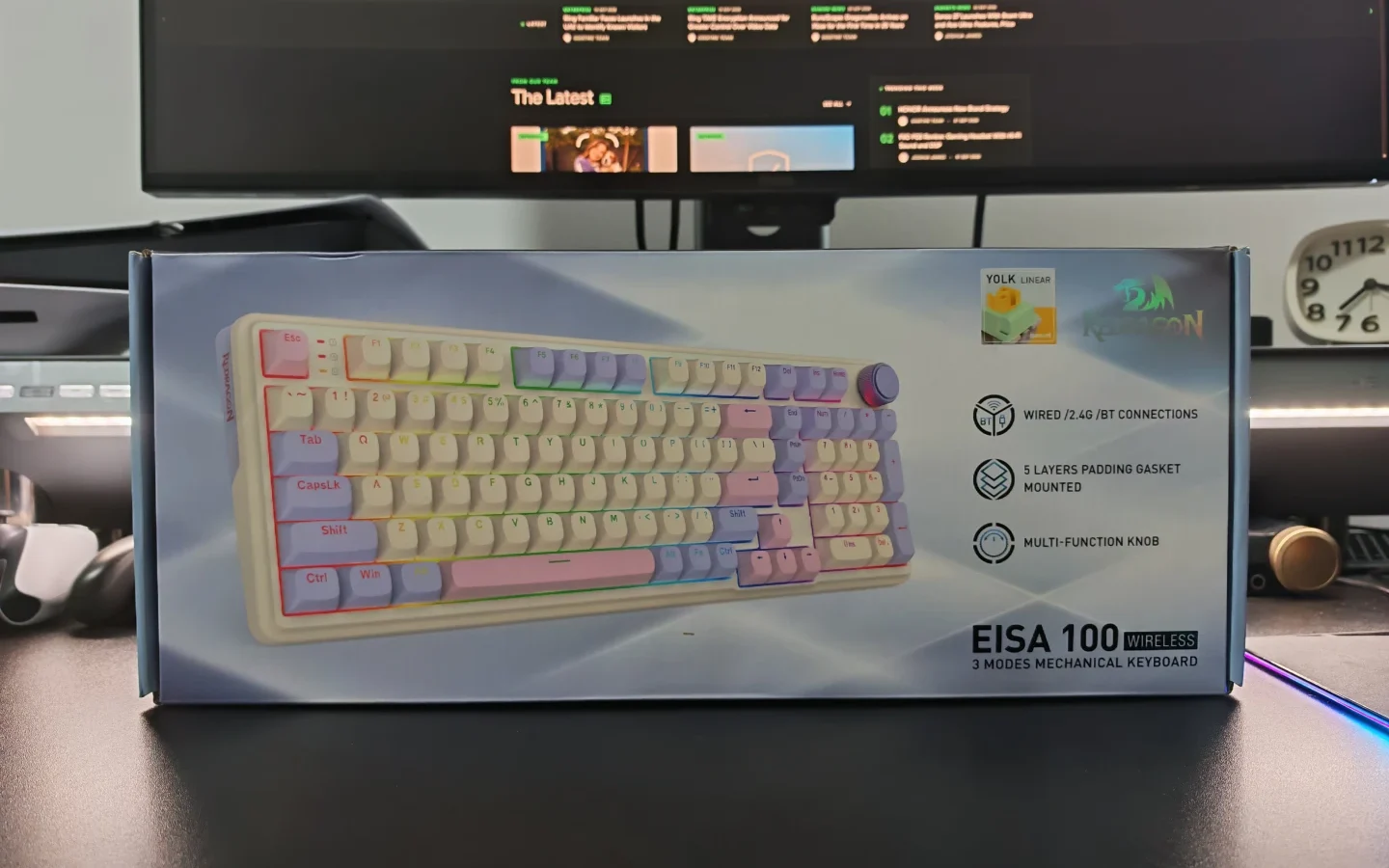
The Redragon EISA K768 is a compact mechanical keyboard designed for users who want the functionality of a full-size layout without taking up as much desk space. It retains a dedicated number pad while adding tri-mode connectivity, hot-swappable switches, RGB lighting and an 8,000mAh battery. A gasket-mounted structure and multiple layers of internal dampening are intended to improve the typing experience, while a multifunction knob provides quick access to volume and lighting controls.
Priced at around US$65, the EISA K768 sits in an accessible segment of the wireless mechanical keyboard market. Its combination of practical features and distinctive colour options makes it worth considering, although its plastic construction, tall keycaps and some acoustic inconsistencies are worth keeping in mind.
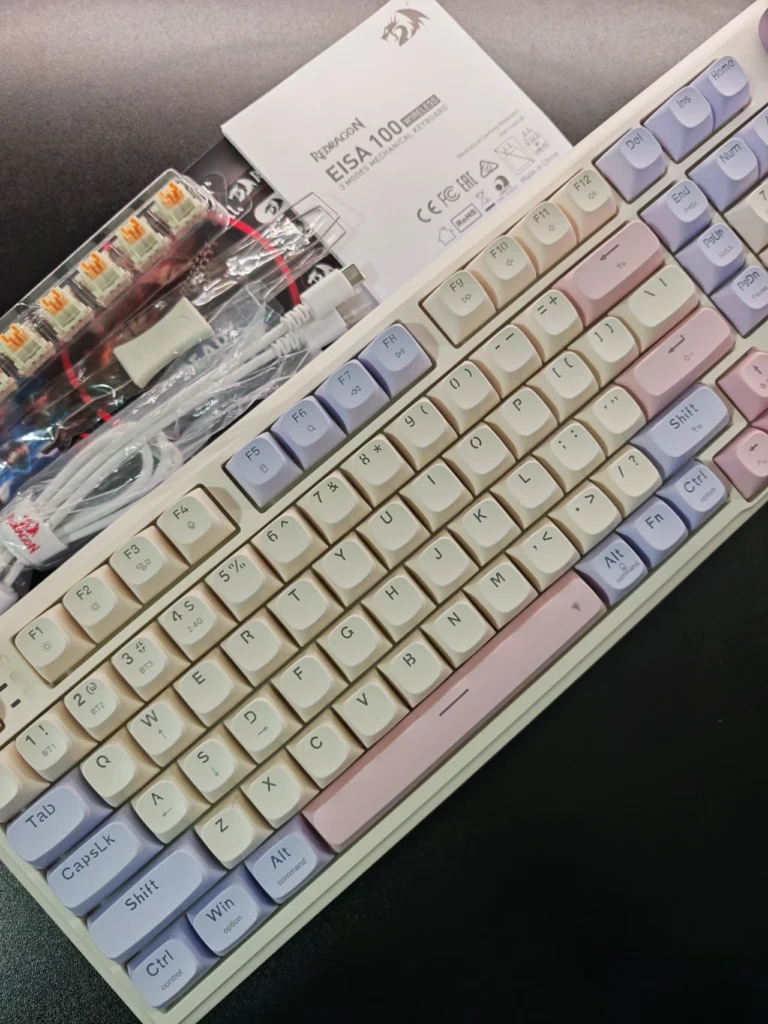
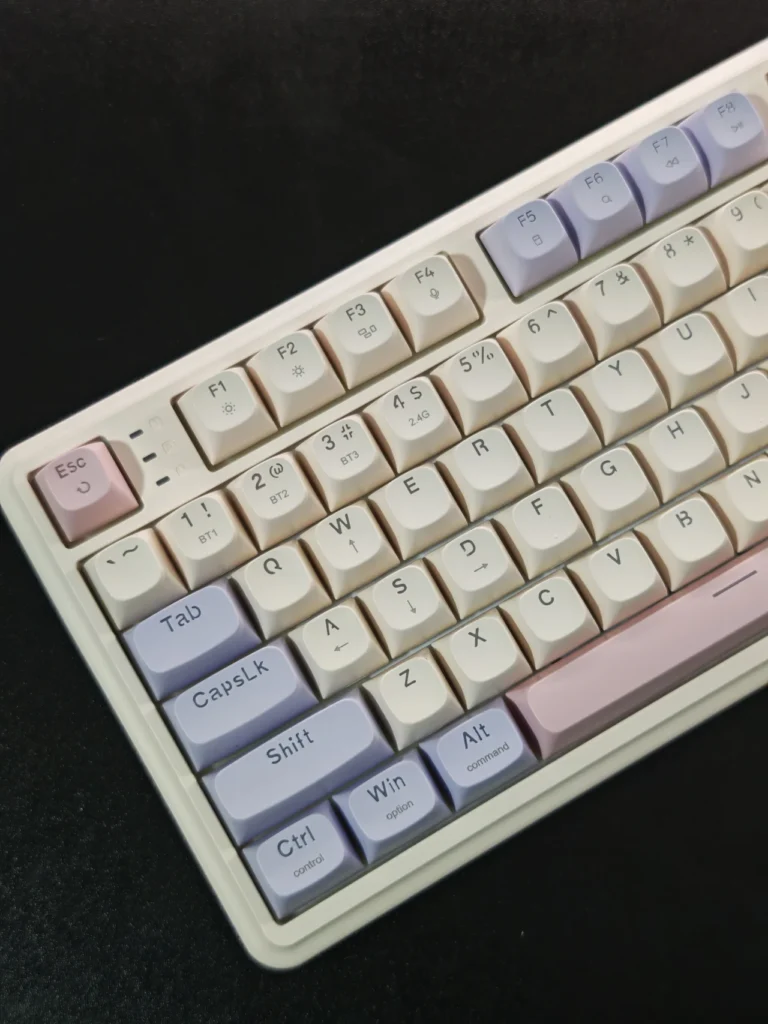
The EISA K768 uses a 100-key layout that preserves the number pad and most of the functionality expected from a full-size keyboard in a more compact footprint. This arrangement is particularly useful for office work, spreadsheets and data entry, where a dedicated number pad remains important. It also leaves more room for mouse movement than a conventional full-size keyboard.
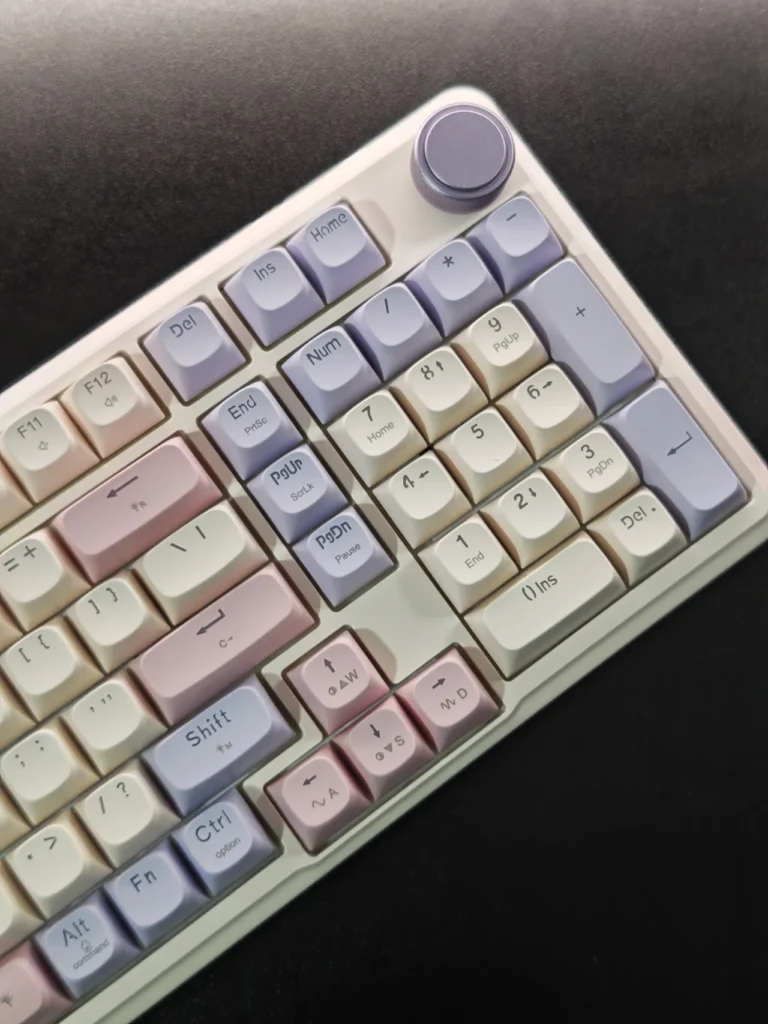
Redragon offers the keyboard in colour schemes such as Retro Cocoa and Lilac Land, with additional colour availability depending on the market. The contrasting keycaps and rounded keycap profile give the board a distinctive appearance. Rather than following the understated design of many office keyboards, it is aimed at users who want their peripherals to complement their desk setup.
The chassis is made from plastic, but the overall construction feels solid. There is some hollowness in parts of the case, although the keyboard does not feel particularly flimsy. The adjustable feet provide different typing angles, and rubber pads underneath help keep it in place. However, the feet could hold more securely when the keyboard is pushed across a desk.
The multifunction knob is a notable design feature. Its metallic construction, textured surface and tactile clicks give it a more premium feel than the surrounding plastic chassis. It can be rotated or pressed to control supported functions without requiring additional dedicated buttons.
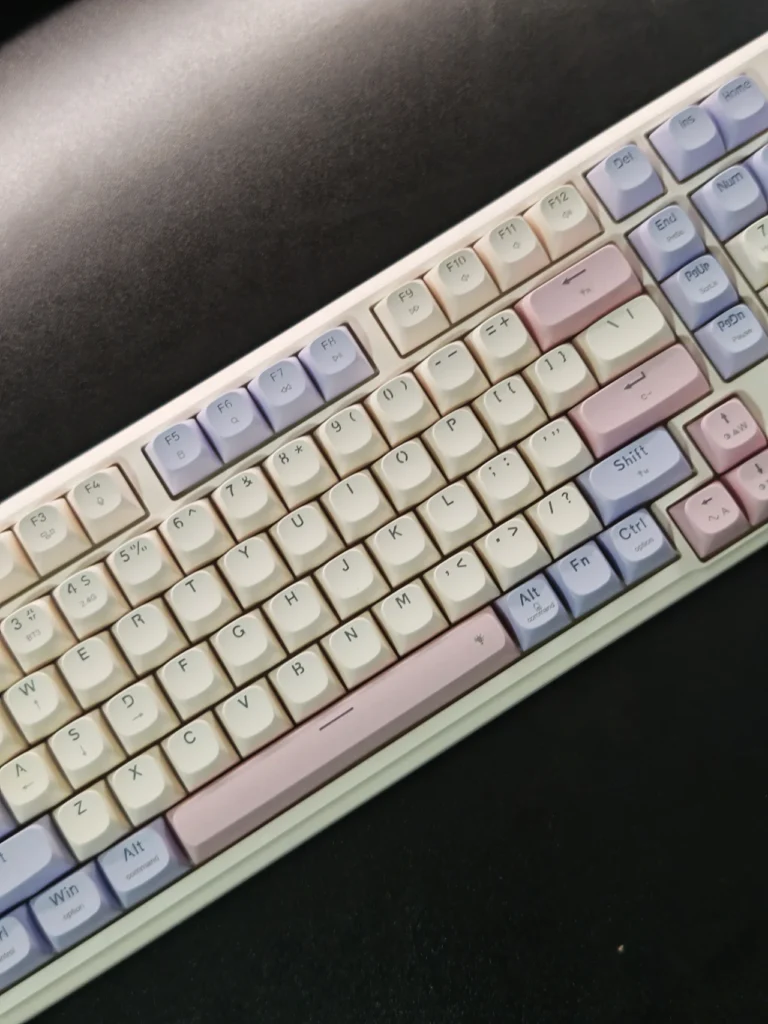
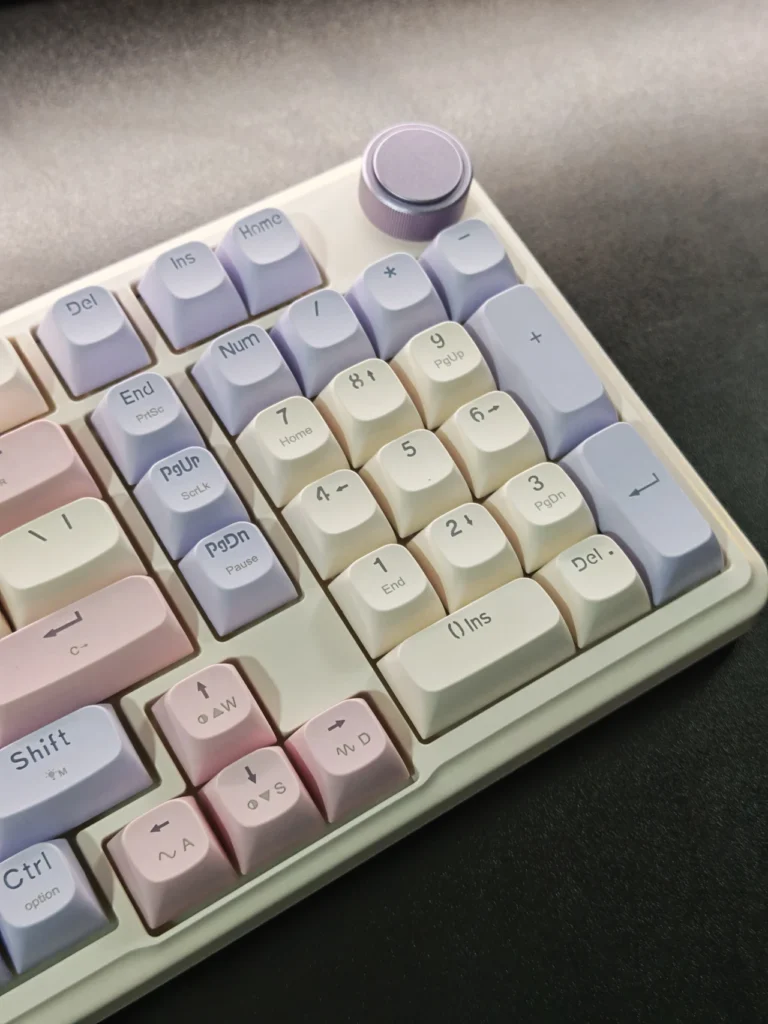
The keycaps are made from double-shot PBT, with legends that allow the RGB lighting to shine through. PBT generally resists the glossy wear associated with many ABS keycaps, making it a practical choice for a keyboard intended for daily use. The secondary function labels are useful, too, although the number of markings can make some areas of the keyboard look busy.
The tall keycap profile may also require an adjustment period for users accustomed to lower-profile or Cherry-style keycaps. The layout itself is easy to understand, but the compact spacing around certain keys can take some getting used to.
The EISA K768 supports three connection modes: USB-C wired, 2.4GHz wireless and Bluetooth. This flexibility allows it to work with a desktop PC, laptop or compatible Bluetooth device without requiring a separate keyboard for each setup.
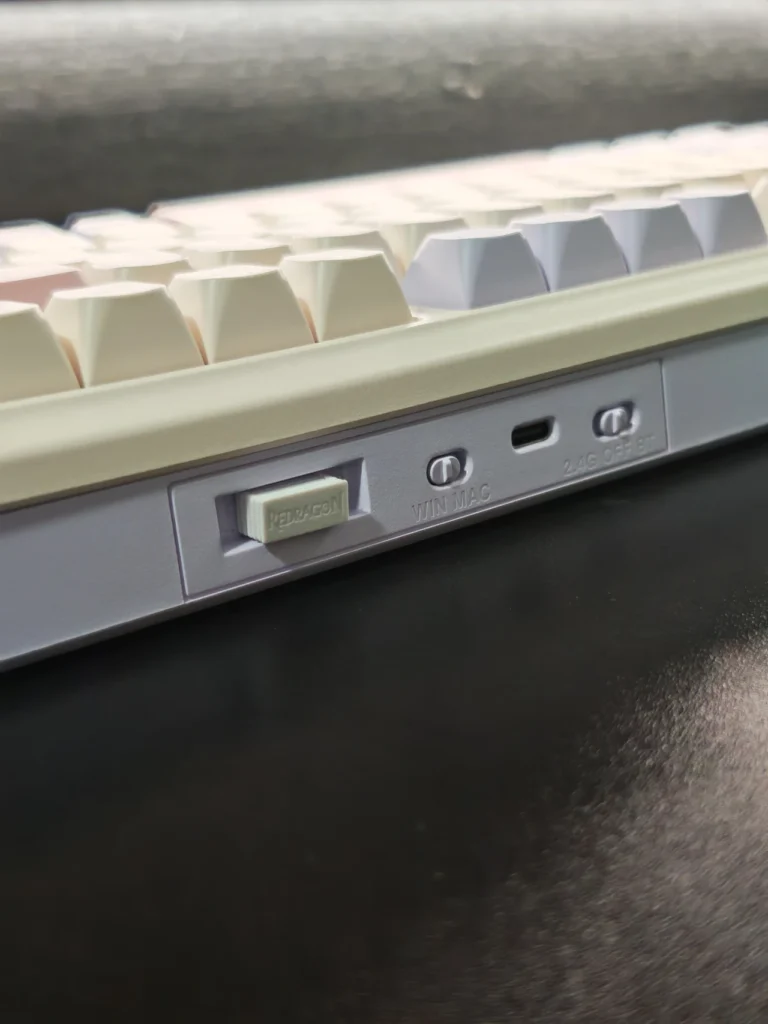
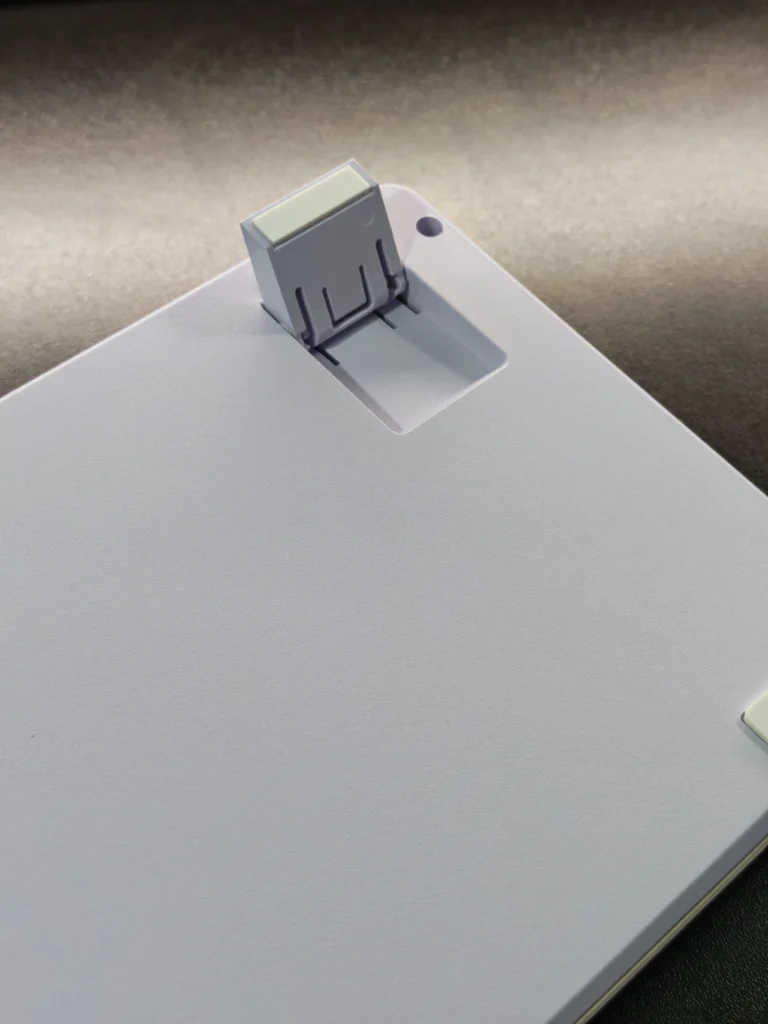
The included 2.4GHz receiver is stored in a dedicated compartment on the keyboard, reducing the risk of losing it when travelling. Bluetooth supports multiple device profiles, making it possible to switch between paired devices. Wired mode remains useful for charging and for users who prefer a direct connection.
The keyboard also supports Windows and macOS layouts, with relevant secondary labels printed on the keycaps. However, users who rely on advanced remapping or lighting customisation on macOS should check software compatibility before purchasing, as the supplied software experience is primarily geared towards Windows.
One of the keyboard’s most useful features is its multifunction control knob. In media mode, it adjusts system volume and can mute or unmute audio when pressed. A long press switches it to lighting control, allowing users to adjust RGB brightness and cycle through lighting effects.
The knob makes these functions accessible without navigating software menus. However, there is a small usability limitation: when the keyboard enters sleep mode, rotating the knob may not wake it. A key press is required first, which can be inconvenient when adjusting volume during a film or video.
The EISA K768 also supports RGB lighting, with illuminated legends that remain visible in darker environments. Brightness, speed and lighting effects can be adjusted using keyboard shortcuts or the companion software. The north-facing LEDs help illuminate the key legends, although switch and keycap compatibility should be considered by anyone planning extensive customisation.
The EISA K768 uses Redragon’s custom linear mechanical switches. Their smooth travel is suited to users who prefer consistent key presses without the tactile bump of a tactile switch or the audible click of a clicky switch. The supplied switches are factory-lubricated, although the amount of lubrication and the resulting feel may vary slightly between keys.
The gasket-mounted structure is designed to introduce some flexibility into the typing experience, while the internal dampening layers help reduce unwanted resonance. Redragon lists five layers of padding alongside the gasket design, including foam and a silicone bottom pad.
In practice, the typing sound is not completely muted. The keyboard produces a mixture of clack and deeper mechanical tones, with the space bar contributing a slightly different sound from the main keys. The overall profile remains pleasant, but users looking for a consistently deep, subdued sound may find it less refined than more expensive enthusiast keyboards.
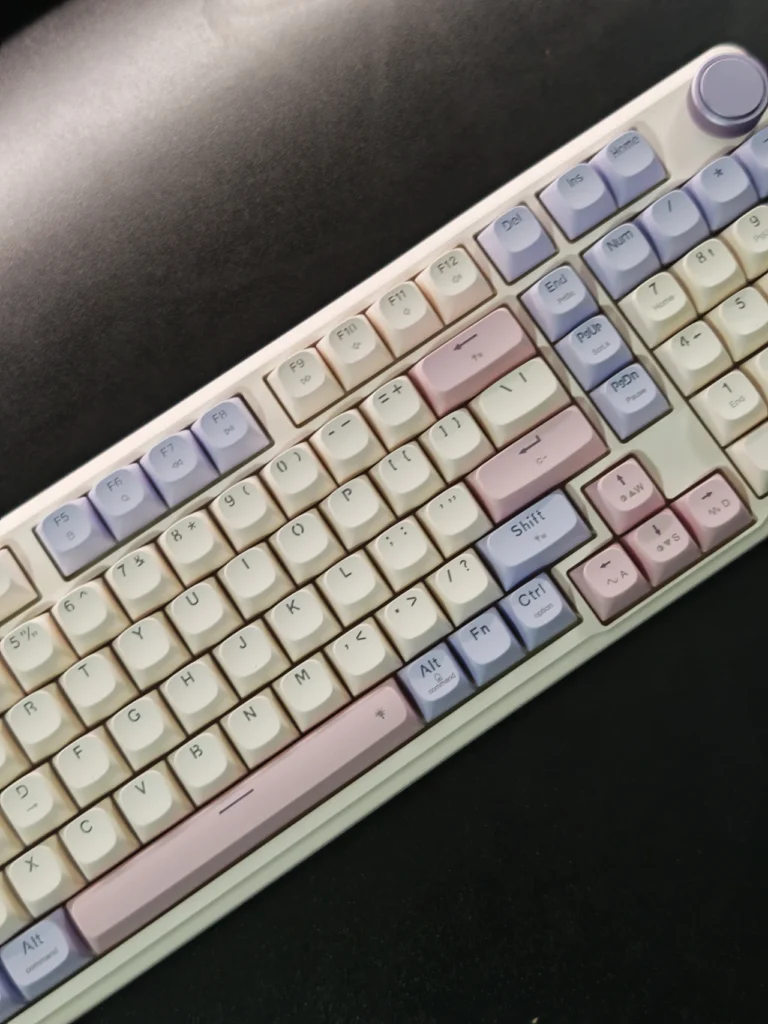
The space bar can sound somewhat hollow, and some stabilisers may exhibit slight movement or rattling. These are relatively common compromises in this price category, but they are worth noting for users who prioritise acoustic consistency.
The hot-swappable PCB is another advantage. It supports compatible three-pin and five-pin mechanical switches, allowing users to replace a faulty switch or experiment with a different typing feel without soldering. This adds useful flexibility and can extend the keyboard’s practical lifespan.
For everyday typing, the linear switches offer a smooth experience, while the compact layout makes efficient use of desk space. However, users who prefer a lower keycap profile or a firmer tactile response should try the keyboard before committing to it.
The EISA K768 is suitable for casual gaming as well as everyday productivity. Its linear switches provide consistent actuation, and the 2.4GHz wireless connection offers an alternative to wired use when a cable-free setup is preferred. Wired mode is available for users who want to keep the connection simple.
The keyboard supports anti-ghosting and N-key rollover, helping it register multiple simultaneous key presses. These features are useful in games that require several inputs at once, although they do not by themselves guarantee a competitive advantage.
The compact layout also leaves additional space for mouse movement, which can be useful in shooters and other games that rely on broad mouse movements. The number pad remains available for games or applications that use additional key bindings.
The keyboard’s strengths are versatility and convenience rather than specialist competitive features. It does not replace a dedicated high-performance gaming keyboard with advanced adjustable actuation, but it offers a practical balance for users who alternate between work and gaming.
The 8,000mAh battery is one of the EISA K768’s main selling points. It is a large capacity for a keyboard in this price range and should reduce the need for frequent charging. Actual runtime will depend on the connection mode, RGB brightness, lighting effects and usage patterns.
The keyboard’s wireless options make it suitable for more than a fixed desktop setup. Bluetooth is convenient for compatible laptops and other devices, while the 2.4GHz receiver offers a dedicated wireless connection. USB-C provides a straightforward option when the battery needs charging or when a wired setup is preferred.
Battery status can be checked through a keyboard shortcut that uses the RGB lighting to indicate the remaining charge. This is a useful alternative to relying entirely on software notifications, although it is less immediate than a dedicated battery display.
The battery’s capacity is reassuring, but users should not interpret it as a guarantee of a particular number of days or weeks between charges. Lighting settings and wireless usage will have a meaningful impact on endurance.
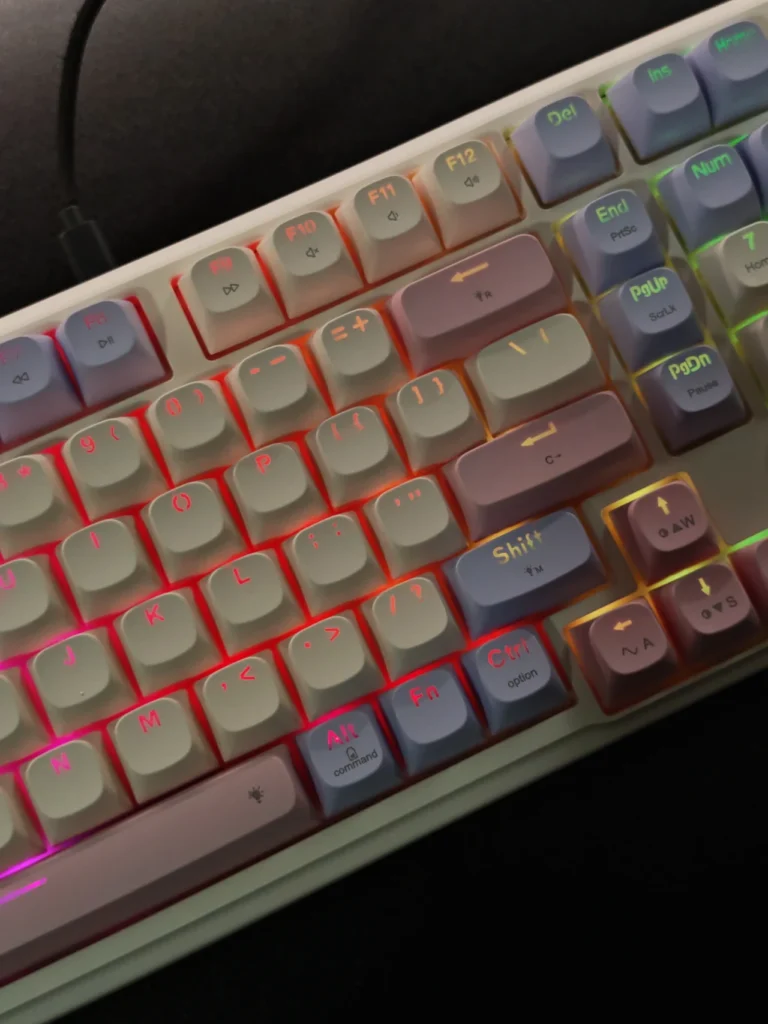
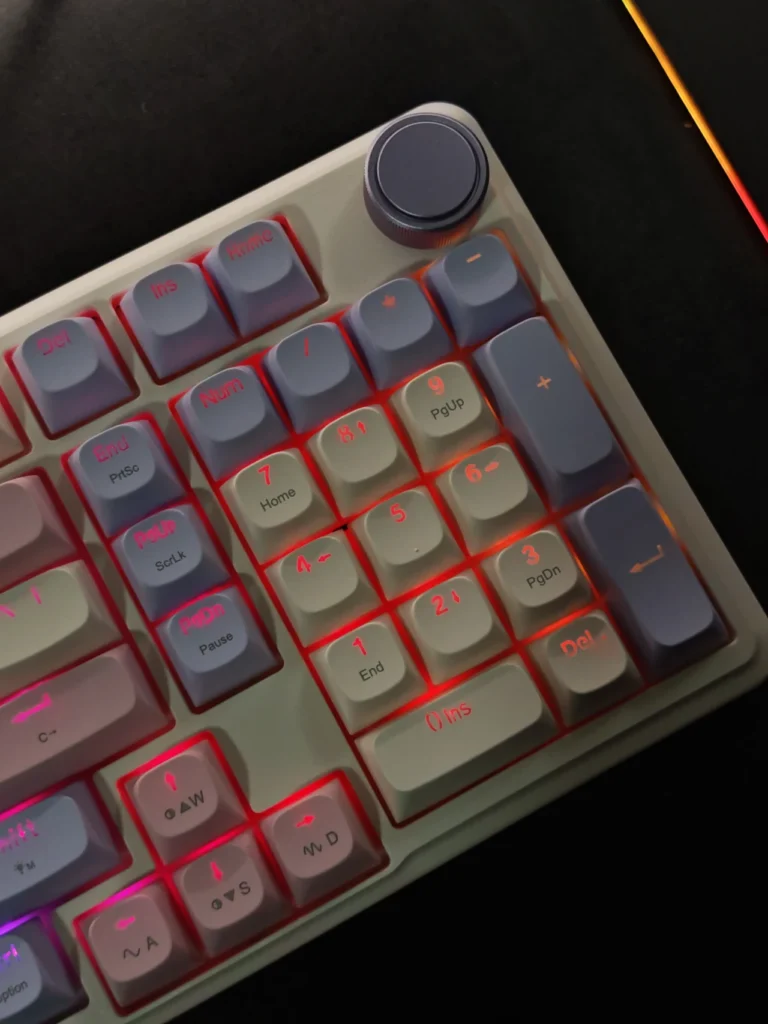
Redragon’s companion software provides options for key remapping, RGB lighting and macro recording. Users can create profiles, assign functions to individual keys and configure lighting effects to suit their preferences. Macro support can be useful for repetitive tasks, shortcuts and games that benefit from sequences of inputs.
The software covers the main customisation features expected from a keyboard in this category, but the interface is functional rather than especially polished. Users who prefer a keyboard that works without installing additional software should still be able to access many everyday functions through its onboard shortcuts.
The clearly labelled secondary functions help make those shortcuts easier to learn. At the same time, the amount of information printed on the keycaps may look cluttered to users who prefer a cleaner design.
Mac users should be aware that the physical layout support and the availability of full software customisation are separate considerations. The keyboard can accommodate Mac layouts, but anyone needing advanced configuration should confirm that the relevant software supports their system.
At approximately US$65 before discounts, the Redragon EISA K768 offers a substantial feature set for its price. Its 100-key layout, 8,000mAh battery, tri-mode connectivity, hot-swappable switches and multifunction knob cover several features that are often spread across more expensive keyboards.
The compact layout is particularly valuable for users who need a number pad but do not want a traditional full-size board taking up additional desk space. The battery capacity and multiple connection modes also make it suitable for users who switch between devices or prefer a wireless workspace.
There are compromises. The plastic case does not have the premium feel of an aluminium chassis, the space bar can sound hollow, and the tall keycaps will not suit everyone. The companion software could also be more refined, especially for users who want consistent customisation across operating systems.
These limitations do not undermine the keyboard’s overall practicality, but they help explain where Redragon has focused its budget. The EISA K768 prioritises features, flexibility and appearance over a fully refined enthusiast typing experience.
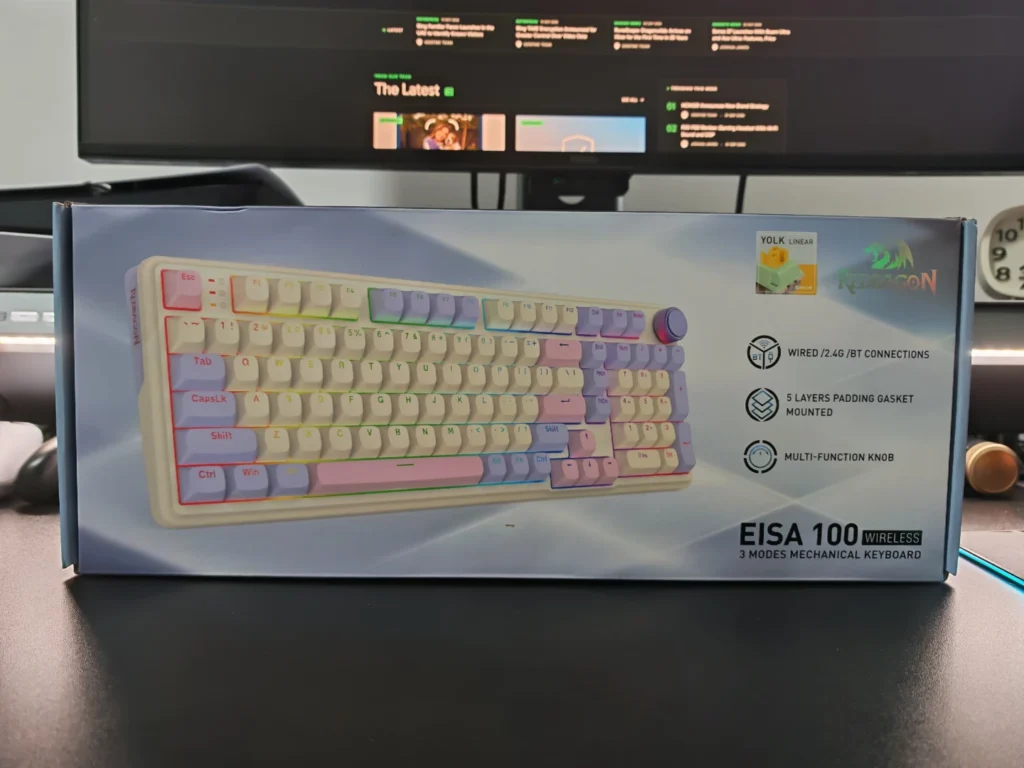
The Redragon EISA K768 is a capable compact mechanical keyboard for users who need a number pad, wireless connectivity and a broad range of customisation options without spending heavily. Its 8,000mAh battery, hot-swappable switches and multifunction knob make it a versatile choice for both office work and casual gaming.
Its typing experience is generally enjoyable, although the sound profile is not entirely consistent and the space bar can feel hollow. The plastic construction and busy keycap legends are also worth considering, while the tall profile may require an adjustment period.
For users looking for a compact, feature-rich keyboard at an accessible price, the EISA K768 represents good value. Those seeking a more refined acoustic profile, premium materials or advanced competitive gaming features may want to explore higher-priced alternatives.
Also Read: Redragon K1NG M916 ULT Review

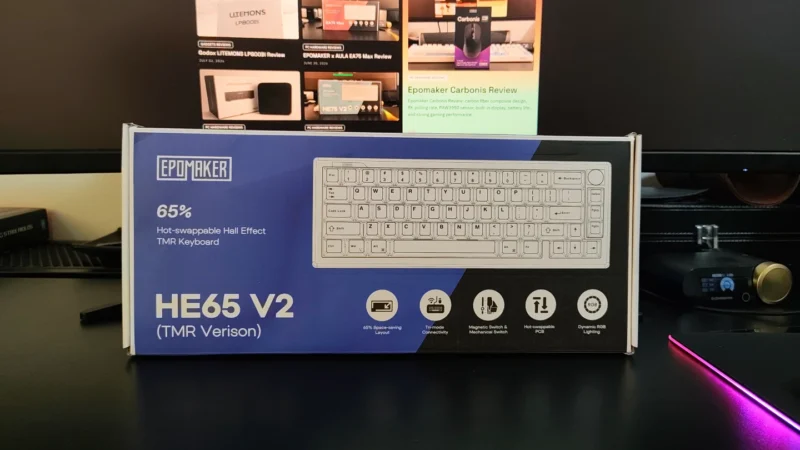
EPOMAKER HE65 V2 TMR review covering its TMR switches, Rapid Trigger, 8,000Hz polling, hybrid hot-swap PCB, wireless connectivity and typing experience.
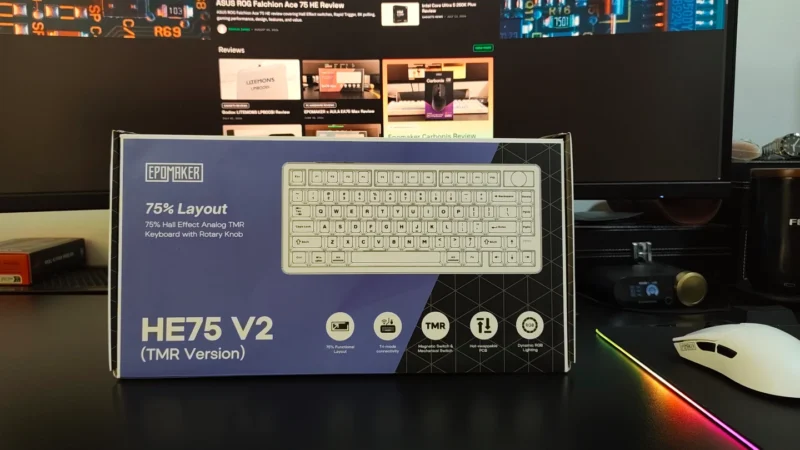
Our EPOMAKER HE75 V2 TMR review covers its TMR switches, Rapid Trigger, 8K polling, wireless performance, sound, software and battery life.
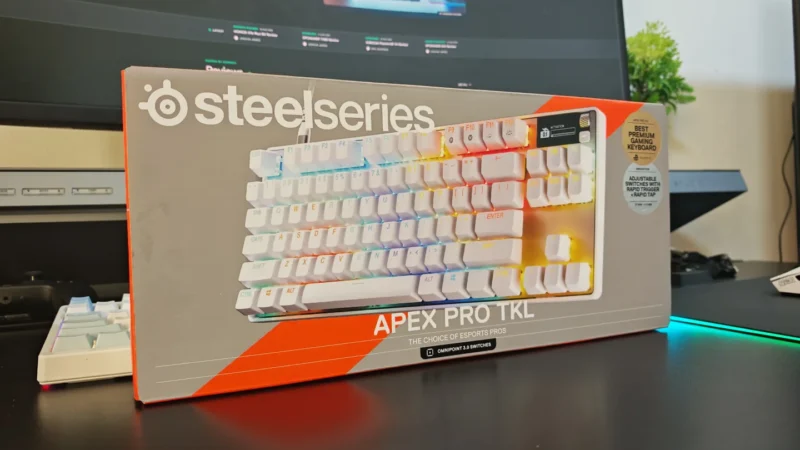
We review the SteelSeries Apex Pro TKL Gen 3, featuring OmniPoint 3.0 Hall Effect switches, adjustable actuation, Rapid Trigger, OLED display and RGB lighting.
 Joshua James