
TOZO NC9 Pro Review: Feature-Rich Wireless Earbuds with a Touchscreen Case
TOZO NC9 Pro review: We test its adaptive ANC, LDAC audio, touchscreen case, Bluetooth 6.0, sound quality, battery life and everyday performance.
We have been using the GX1 for gaming, work and general media consumption, and its open-back design is easily the most distinctive aspect of the headset.
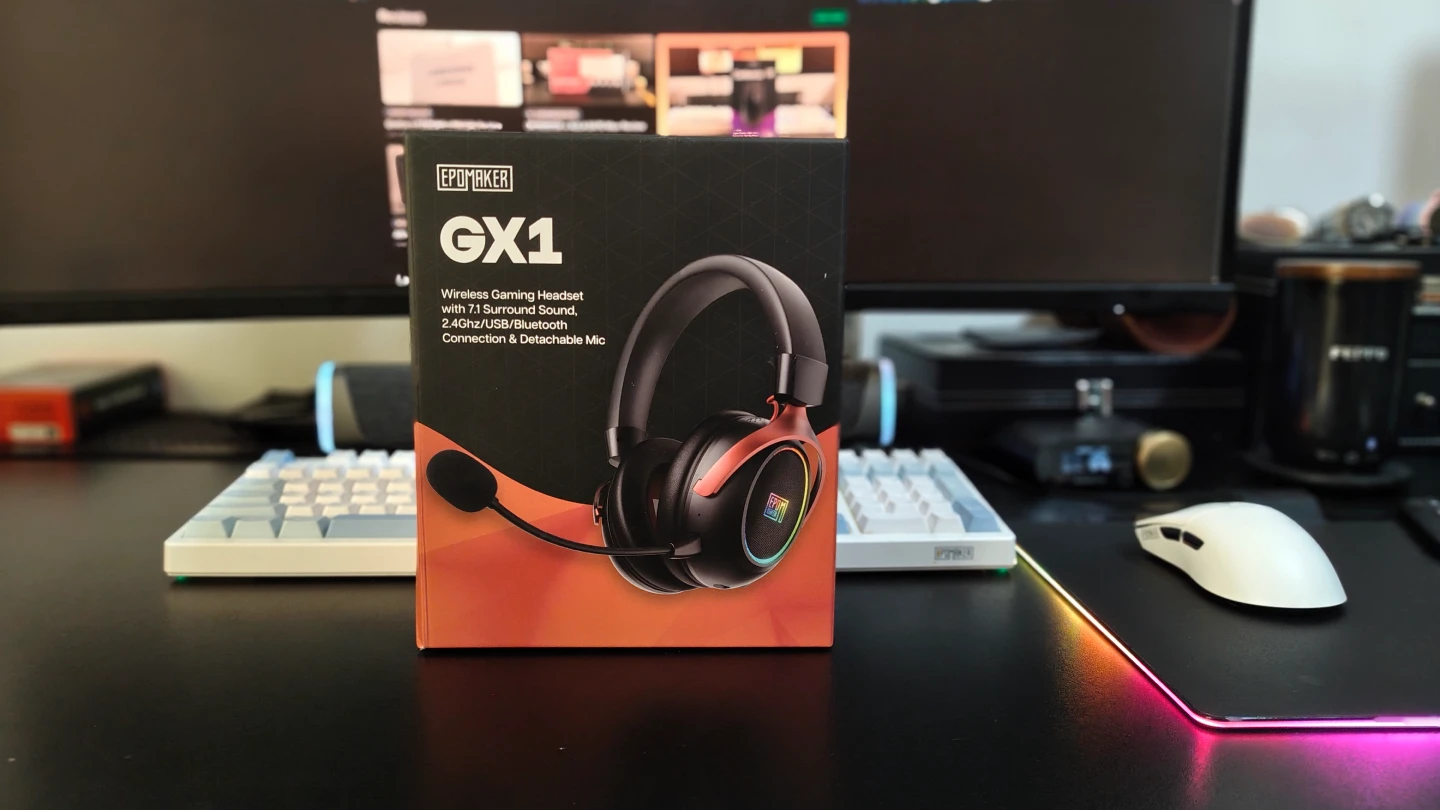
The gaming headset market is packed with affordable wireless options, but most models in this segment tend to follow a familiar formula: closed-back earcups, basic stereo audio and a single wireless connection. The EPOMAKER GX1 takes a different approach. It combines an open-back design with 50mm dynamic drivers, virtual 7.1 surround sound, tri-mode connectivity and a detachable ENC microphone, while keeping the price around the $50 mark.
We have been using the GX1 for gaming, work and general media consumption, and its open-back design is easily the most distinctive aspect of the headset. It provides a more spacious presentation than the typical closed-back gaming headset, although that also means less isolation from the surrounding environment.
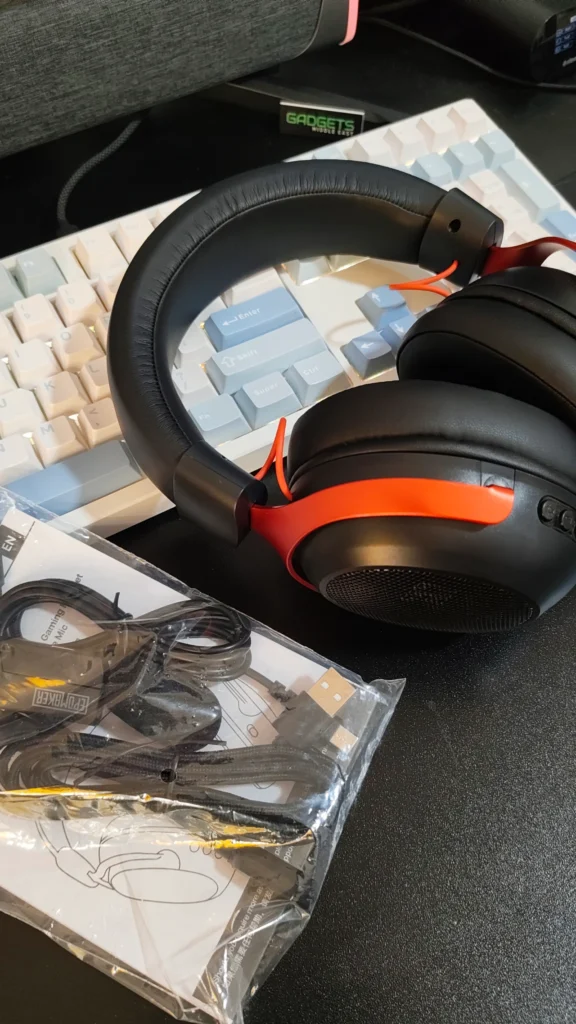
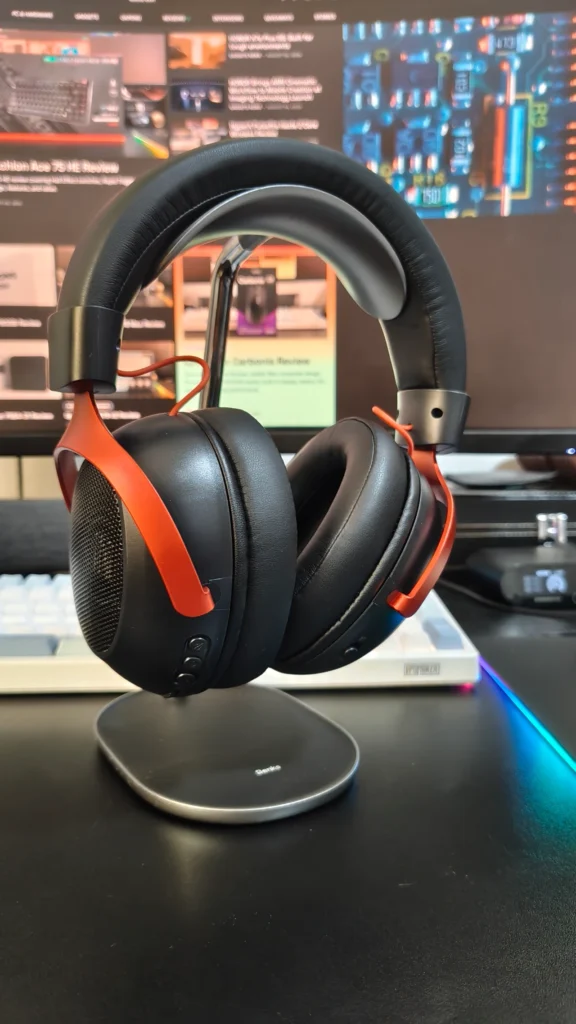
The EPOMAKER GX1 has a relatively understated appearance compared with many gaming headsets. Its open-back earcups give it a more audio-focused look, while the subtle blue detailing and available colour options add some gaming character without making the headset look overly aggressive.
The headset weighs around 320g, which is reasonable for a wireless gaming headset with a 2,000mAh battery and multiple connectivity options. The seven-position adjustable headband provides plenty of room for different head sizes, while the padded headband and thick memory foam ear cushions help maintain comfort during longer sessions.
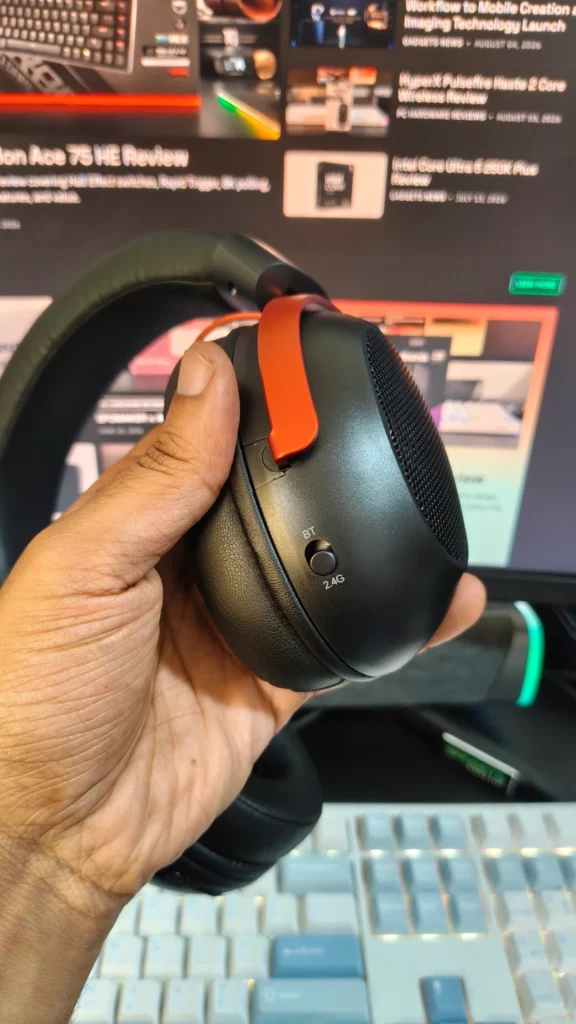
The earcups can swivel vertically to improve the fit, although they do not offer extensive horizontal movement. We also found the headset flexible enough to accommodate different head shapes, although users who prefer a stronger clamping force may find the GX1 relatively relaxed.
The earcups use a soft leather-like finish with thick memory foam underneath. The combination feels comfortable against the head, and the open-back construction allows more airflow around the ears.
The headset also features RGB lighting. It is primarily an aesthetic addition rather than a functional feature, and users who prioritise battery life can disable it.
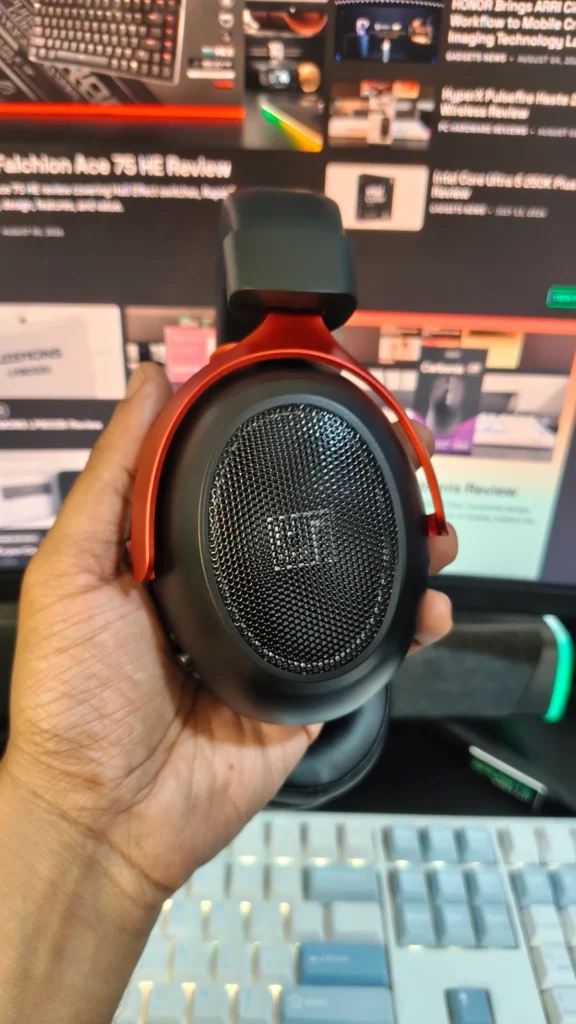
The open-back construction is what separates the GX1 from many competing headsets at this price. Instead of sealing the earcups completely, the design allows air to pass through the rear of the drivers.
This produces a wider and more spacious presentation. Game environments feel less confined, and positional information can be easier to perceive than with some inexpensive closed-back headsets. The design is particularly interesting for single-player games, where environmental effects, music and dialogue benefit from a more open presentation.
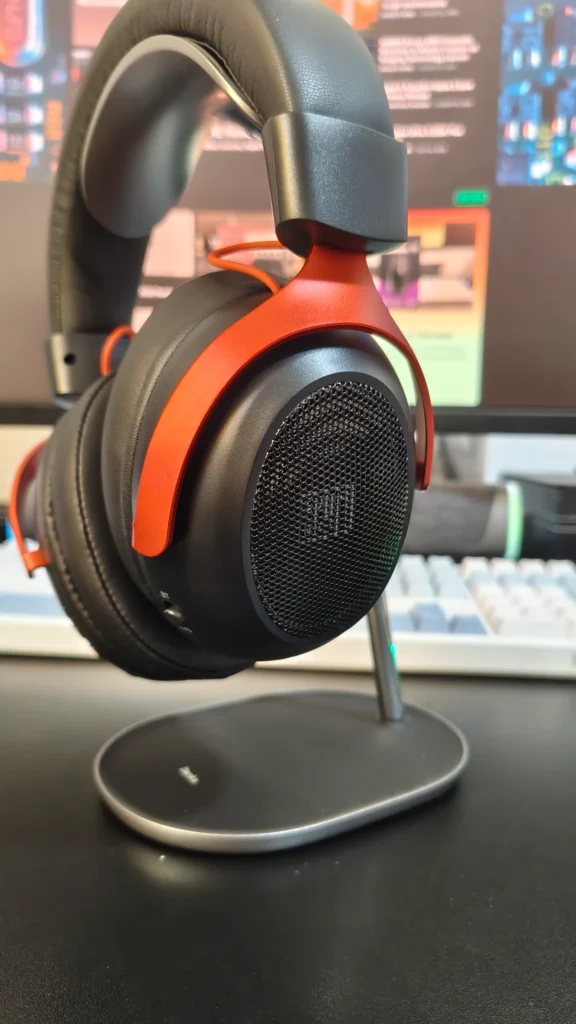
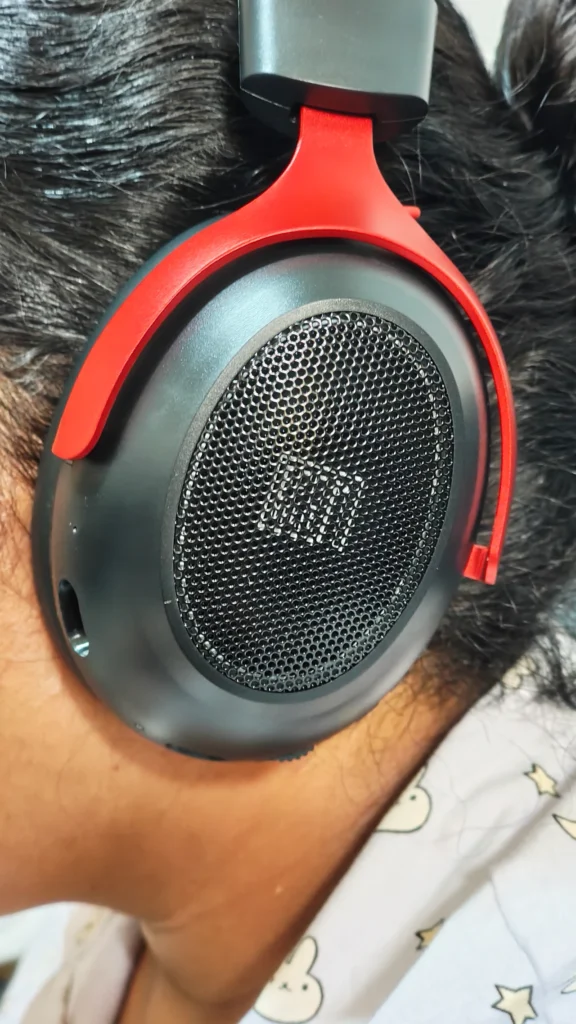
The trade-off is isolation. Because the GX1 is open-back, external sounds remain audible, while audio from the headset can also leak into the surrounding environment. It is therefore better suited to a relatively quiet room than a busy office or shared space.
The headset uses 50mm dynamic drivers and has a stated frequency response of 20Hz to 20kHz. EPOMAKER also lists channel balance within 5dB and total harmonic distortion below 3%.
In practical use, the GX1 delivers a full sound with enough detail for gaming and general media. The larger drivers provide a good foundation for bass, while the open-back design prevents the presentation from feeling excessively closed in.
Virtual 7.1 surround sound is another major feature. The system uses software processing rather than physically separate surround channels to create a wider spatial presentation. For competitive games, this can help make directional sounds easier to interpret. Footsteps, reloads, gunfire and other environmental cues can provide a clearer indication of where activity is taking place.
However, virtual surround is not automatically better than stereo. Its effectiveness depends on the game, its audio implementation and individual preference. We found it more useful to treat 7.1 as an additional listening mode rather than something that needs to remain enabled at all times.
Players who prefer a more natural presentation may find stereo preferable, while those who want additional spatial processing can switch to 7.1 when appropriate.
The GX1 supports three connection methods: 2.4GHz wireless, Bluetooth and wired connectivity. The 2.4GHz connection is the preferred option for gaming because of its lower latency.
EPOMAKER rates the 2.4GHz connection at approximately 25ms, which is sufficiently low for gaming without creating an obvious disconnect between on-screen action and audio. The wireless transmitter is particularly practical because it can be used with either USB-A or USB-C. The adapter separates from the USB-C transmitter, allowing it to be connected directly to different ports without carrying an additional adapter.
The GX1 supports PC, Mac, PlayStation and Nintendo Switch through supported connection methods, while Xbox users are limited to wired connectivity. Bluetooth is also available for smartphones, tablets and other compatible devices. This makes the GX1 considerably more versatile than a headset designed exclusively around one platform.
Bluetooth is useful when gaming latency is less important. It makes the GX1 practical for listening to music, watching videos or taking calls from a smartphone or tablet.
The wired connection provides another fallback when wireless is unavailable or when users simply prefer a direct connection. The headset can also continue charging while being used in supported modes, which is useful when the battery is running low during a long session.

EPOMAKER takes an interesting approach to microphones by providing two options. There is a built-in microphone for casual calls and situations where a detachable boom would be inconvenient. For gaming, the detachable boom microphone is the better option, providing a more conventional position close to the mouth.
The boom microphone also incorporates Environmental Noise Cancellation (ENC), designed to reduce background sounds such as keyboard clicks, fans and other ambient noise. For gaming and everyday voice communication, the microphone setup is practical. The detachable design also means the GX1 can look more like a conventional pair of headphones when the boom is removed.
Comfort is one of the GX1’s stronger characteristics. The 320g weight is manageable for extended use, while the thick memory foam ear cushions provide a soft contact point around the ears. The seven-position headband adjustment also makes it easier to find a suitable fit. EPOMAKER has designed the padding with glasses wearers in mind, which should help reduce pressure around the frame during longer sessions.
The open-back design also has an advantage during extended use because it allows more airflow. This can help reduce the warm, enclosed feeling that some closed-back headsets produce after several hours. The relatively relaxed clamping force may not suit everyone, particularly users who prefer a headset that grips the head firmly. For most users, however, the fit strikes a reasonable balance between stability and comfort.
Battery performance is another important part of the GX1’s specification. EPOMAKER lists a 2,000mAh battery and claims up to 70 hours of playback with RGB disabled, while enabling RGB reduces the claimed runtime to approximately 30 hours. The difference between the two figures is significant, but it gives users a choice between longer battery life and additional lighting.
Even the lower 30-hour figure should cover several gaming sessions before charging becomes necessary. With the RGB lighting disabled, the claimed 70-hour maximum is particularly useful for users who do not want to charge their headset frequently.
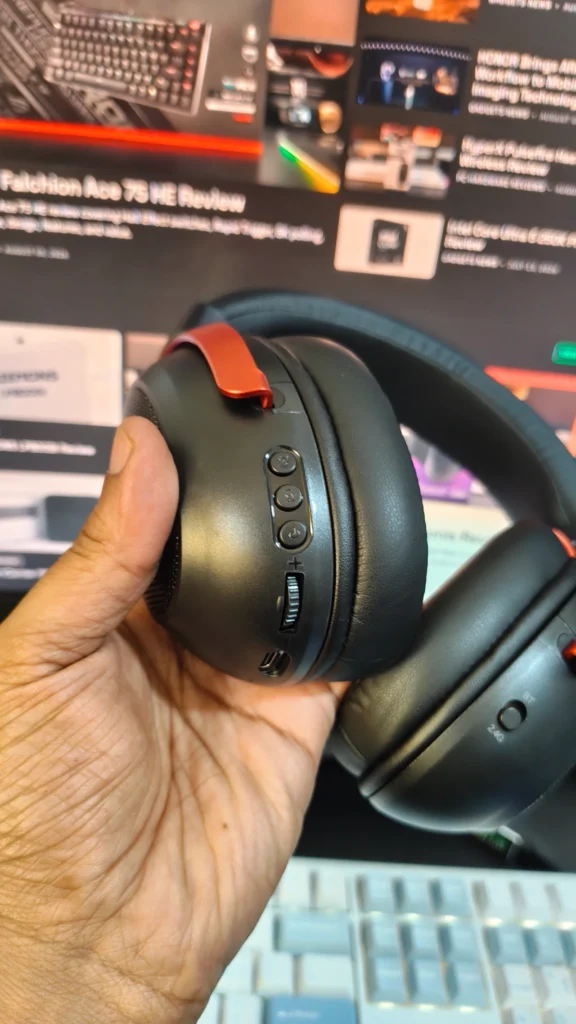
The GX1 keeps its physical controls within easy reach on the earcups. We particularly like the volume wheel because it is more intuitive to adjust than repeatedly pressing volume buttons. There are also dedicated controls for power, microphone mute and switching audio or lighting modes. A physical selector on the opposite earcup allows users to switch between Bluetooth and 2.4GHz modes.
Companion software adds further customisation, including EQ adjustments, virtual surround controls and microphone settings. It is not as extensive as the software ecosystems offered by more expensive gaming brands, but it provides the important controls without becoming unnecessarily complicated.
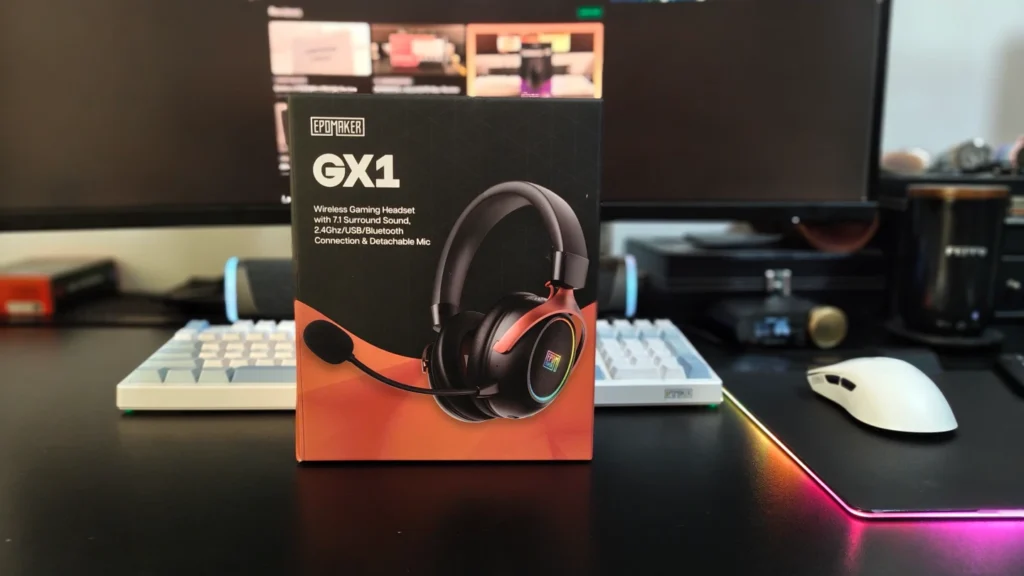
The EPOMAKER GX1 is an interesting alternative to the typical budget wireless gaming headset. Its open-back construction immediately gives it a different character, providing a wider and more spacious soundstage while improving airflow during long sessions.
The 50mm drivers, virtual 7.1 surround sound and low-latency 2.4GHz connection make it well suited to gaming, particularly for players who value positional audio. Tri-mode connectivity further increases its versatility, allowing the headset to move between gaming PCs, consoles, mobile devices and wired setups. Comfort is another strength, thanks to the 320g construction, seven-position headband and memory foam ear cushions. The detachable ENC microphone is also a practical addition for multiplayer gaming and general voice communication.
There are compromises. The open-back design offers limited isolation and allows sound leakage, making the GX1 less suitable for noisy environments. Console compatibility is also not completely universal, with Xbox requiring a wired connection. Virtual 7.1 will similarly appeal more to some users than others.
At around $45-$50, however, the GX1 offers a strong combination of features. It does not attempt to compete with premium gaming headsets on software depth or refinement, but it delivers the core features most users need while adding an open-back design that remains unusual at this price.
Also Read: EPOMAKER NEX Pro Review

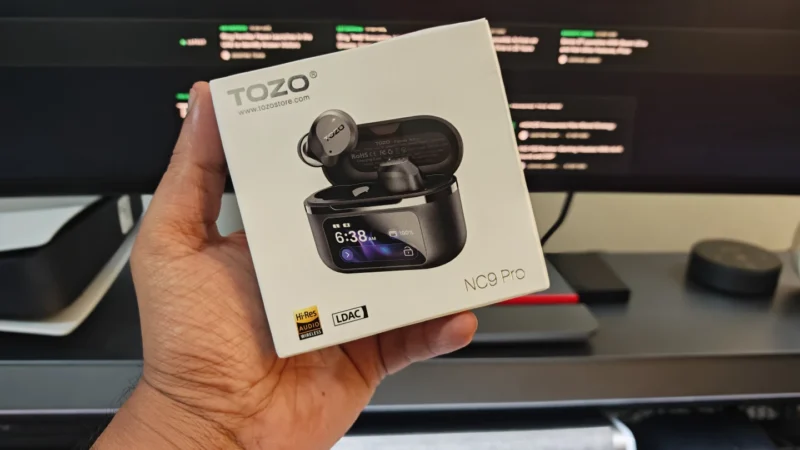
TOZO NC9 Pro review: We test its adaptive ANC, LDAC audio, touchscreen case, Bluetooth 6.0, sound quality, battery life and everyday performance.

Our Snowsky ECHO review examines its sound quality, build, 4.4mm balanced output, battery life, Bluetooth, USB DAC features and overall value.
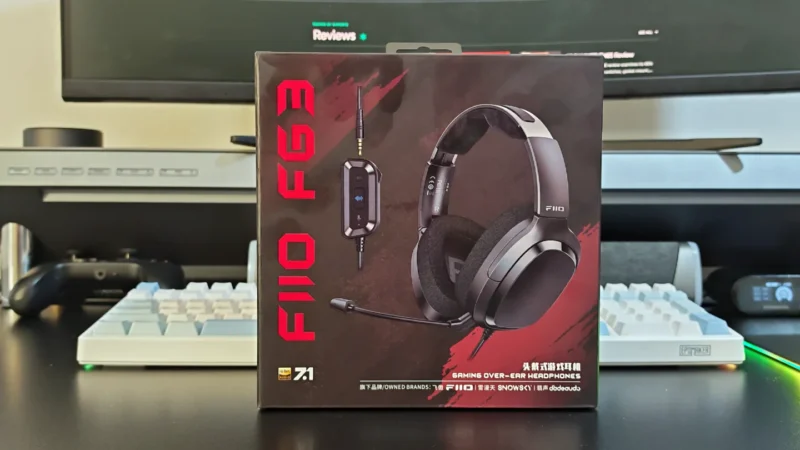
FiiO FG3 Review: an interesting first attempt at a gaming headset from a company with a strong background in personal audio.
 Joshua James