
Redragon EISA K768 Review: A Compact Wireless Keyboard for Work and Gaming
Our Redragon EISA K768 review covers its 100-key layout, wireless connectivity, 8,000mAh battery, typing experience and gaming performance.
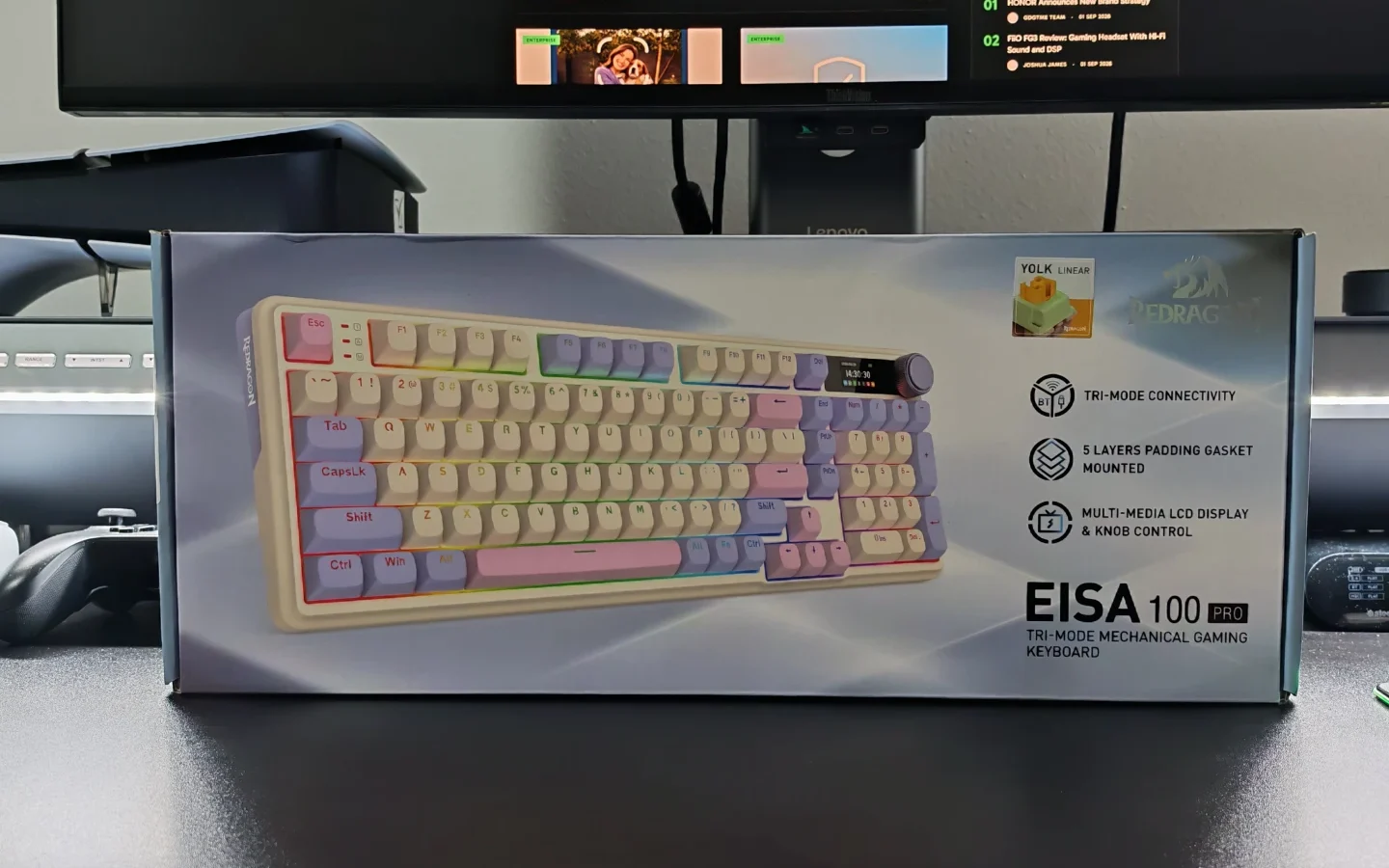
The Redragon EISA K768 Pro builds on the original EISA K768 with a customisable TFT display, retaining its compact layout, wireless connectivity and mechanical typing experience. The addition of a screen gives the keyboard a more distinctive identity, while its gasket-mounted construction, hot-swappable switches and large battery make it a versatile option for everyday productivity and gaming.
At approximately US$74.99, the EISA K768 Pro sits in an affordable segment of the wireless mechanical keyboard market. It offers a combination of practical hardware features and visual customisation that is not always available at this price. However, its display is more of a personalisation feature than a productivity necessity, and some compromises remain in its construction and acoustic performance.
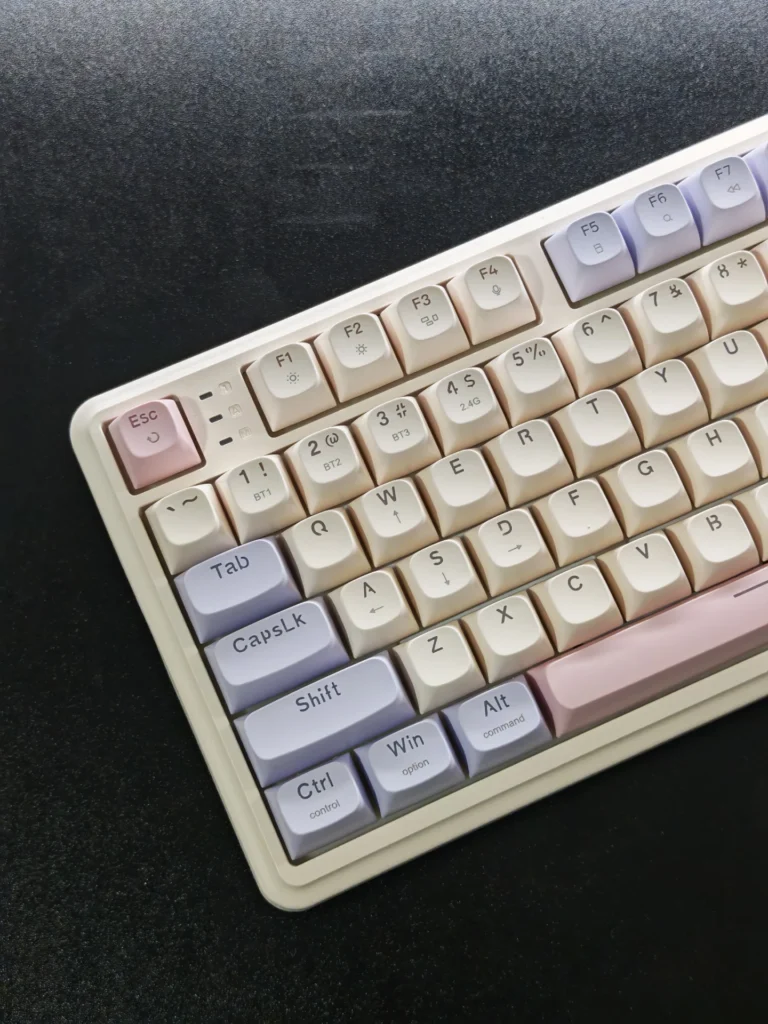
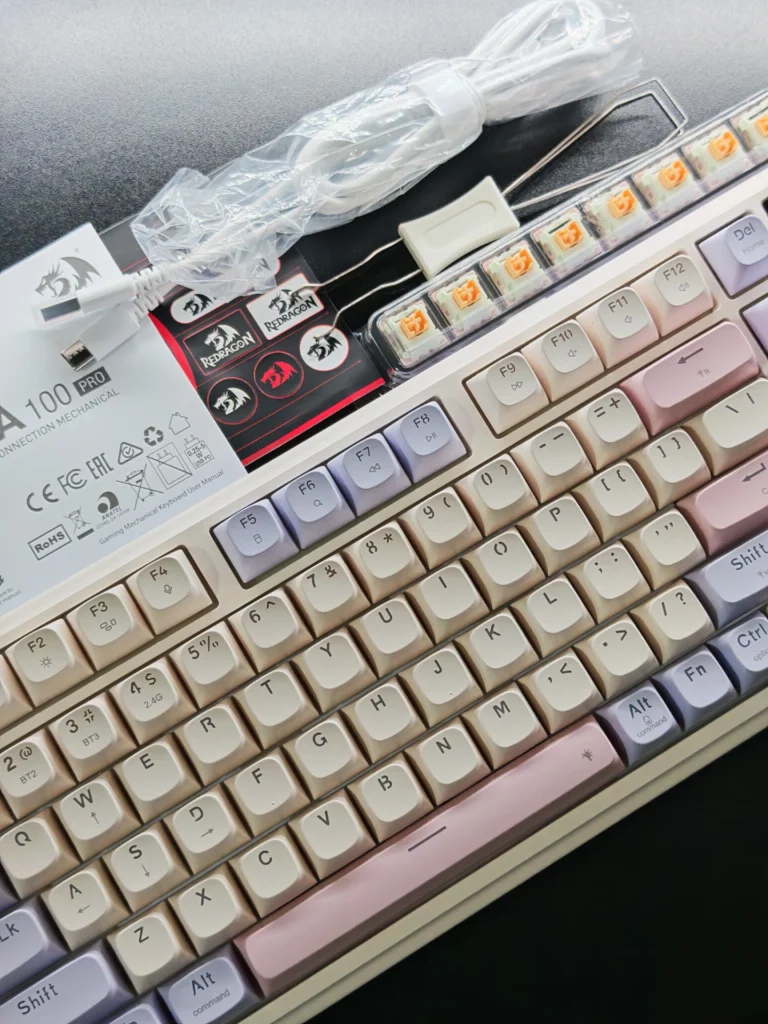
The EISA K768 Pro retains the compact design of the original keyboard, preserving the number pad while reducing the overall footprint compared with a conventional full-size keyboard. This arrangement makes it particularly useful for users who regularly work with spreadsheets, documents or numerical input but want additional space for mouse movement.
Redragon offers the keyboard in distinctive colour combinations, including Violet and Black & Green. The contrasting keycaps and rounded profiles give it a more expressive appearance than conventional office keyboards. Its overall design is clearly intended to complement gaming and enthusiast desk setups rather than blend into a traditional workstation.
The chassis uses plastic construction, although its approximately 1.13kg weight gives it a substantial presence on a desk. The adjustable feet provide alternative typing angles, while the rubber pads help maintain stability during use.
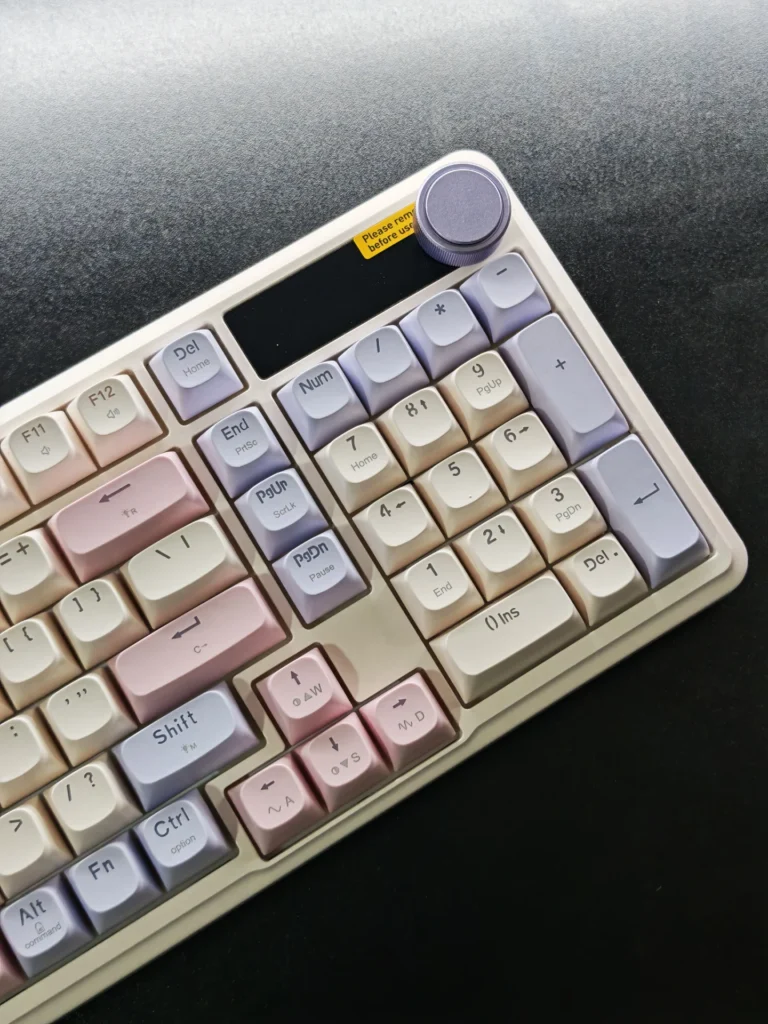
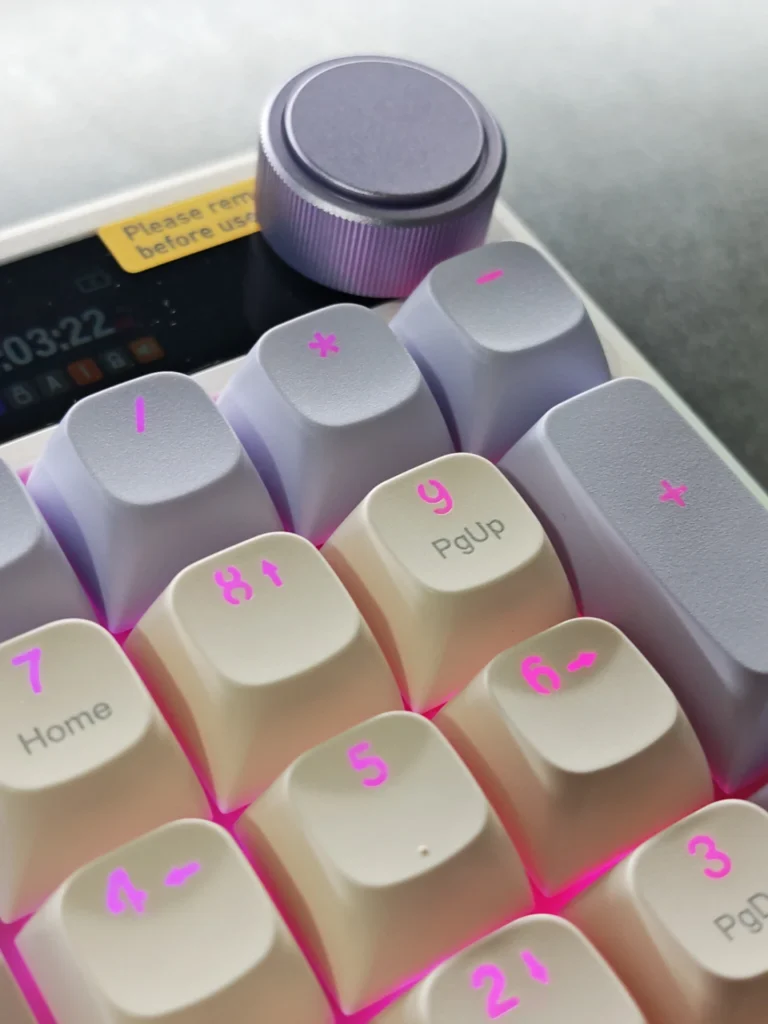
The multifunction control knob is another notable design element. Its metallic finish and tactile operation provide a useful contrast to the surrounding chassis. It offers convenient access to media and lighting controls without requiring dedicated additional buttons.
The most noticeable visual difference from the standard EISA K768 is the integrated TFT display. Positioned above the main key area, it introduces a small information and personalisation panel without significantly changing the keyboard’s overall footprint.
The customisable TFT display is the EISA K768 Pro’s defining feature. It provides a dedicated space for displaying information and personal content, allowing users to personalise their keyboard beyond its RGB lighting and keycap colour scheme.
The display can show battery information, connection status and typing-related information. It also supports custom GIFs and images, including memes, giving users the option to turn the keyboard into a more personalised part of their desk setup.
This feature is particularly appealing to users who enjoy customising their peripherals. Instead of relying entirely on static branding or lighting effects, the screen provides another way to make the keyboard visually distinctive.
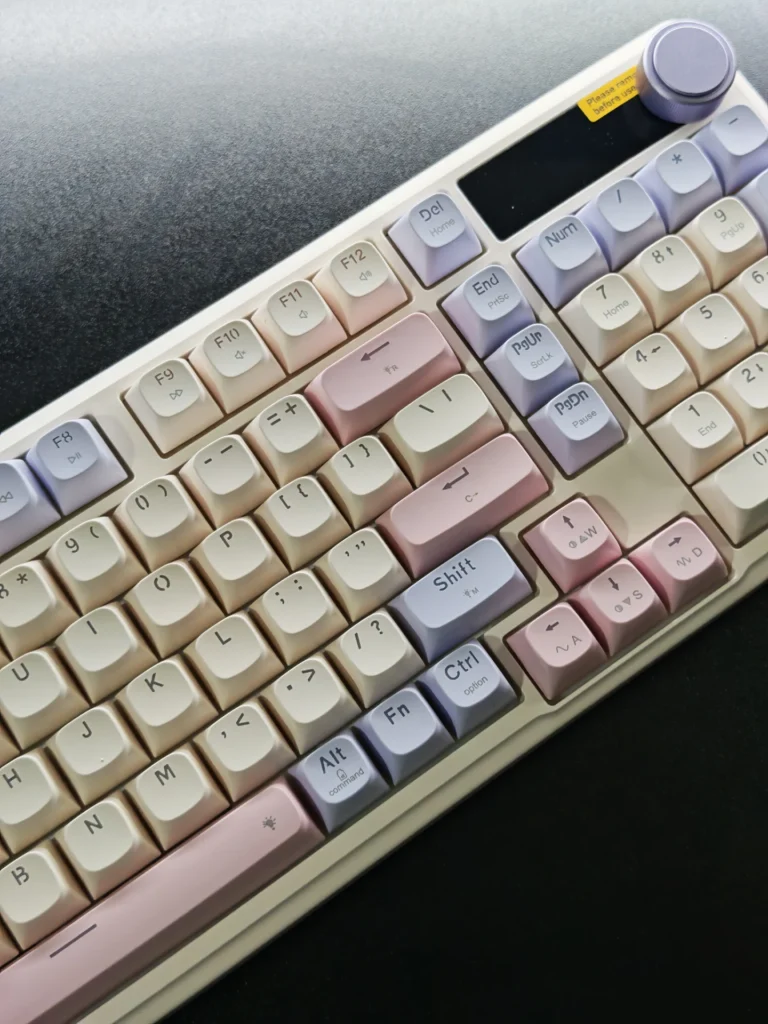
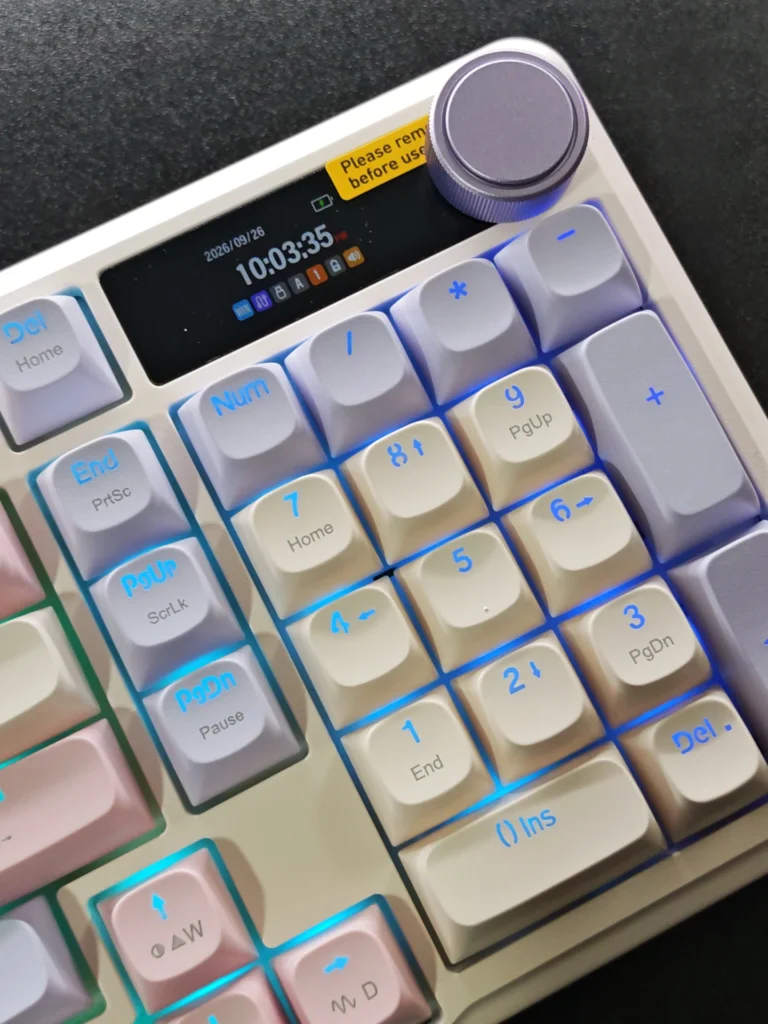
However, its practical usefulness depends on how much importance users place on personalisation. Battery and connection information can be convenient, but these are not functions that necessarily require a dedicated display. The custom images and animations are primarily aesthetic additions rather than features that improve typing performance.
The screen is therefore best understood as an additional convenience and customisation feature. It gives the Pro model a clearer identity, although users who prefer a minimalist keyboard may not consider it essential.
The EISA K768 Pro supports three connection modes: USB-C wired, 2.4GHz wireless and Bluetooth. This flexibility allows users to connect it to different devices depending on their requirements.
The 2.4GHz connection is suitable for desktop use and gaming, while Bluetooth makes it convenient for laptops and compatible devices. USB-C provides a wired alternative and allows the keyboard to be charged when required.
The keyboard also includes a multifunction control knob that handles media playback and lighting adjustments. Its operation reduces the need to memorise additional keyboard shortcuts or access software settings for everyday adjustments.
The knob can control system volume and playback functions, while switching modes provides access to RGB lighting controls. This is particularly convenient when adjusting settings during work or entertainment.
The EISA K768 Pro also supports RGB lighting, with adjustable brightness and lighting effects. Users can configure the illumination through keyboard shortcuts or the companion software.
Together, the screen, knob and lighting system give the keyboard several customisation options without requiring additional physical controls.
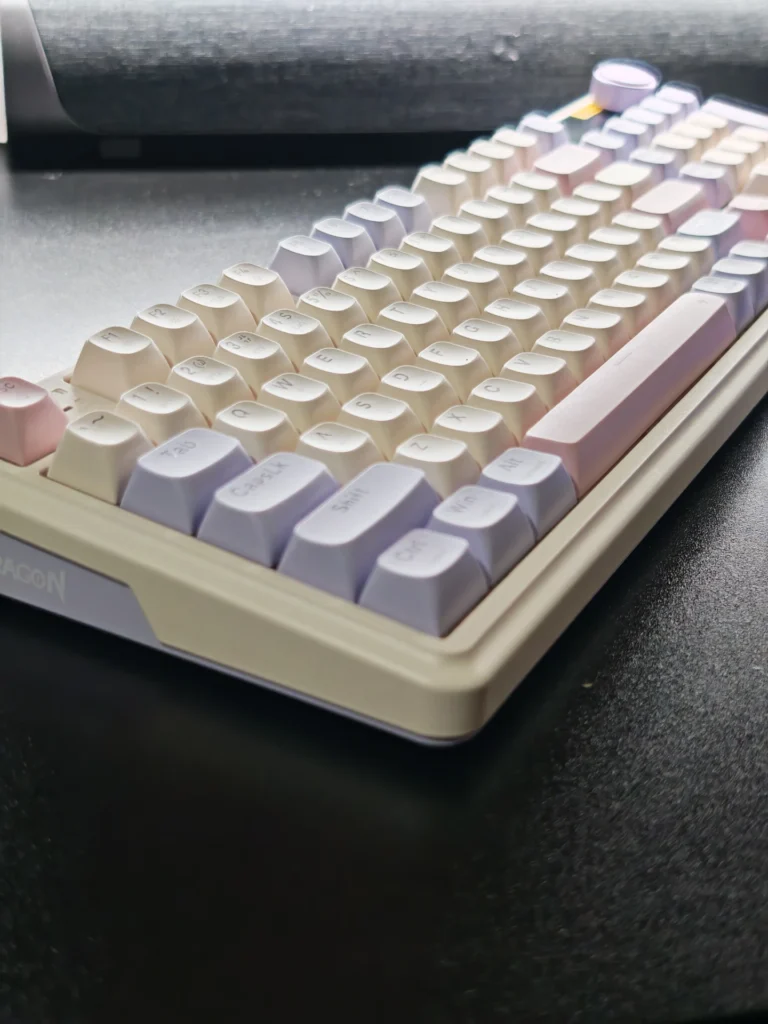
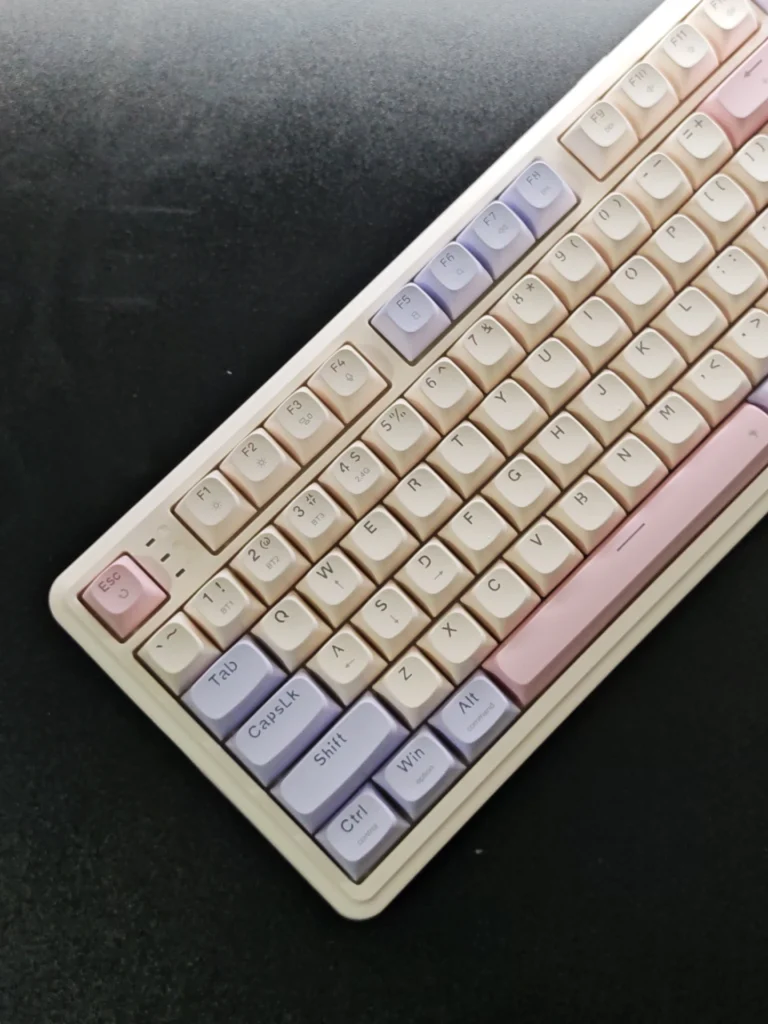
The EISA K768 Pro uses Redragon’s custom Dragon Chant linear mechanical switches. These switches provide a consistent keypress without the tactile bump associated with tactile switches or the audible click of clicky alternatives.
The linear configuration makes the keyboard suitable for users who prefer smooth key travel for extended typing sessions. It also works well for gaming, where consistent keypresses can be more important than a pronounced tactile response.
The keyboard uses a gasket-mounted structure alongside five layers of internal dampening. These components are intended to reduce unwanted resonance and provide a more cushioned typing experience.
In practice, the combination creates a typing sound that leans towards a softer, deeper mechanical profile rather than a sharp or excessively loud one. The overall experience is pleasant for everyday use, although individual keys may not sound entirely consistent.
The space bar remains an area where the acoustic profile can differ from the main keys. Some stabiliser movement may also be noticeable, particularly to users who pay close attention to typing sound.
The hot-swappable PCB is another useful feature. It supports compatible three-pin and five-pin mechanical switches, allowing users to replace switches without soldering. This is useful for maintenance and provides flexibility for those interested in experimenting with different switch characteristics.
The supplied PBT keycaps are another practical addition. Their material generally resists the glossy wear associated with conventional ABS keycaps, making them suitable for regular use.
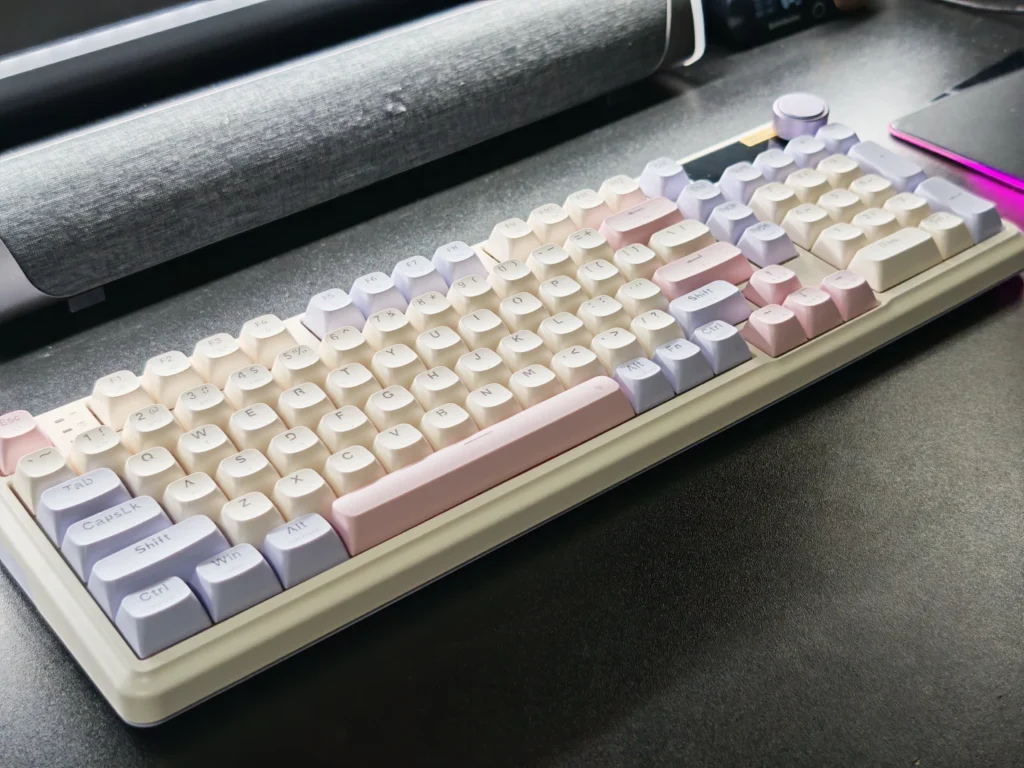
The EISA K768 Pro is designed to accommodate both productivity and gaming. Its linear switches provide consistent actuation, while the 2.4GHz wireless connection offers a convenient alternative to wired use.
The keyboard supports anti-ghosting and N-key rollover, allowing multiple simultaneous keypresses to be registered. This is useful in games that require combinations of movement, actions and shortcuts.
Its compact layout also leaves more room for mouse movement than a conventional full-size keyboard. The retained number pad provides additional flexibility for applications and games that use numerical input or secondary key assignments.
The typing experience is responsive enough for casual and regular gaming, although the keyboard does not include specialised features such as adjustable actuation or Rapid Trigger functionality found on some enthusiast gaming models.
The display does not directly improve gaming performance, but it adds visual personalisation to a gaming setup. For users who value appearance alongside functionality, this is a reasonable addition.
Redragon’s companion software provides access to additional keyboard customisation. Users can configure RGB lighting, assign functions to keys and create macros for supported applications.
The software also supports further personalisation, allowing users to configure aspects of the keyboard beyond its onboard shortcuts.
The TFT display introduces another customisation layer, allowing users to select supported personal images or GIFs. This provides more flexibility than conventional keyboards that rely exclusively on RGB lighting.
However, software usability remains an area where Redragon could improve. The interface is functional, but it does not offer the same polished experience as some more expensive keyboard ecosystems.
Users who prefer a straightforward plug-and-play keyboard can still access essential functions through onboard controls. Those interested in extensive remapping or display customisation should familiarise themselves with the available software before purchasing.
The EISA K768 Pro includes an 8,000mAh battery, which is one of its more substantial hardware specifications. This capacity provides considerable flexibility for wireless operation and reduces the need for frequent charging.
Actual battery life depends on several factors, including RGB brightness, display activity, connection mode and usage patterns. The integrated screen and lighting are additional considerations for users who intend to operate the keyboard wirelessly for extended periods.
Bluetooth is convenient for connecting compatible devices, while 2.4GHz wireless is better suited to a dedicated desktop setup. USB-C remains available for wired operation and charging.
The display also provides battery-related information, making charge status easier to monitor without relying entirely on software notifications.
Although the battery capacity is generous, Redragon does not provide a single runtime figure that applies to every configuration. Users should therefore expect endurance to vary depending on their preferred lighting and display settings.
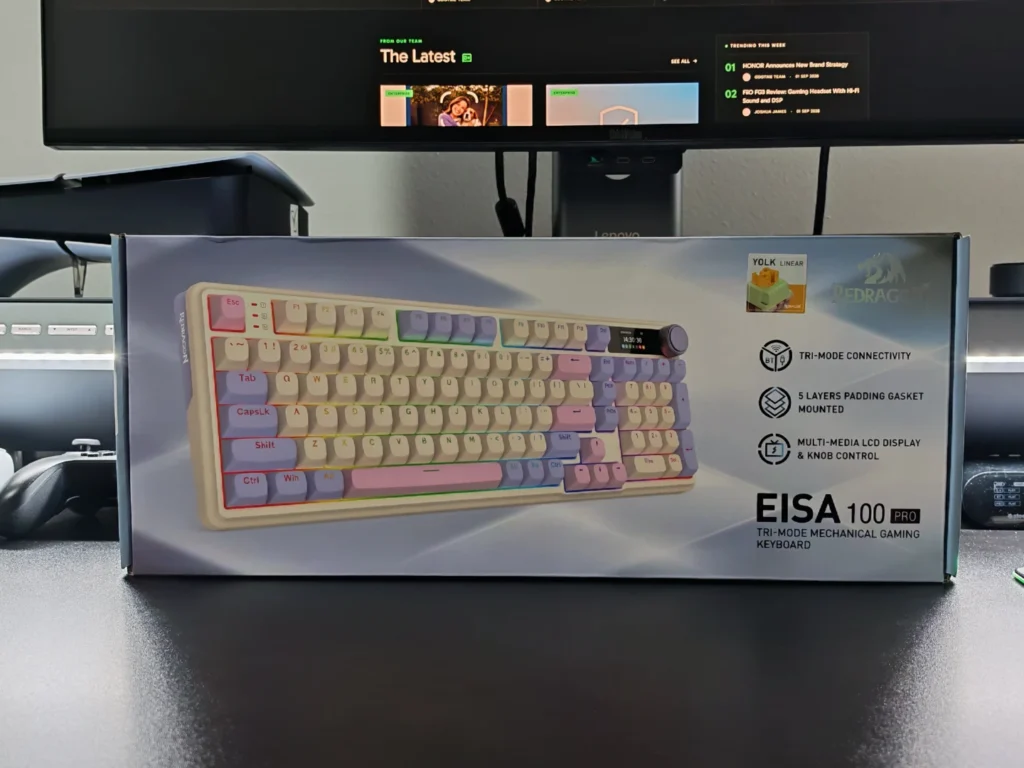
At approximately US$74.99, the Redragon EISA K768 Pro offers a substantial selection of features for its price. Its compact layout, gasket mounting, hot-swappable switches, PBT keycaps and tri-mode connectivity make it a versatile mechanical keyboard.
The TFT display is the main reason to consider the Pro over the standard EISA K768. It adds customisation and convenient access to information, while also giving the keyboard a more distinctive appearance.
However, the screen is not essential to the underlying typing experience. Users who do not value display customisation may find the standard EISA K768 a more economical choice.
The plastic chassis, occasional acoustic inconsistencies and relatively functional software interface are also worth considering. These compromises are understandable within this price category, but they prevent the keyboard from feeling like a fully premium enthusiast product.
For users seeking a feature-rich wireless mechanical keyboard with additional personalisation options, the EISA K768 Pro offers a balanced package.
The Redragon EISA K768 Pro is a versatile mechanical keyboard that combines practical hardware features with a customisable TFT display. Its compact layout retains the number pad, while tri-mode connectivity, an 8,000mAh battery and hot-swappable switches make it suitable for both work and gaming.
The display is its most distinctive addition. It provides useful status information and supports custom images and GIFs, although its primary appeal remains personalisation rather than improved productivity.
The typing experience is generally enjoyable, with smooth linear switches and a gasket-mounted structure that helps provide a softer sound profile. The plastic construction and occasional acoustic inconsistencies remain compromises, while the software could benefit from a more refined interface.
At its asking price, the EISA K768 Pro is a sensible option for users who want a compact mechanical keyboard with wireless flexibility and additional customisation. Those who do not need the display can consider the standard EISA K768, while users looking for premium materials or advanced competitive gaming features may prefer higher-priced alternatives.
Also Read: Redragon EISA K768 Review

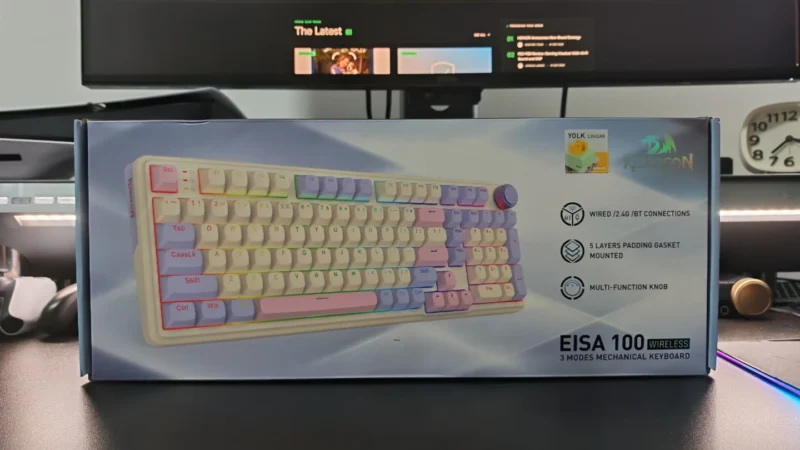
Our Redragon EISA K768 review covers its 100-key layout, wireless connectivity, 8,000mAh battery, typing experience and gaming performance.
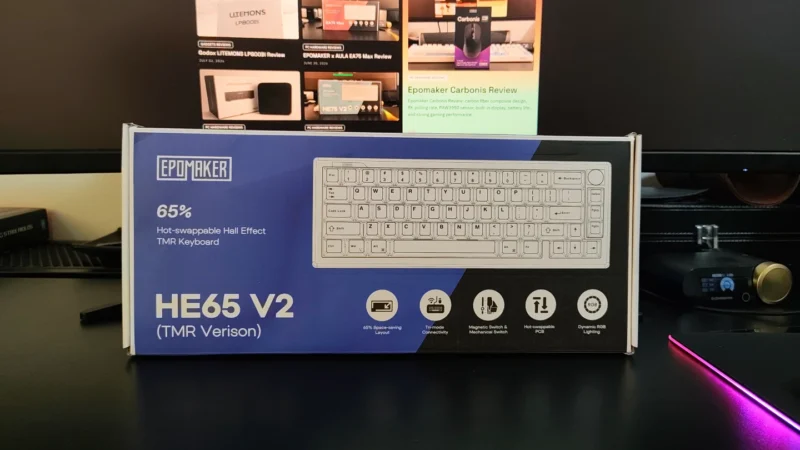
EPOMAKER HE65 V2 TMR review covering its TMR switches, Rapid Trigger, 8,000Hz polling, hybrid hot-swap PCB, wireless connectivity and typing experience.
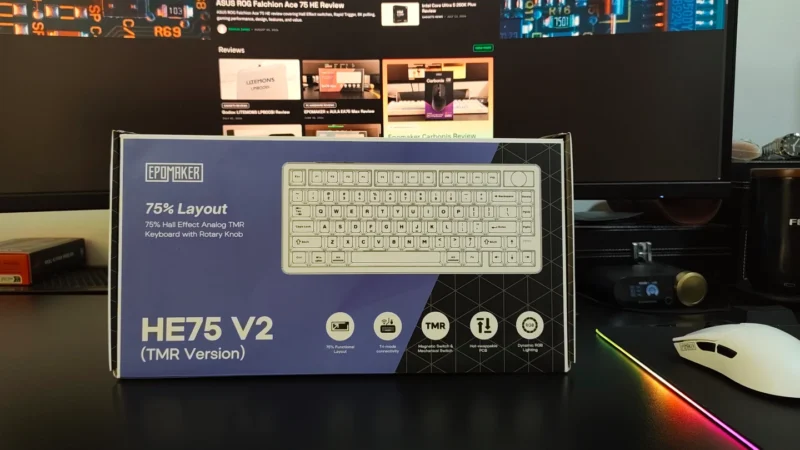
Our EPOMAKER HE75 V2 TMR review covers its TMR switches, Rapid Trigger, 8K polling, wireless performance, sound, software and battery life.
 Joshua James